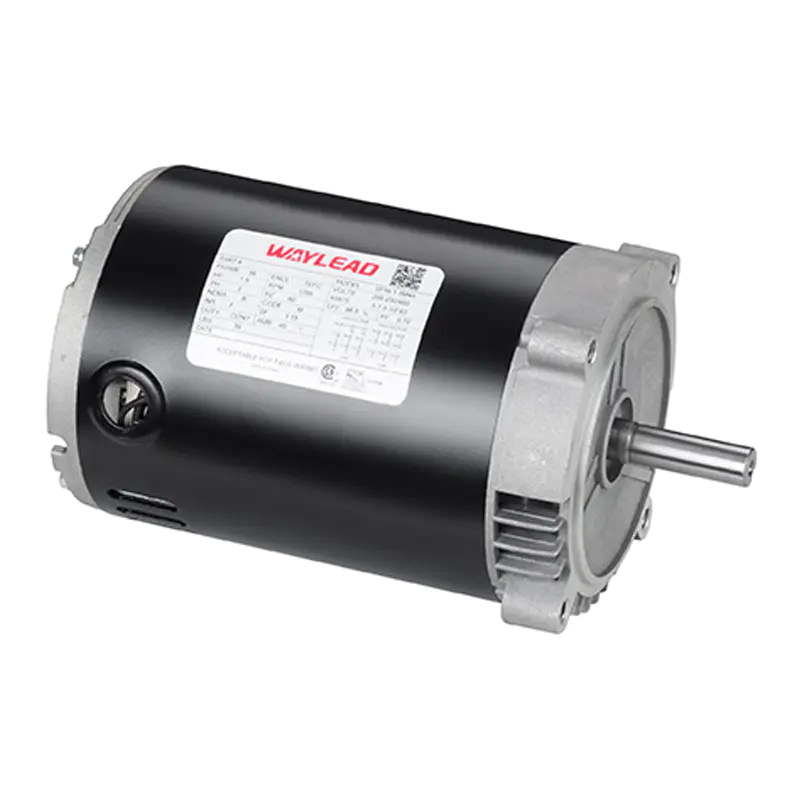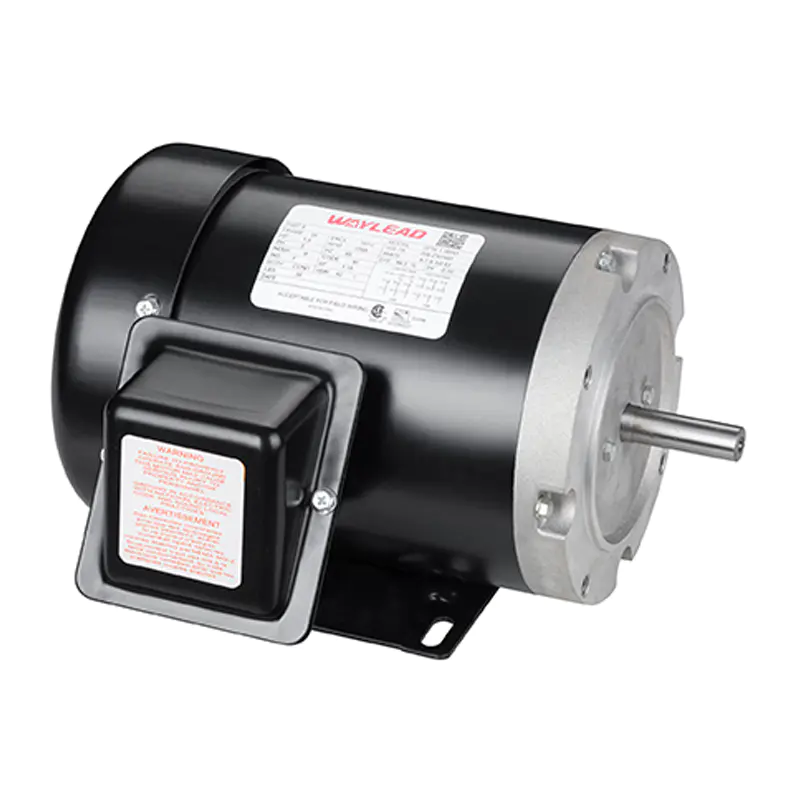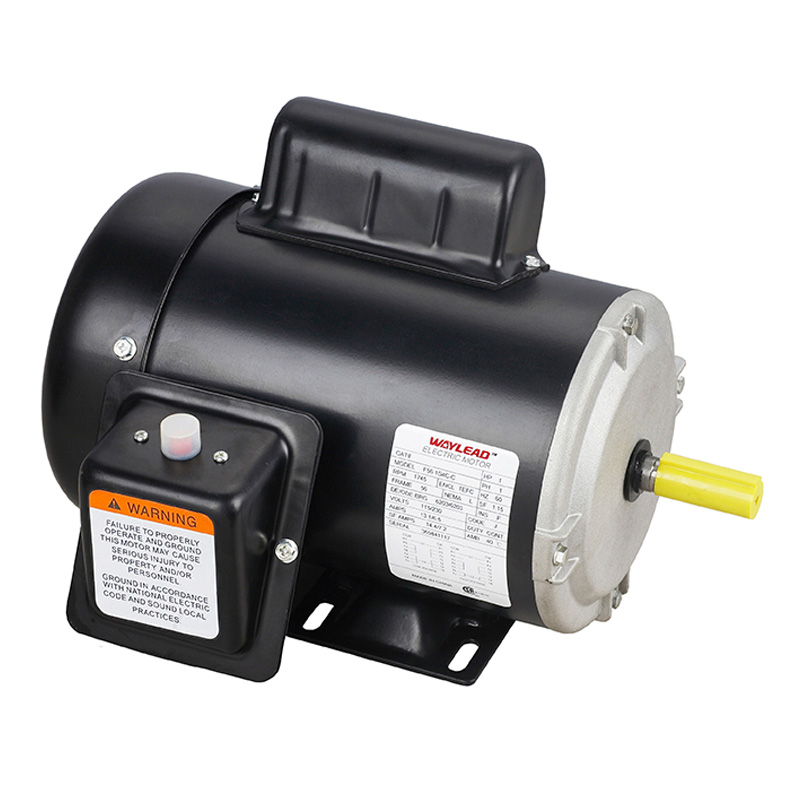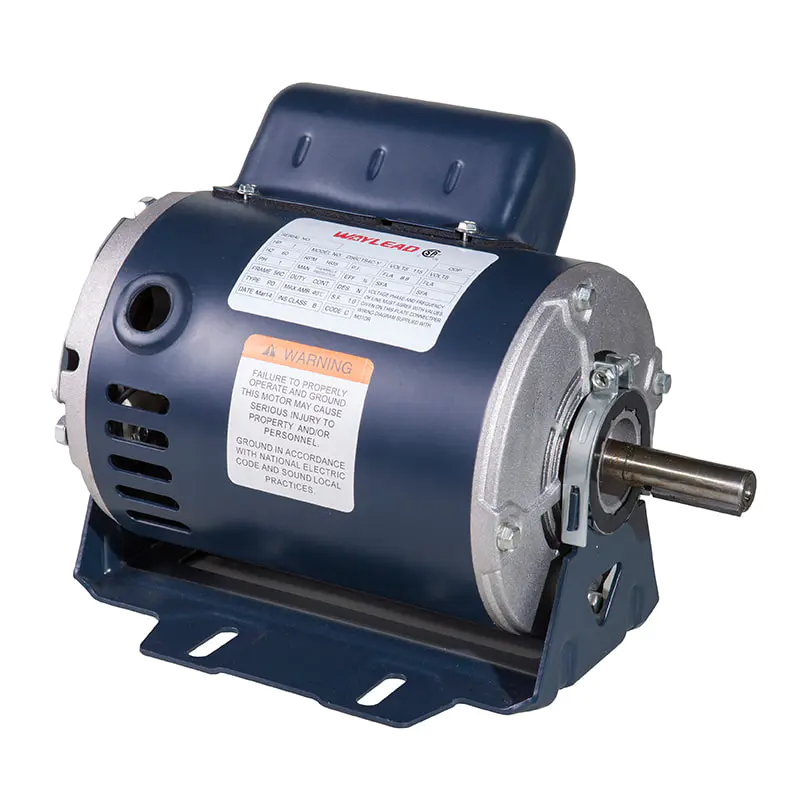
Single phase motors use electrolytic (aluminum electrolytic) capacitors for starting and metallized polypropylene film capacitors for continuous running — with the specific type depending entirely on whether the capacitor is in the circuit only during startup or remains energized throughout operation. Using the wrong capacitor type is one of the leading causes of single phase motor failure, making correct identification and selection a critical skill for electricians, engineers, and maintenance technicians.
This guide explains exactly which type of capacitor is used in single phase motors, why each type is chosen, how they differ electrically and physically, how to read capacitor specifications, and how to select the right replacement — supported by comparison tables, real-world specifications, and a comprehensive FAQ.
Why Do Single Phase Motors Need Capacitors?
Single phase motors require capacitors because a single-phase AC supply produces a pulsating magnetic field that cannot generate the rotating magnetic field needed to self-start — a capacitor creates the necessary phase displacement to produce starting torque.
Three-phase motors generate a naturally rotating magnetic field from three current phases separated by 120°. Single phase motors receive only one phase, producing a field that alternates but does not rotate. Without rotation in the magnetic field, the rotor has no preferred direction of spin and cannot start on its own — a phenomenon known as the single-phase problem.
The solution is to create an artificial second phase using a capacitor connected in series with an auxiliary (start) winding. The capacitor introduces a phase shift of up to 90° between the main winding current and the auxiliary winding current, producing an approximate two-phase condition sufficient to generate a rotating magnetic field and self-starting torque.
- A start capacitor is in circuit only during startup (typically 0.5–3 seconds) and then disconnected by a centrifugal switch or current relay
- A run capacitor remains in circuit continuously during operation to improve power factor, efficiency, and running torque
- Some motors use both a start and a run capacitor — known as capacitor start / capacitor run (CSCR) motors — for maximum performance
Which Type of Capacitor Is Used in Single Phase Motor: The Two Main Types
Two fundamentally different capacitor technologies are used in single phase motors: electrolytic capacitors (used as start capacitors) and metallized polypropylene film capacitors (used as run capacitors) — and they must never be interchanged.
Type 1 — Electrolytic Start Capacitor (AC Electrolytic)
The start capacitor used in single phase motors is an AC electrolytic capacitor — not a standard DC electrolytic — specifically designed for intermittent, high-capacitance duty during motor starting.
AC electrolytic start capacitors are constructed with two aluminum foil electrodes separated by an electrolyte-soaked paper spacer, housed in a cylindrical aluminum or plastic case. Unlike DC electrolytics, they have no polarity marking because the electrolyte layer is extremely thin and the capacitor is designed to handle reversed voltage on each AC half-cycle — but only for very short durations.
Key characteristics of start capacitors:
- Capacitance range: 70 µF to 1,200 µF (high capacitance needed for maximum starting torque)
- Voltage rating: typically 125 VAC, 165 VAC, 250 VAC, or 330 VAC
- Duty cycle: intermittent only — rated for 3 seconds ON per minute maximum; overheating occurs rapidly if left continuously energized
- Temperature rating: typically 65°C to 85°C maximum case temperature
- Physical appearance: black or dark-colored cylindrical case, often with a bleed resistor (10–20 kΩ) across terminals to discharge after disconnection
- ESR: relatively high — this is acceptable because it only operates briefly
A typical start capacitor for a ½ HP single phase motor would be rated 161–193 µF at 250 VAC. A 3 HP motor might use a 430–516 µF / 165 VAC start capacitor. The wide capacitance range (±20%) allows for manufacturing variation without requiring exact values.
Type 2 — Metallized Polypropylene Film Run Capacitor
The run capacitor used in single phase motors is a metallized polypropylene film capacitor — a non-polarized, dry construction component designed for continuous 24/7 AC duty at the motor's operating voltage.
Run capacitors are constructed by winding two layers of polypropylene film (each 5–12 µm thick) with a vacuum-deposited aluminum metallization as the electrode. This "self-healing" construction allows the capacitor to survive momentary dielectric breakdown events — the metallization vaporizes around the fault point, isolating it rather than creating a short circuit. This property is why film capacitors are reliable for continuous motor operation where electrolytics would rapidly fail.
Key characteristics of run capacitors:
- Capacitance range: 1 µF to 100 µF (lower than start capacitors — only enough to maintain phase shift, not maximize starting torque)
- Voltage rating: 370 VAC or 440 VAC most common (higher than nominal line voltage to provide safety margin)
- Duty cycle: continuous — rated for 100% duty, 24 hours per day
- Temperature rating: 70°C to 85°C ambient; case temperature may reach 90°C in service
- Physical appearance: oval or round metal or plastic can, typically silver, gray, or black; two or three terminals (dual-run capacitors have three)
- ESR: very low — essential for minimizing heat generation during continuous operation
- Tolerance: tighter than start capacitors — typically ±5% or ±6%
A typical run capacitor for a 1 HP air conditioner compressor motor would be 35–45 µF at 440 VAC. A ceiling fan motor uses much smaller values — typically 2.5–5 µF at 250 VAC. HVAC equipment commonly uses dual-run capacitors — a single can containing two electrically independent capacitors (e.g., 45 µF + 5 µF at 440 VAC) serving both the compressor and fan motor simultaneously.
Start Capacitor vs Run Capacitor: Full Comparison
Start and run capacitors differ fundamentally in construction, capacitance value, voltage rating, duty cycle, and failure mode — understanding these differences is essential for correct diagnosis and replacement.
| Parameter | Start Capacitor | Run Capacitor |
| Capacitor technology | AC electrolytic | Metallized polypropylene film |
| Typical capacitance | 70 – 1,200 µF | 1 – 100 µF |
| Typical voltage rating | 125 – 330 VAC | 370 – 440 VAC |
| Duty cycle | Intermittent (≤3 sec/min) | Continuous (100%) |
| Construction | Wet electrolyte, aluminum foil | Dry film, metallized PP |
| Self-healing | No | Yes |
| Tolerance | ±20% | ±5% to ±6% |
| Typical ESR | Higher (1–10 Ω) | Very low (<0.1 Ω) |
| Typical lifespan | 5,000 – 10,000 start cycles | 50,000 – 100,000 hours |
| Common failure mode | Vent blowout, electrolyte dry-out | Capacitance drift, open circuit |
| Bleed resistor | Yes (10–20 kΩ typical) | No (or optional) |
| Physical shape | Round cylinder, dark case | Oval or round, metal/plastic can |
| Interchangeable? | No — never substitute one type for the other | |
Table 1: Comprehensive comparison of start capacitors vs run capacitors used in single phase motors across all key electrical and physical parameters.
Which Single Phase Motor Types Use Which Capacitors?
Different single phase motor designs use different capacitor configurations — from no capacitor at all (split-phase motors) to both a start and run capacitor (CSCR motors) — and understanding the motor type is the first step in correct capacitor identification.
| Motor Type | Start Capacitor | Run Capacitor | Starting Torque | Typical Applications |
| Split-Phase (Resistance Start) | None | None | Low (100–150% FLT) | Fans, blowers, light loads |
| Capacitor Start (CSIR) | Yes (electrolytic) | None | High (200–350% FLT) | Compressors, pumps, conveyors |
| Permanent Split Capacitor (PSC) | None | Yes (film) | Low–Medium (50–100% FLT) | HVAC fans, ceiling fans, refrigerators |
| Capacitor Start / Cap. Run (CSCR) | Yes (electrolytic) | Yes (film) | Very High (300–450% FLT) | Air compressors, woodworking, pumps |
| Shaded Pole | None | None | Very Low | Small fans, appliances |
Table 2: Single phase motor types and their capacitor configurations, showing starting torque levels and typical industrial and household applications. FLT = Full Load Torque.
How to Read and Select the Correct Capacitor for a Single Phase Motor
Correct capacitor selection requires matching four parameters: capacitance value (µF), voltage rating (VAC), capacitor type (start or run), and physical dimensions — and the replacement capacitor's voltage rating must equal or exceed the original, never be lower.
Reading Capacitor Markings
Motor capacitors are labeled with all essential data on the case. A typical start capacitor label reads: 189–227 µF / 250 VAC / 50/60 Hz. The capacitance range (189–227 µF) reflects the ±20% tolerance — any value in this range is acceptable for that motor. A typical run capacitor label reads: 35 µF ±5% / 440 VAC / 50/60 Hz.
Selection Rules for Replacement
- Capacitance value: use the exact rated value or the center of the rated range; going ±10% above or below the rated value is generally safe; exceeding ±20% causes performance and thermal issues
- Voltage rating: must equal or exceed original; using a higher voltage rating is always safe (e.g., replacing a 370 VAC run cap with a 440 VAC unit is fine and often preferred); never use a lower voltage rating
- Type: never substitute a start capacitor for a run capacitor — the electrolytic construction will fail within minutes when left continuously energized; never substitute a run capacitor for a start capacitor — insufficient capacitance will prevent the motor from starting
- Physical fit: diameter and height must fit the mounting bracket; terminal type (push-on spade vs. screw terminal) should match the original
- Temperature rating: match or exceed original; a higher temperature rating is always safer in high-ambient installations
Capacitor Value by Motor Horsepower (Typical Reference)
| Motor HP | Typical Start Cap (µF / VAC) | Typical Run Cap (µF / VAC) | Common Application |
| 1/6 – 1/4 HP | 88–108 µF / 125 VAC | 5–7.5 µF / 370 VAC | Small pumps, fans |
| 1/3 – 1/2 HP | 161–193 µF / 250 VAC | 10–15 µF / 370 VAC | Well pumps, grinders |
| 3/4 – 1 HP | 243–292 µF / 250 VAC | 20–25 µF / 370 VAC | Air compressors, HVAC |
| 1.5 – 2 HP | 340–408 µF / 165 VAC | 30–40 µF / 440 VAC | Large compressors, lathes |
| 3 – 5 HP | 430–516 µF / 165 VAC | 50–70 µF / 440 VAC | Industrial pumps, saws |
Table 3: Typical start and run capacitor values by single phase motor horsepower rating, provided as a general reference — always verify against the motor nameplate data.
How to Diagnose a Failed Capacitor in a Single Phase Motor
A failed capacitor in a single phase motor produces unmistakable symptoms: the motor hums loudly but fails to start (start cap failure), runs hot and draws excess current (run cap failure), or starts only when manually spun (start cap failure in CSIR motors).
Visual Inspection Signs
- Bulging or vented top cap — the pressure relief vent on start capacitors opens when internal pressure builds from overheating; any venting means the capacitor has failed
- Electrolyte leakage — brown or rust-colored residue around the case seam indicates electrolyte has leaked; immediate replacement required
- Burn marks or melted case — thermal overload from a stuck centrifugal switch leaving the start capacitor continuously energized
- Cracked or swollen film capacitor case — overvoltage or end-of-life failure in run capacitors
Testing with a Multimeter or LCR Meter
Always discharge the capacitor before testing — start capacitors can retain 300+ volts for several minutes after disconnection. Short the terminals through a 20 kΩ, 5W resistor for 5 seconds before handling.
- LCR meter / capacitance meter: most accurate method; measure actual capacitance and compare to rated value; deviation >20% from rated value means replacement is needed
- Multimeter (resistance mode): a rough check only; a good capacitor shows a brief deflection then climbs to OL (overload/infinite resistance); a short-circuit capacitor reads near 0 Ω; an open capacitor shows no deflection at all
- ESR meter: ideal for identifying run capacitors that read correct capacitance but have elevated ESR from aging — elevated ESR causes overheating and efficiency loss even when capacitance appears in-spec
What Happens If You Use the Wrong Capacitor in a Single Phase Motor?
Installing the wrong type or wrong value of capacitor in a single phase motor causes overheating, reduced starting torque, increased energy consumption, winding burnout, or immediate capacitor failure — the consequences scale with how far the replacement deviates from specification.
| Wrong Capacitor Scenario | Immediate Effect | Long-Term Consequence |
| Start cap left in continuously (switch fault) | Rapid overheating | Capacitor failure within minutes; winding damage |
| Run cap used as start cap | Motor fails to start (insufficient µF) | Locked rotor current burns start winding |
| Start cap used as run cap | Motor starts, then cap overheats | Electrolytic fails within minutes of continuous duty |
| Capacitance too low (run cap) | Reduced torque, increased current draw | Motor runs hot, reduced efficiency, early winding failure |
| Capacitance too high (run cap) | Excessive current in auxiliary winding | Auxiliary winding overheats; insulation failure |
| Voltage rating too low | Dielectric stress at rated voltage | Early dielectric breakdown; fire or explosion risk |
Table 4: Consequences of incorrect capacitor selection in single phase motors, showing both immediate operational effects and long-term damage outcomes.
FAQ: Capacitors in Single Phase Motors
Q1: Can I use a higher µF capacitor than specified for a single phase motor?
For start capacitors, going up to 20% above the rated value is generally acceptable and often improves starting torque. For run capacitors, exceeding the rated value by more than 10% causes excess current in the auxiliary winding, overheating, and eventual winding insulation failure. Run capacitors should match the specification within ±10%; exact replacement is always preferable. Never exceed the capacitance range on a motor nameplate without consulting the motor manufacturer's datasheet.
Q2: What is a dual-run capacitor and where is it used?
A dual-run capacitor is a single physical unit containing two electrically independent film capacitors sharing a common terminal. It has three terminals labeled C (common), Fan (typically 5 µF side), and Herm/COMP (typically 35–45 µF side). Dual-run capacitors are almost exclusively found in HVAC systems where one capacitor serves both the compressor motor and the condenser fan motor simultaneously. They save space and cost compared to two separate run capacitors. If either section fails, the entire dual capacitor must be replaced — there is no way to repair just one section.
Q3: Why does a single phase motor hum but not start?
A single phase motor that hums at full volume but does not rotate almost always indicates a failed start capacitor or a stuck centrifugal switch that is not closing at startup. The main winding receives power (hence the hum) but the auxiliary winding circuit is broken, so no starting torque is generated. Secondary causes include a seized bearing (motor cannot turn at all) or an open auxiliary winding. Test the start capacitor first — it is the most common failure point and the easiest to replace. If the capacitor tests good, manually spin the shaft while applying power; if the motor then runs normally, the centrifugal switch is the likely fault.
Q4: Is it safe to run a PSC motor without its run capacitor?
No — a PSC (permanent split capacitor) motor cannot start without its run capacitor because the run capacitor provides the phase shift needed for rotation. Without it, the motor will either fail to start entirely or draw locked-rotor current continuously, rapidly overheating and burning the windings. Unlike CSIR motors that can theoretically run after the start capacitor is disconnected, PSC motors depend on the run capacitor for both starting and running operation. Never operate a PSC motor with a missing, open-circuit, or significantly out-of-spec run capacitor.
Q5: How long do motor capacitors last and when should they be replaced proactively?
Start capacitors typically last 5–10 years or 10,000–30,000 start cycles under normal conditions; run capacitors last 10–20 years in continuous-duty applications when operated within their voltage and temperature ratings. Proactive replacement is recommended when: a run capacitor measures more than 10% below its rated capacitance; a start capacitor shows any physical swelling or electrolyte residue; the motor is in a critical application (well pump, refrigeration compressor) where unexpected failure causes significant loss; or the capacitor is more than 15 years old in an outdoor HVAC unit exposed to temperature extremes.
Q6: Can two run capacitors be connected in parallel to replace a single larger one?
Yes — film run capacitors can be connected in parallel to achieve a combined capacitance equal to the sum of both values (e.g., two 20 µF / 440 VAC capacitors in parallel equal 40 µF / 440 VAC). This is a recognized field repair technique when the exact value is unavailable. Both capacitors must be rated for the same voltage (use the higher voltage rating if values differ). This technique works only for run capacitors — never parallel start capacitors, as the high inrush current at startup can exceed the current rating of the combined assembly and cause terminal failure.
Conclusion
The answer to which type of capacitor is used in single phase motors comes down to role and duty: AC electrolytic capacitors serve as start capacitors for their high capacitance and short-duty capability, while metallized polypropylene film capacitors serve as run capacitors for their self-healing construction, low ESR, and suitability for continuous 24/7 operation.
These two technologies are not interchangeable. Confusing them — or selecting a replacement with incorrect voltage rating or capacitance value — is a direct path to motor winding damage, capacitor failure, and expensive downtime. Always identify the motor type first (CSIR, PSC, CSCR, or split-phase), locate the capacitor specification on the motor nameplate or existing capacitor label, and match all four parameters: type, capacitance, voltage rating, and temperature rating.
For maintenance teams and technicians, stocking a range of common run capacitor values (5, 7.5, 10, 15, 20, 25, 35, 40, 45 µF at 440 VAC) and the most common start capacitor ranges for the equipment on site eliminates the downtime gap between failure and repair — keeping single phase motors running reliably for their full service life.