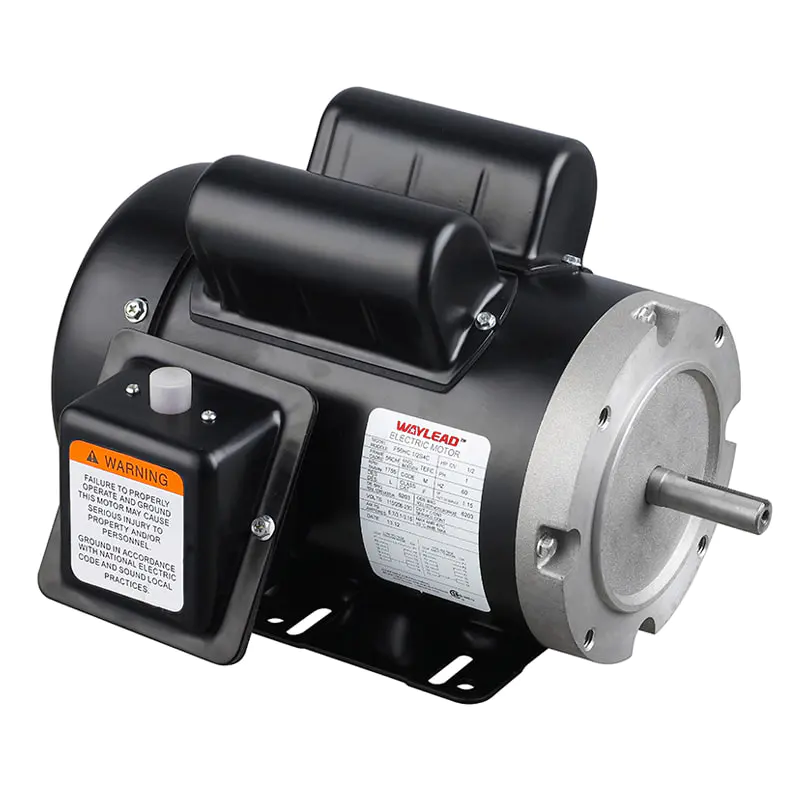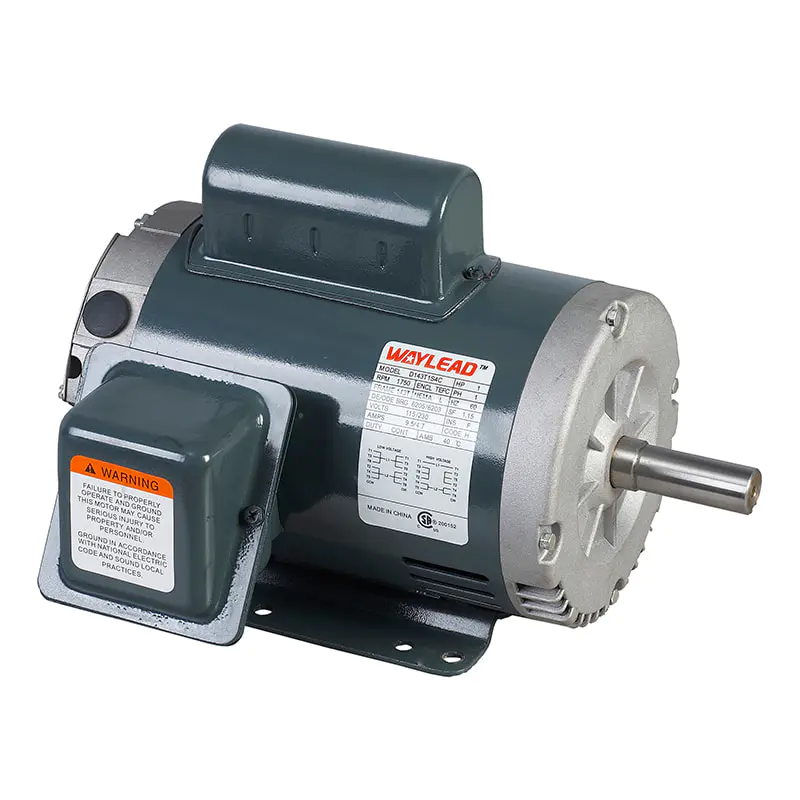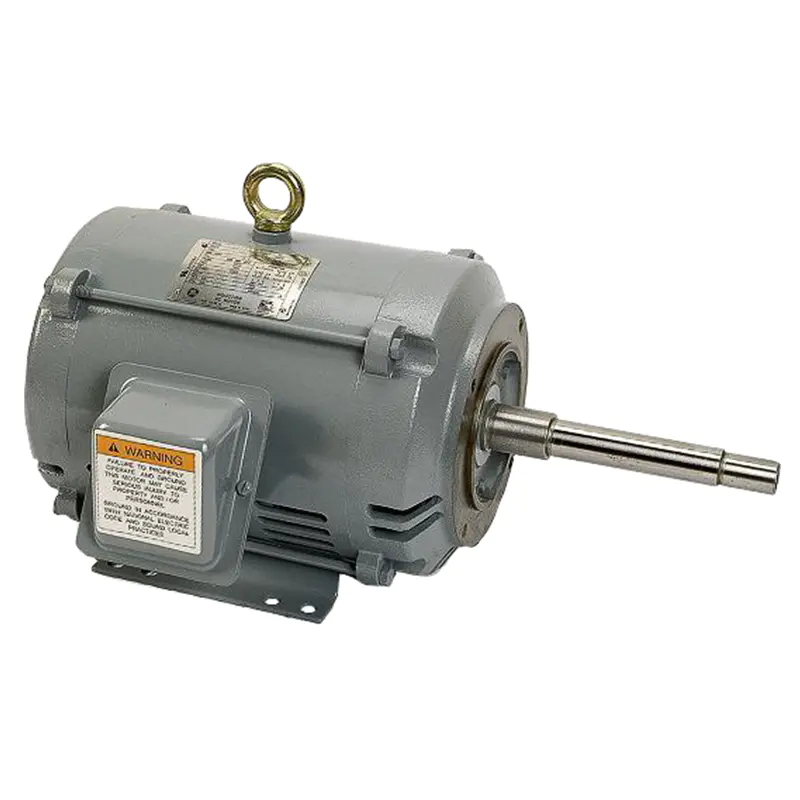
An a.c. motor — also written AC motor — is an electric motor that runs on alternating current and converts electrical energy into continuous rotary motion. It is the most widely used motor type in the world because it runs directly from the standard power grid, has a simple rugged construction, and needs no controller for fixed-speed jobs such as pumps, fans, blowers, conveyors, and compressors.
"A.C. motor," "AC motor," and "ac motor" all describe the same machine. Choosing the right one comes down to three questions: how the rotation is produced, which family matches your power supply, and how to size the motor to the load. This guide answers those questions directly and explains what goes wrong when they are answered incorrectly.
How an AC Motor Works
An AC motor creates rotation through the interaction between a rotating magnetic field in the stator and the currents it induces in the rotor, so no brushes or commutator are needed.
In a three-phase motor, the three windings carry currents that peak one after another, so the magnetic field physically rotates around the stator at synchronous speed — which is why a three-phase induction motor starts by itself.
A single-phase motor has one main winding whose field only pulsates, so a second starting winding, capacitor, or shaded pole provides the phase shift needed to start the rotor; the main winding then keeps it running.
In an induction motor the rotor is a squirrel cage of bars short-circuited by end rings. The rotating field induces currents in the bars and drags the rotor along, but the rotor never quite catches the field — the difference is "slip," normally 2–8 percent at rated load. A 4-pole 60 Hz motor, for instance, has a synchronous speed of 1,800 rpm yet runs at roughly 1,725–1,750 rpm fully loaded.
Synchronous motors instead use magnets or an excitation winding on the rotor, locking it onto the rotating field so it turns at exactly synchronous speed — the right choice for constant-speed or power-factor-correction duty.
The Two Main AC Motor Families: Induction and Synchronous
Induction motors account for the vast majority of a.c. motors sold because they are inexpensive, robust, and self-contained; synchronous motors are reserved for applications that need exact speed or reactive-power control.
Single-phase induction motors
Single-phase motors are the standard answer when only a single-phase supply is available, which usually means equipment up to about 3 horsepower: household pumps, small compressors, fans, and light machinery. The types differ mainly in how they start:
- Split-phase — moderate starting torque, low cost; for easy-starting loads like grinders and small conveyors.
- Capacitor-start — high starting torque; ideal for compressors, jet pumps, and loads that start under load.
- Permanent split capacitor (PSC) — low starting torque, quiet and reliable; common in fans and blowers.
- Capacitor-start capacitor-run — high starting torque plus better running efficiency; good for demanding intermittent duty.
- Shaded-pole — the simplest and cheapest type; for very small fans and appliance drives.
Pick the wrong starting method and you will see stalling, relay trips, or overheated insulation within days.
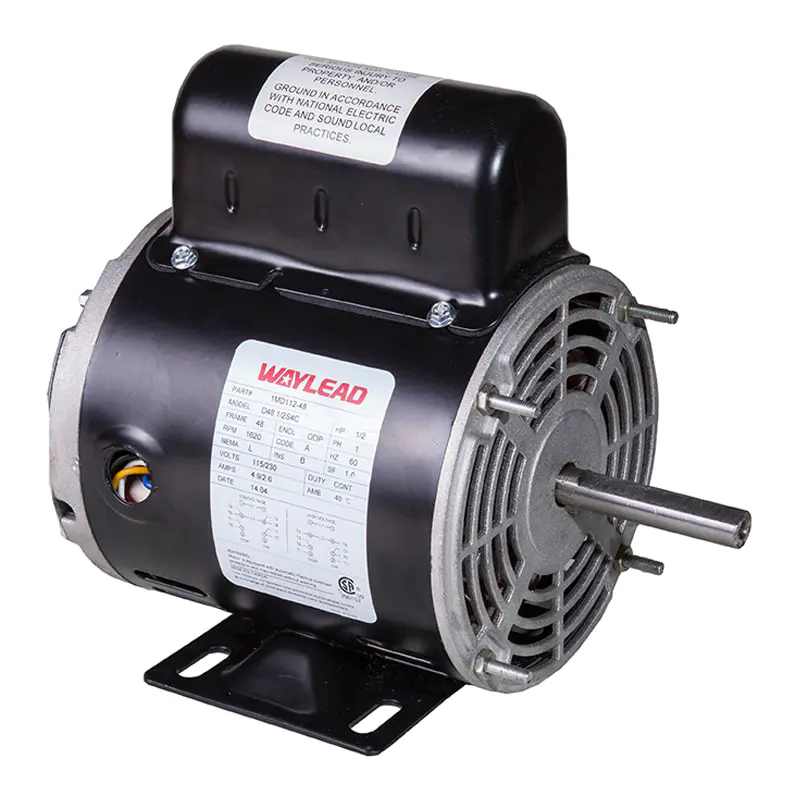 Single-Phase Motor Options in 48 and 56 Frame SizesThis page lists dripproof and totally enclosed single-phase motors, including capacitor-start and capacitor-run types. If you are troubleshooting starting failures, these enclosed options may help prevent stalling and overheating.View Product →
Three-phase induction motors
Three-phase motors are the better choice whenever a three-phase supply is available: they are self-starting, 2–5 points more efficient at the same size, and cheaper per horsepower once the rating passes about 1 HP.
This family runs from fractional-horsepower 48-frame machines to large motors beyond frame 250. At 60 Hz the pole count sets full-load speed: 2 poles near 3,450 rpm, 4 poles near 1,725 rpm, 6 poles near 1,140 rpm, 8 poles near 850 rpm.
Synchronous motors
Synchronous a.c. motors rotate at exactly synchronous speed with zero slip, suiting clocks, precision conveyors, and large drives where speed stability or power-factor correction justifies the cost.
Single-Phase vs. Three-Phase: Which AC Motor Do You Need?
If three-phase power is available and the load exceeds about 1 HP, pick a three-phase motor; if only single-phase service exists, pick a single-phase motor with a starting method matched to the load.
| Characteristic | Single-phase motor | Three-phase motor |
|---|---|---|
| Supply voltage | 115/230 V typical | 208–230/460 V typical |
| Typical power range | Fractional to about 3 HP | Fractional to thousands of HP |
| Starting | Needs capacitor or auxiliary winding | Self-starting |
| Starting torque | Moderate to high by type | High and smooth |
| Efficiency | Lower at equal size | About 2–5 points higher |
| Cost per horsepower | Higher | Lower above 1 HP |
| Typical applications | Pumps, fans, small compressors | Industrial machinery, large pumps, conveyors |
How to Choose the Right AC Motor
Match six values — power, speed, voltage, frame size, enclosure, and efficiency class — to the machine and environment, then verify duty cycle and mounting before ordering.
Work through these points in order:
- Power and service factor — identify the horsepower the machine needs; a service factor of 1.00–1.15 covers occasional overloads without oversizing.
- Speed — choose the pole count matching the equipment's design rpm; 4-pole is the default for most general-purpose drives.
- Voltage — nameplate voltage must match the supply; many single-phase motors are dual-voltage 115/230 V, and common three-phase ratings are 208–230 V and 460 V.
- Frame size — NEMA frames such as 48, 56, 143T, and 182T fix mounting holes, shaft height, and shaft diameter, so the replacement must match the existing base and coupling.
- Enclosure — ODP for clean indoor air; TEFC for dust, dirt, moisture, and outdoor locations; TENV for heat-sensitive or washdown duty.
- Efficiency class — premium efficiency or IE3 for continuous duty; standard efficiency for short-running or intermittent use.
A manufacturer covering both NEMA and IEC ratings makes this comparison easier — start with a motor manufacturer's product range and narrow the list by frame and efficiency.
Efficiency Classifications and Energy Cost
Efficiency matters more than the purchase price: electricity represents roughly 95–97 percent of the lifetime cost of a continuously running motor.
North America uses standard, high, and premium efficiency classes; international markets use IEC IE1, IE2, IE3, and IE4. In the U.S. and Canada, many general-purpose motors from 1 to 250 HP must meet NEMA Premium or IE3 as a legal minimum.
The effect is significant: a 5 HP motor running 6,000 hours per year at $0.12/kWh costs about $2,700 a year to operate, so a 3-percent efficiency gain saves $80–90 annually and often pays back the upgrade within two years.
Sizing also matters: a motor oversized for its load runs poorly at partial load, so a motor loaded to 75–100 percent of nameplate rating is better than extra unused margin.
 High and Premium Efficiency Three-Phase AC MotorsCovering dripproof, totally enclosed, and cast iron premium efficiency motors, this page suits applications requiring reliable fixed-speed operation. Efficiency ratings align with proper load sizing for pumps, fans, and compressors.View Product →
Common AC Motor Applications
AC motors power nearly every fixed-speed rotating machine on the grid — pumps, fans, blowers, compressors, conveyors, agricultural equipment, and commercial food machines are the largest groups.
Water and jet pumps. Single-phase capacitor-start motors for residential pumping; three-phase motors for irrigation and booster systems.
Fans and blowers. Quiet-running PSC or three-phase motors for continuous ventilation.
Air compressors. Capacitor-start or three-phase motors with high starting torque; farm-duty versions add dust and moisture protection.
Conveyors and material handling. Three-phase motors, often with brake motors for rapid stopping and load holding.
Agricultural equipment. Farm-duty motors with totally enclosed frames for grinders, feed systems, and grain handling.
Woodworking and machine tools. TEFC three-phase motors for saws, planers, and spindle drives.
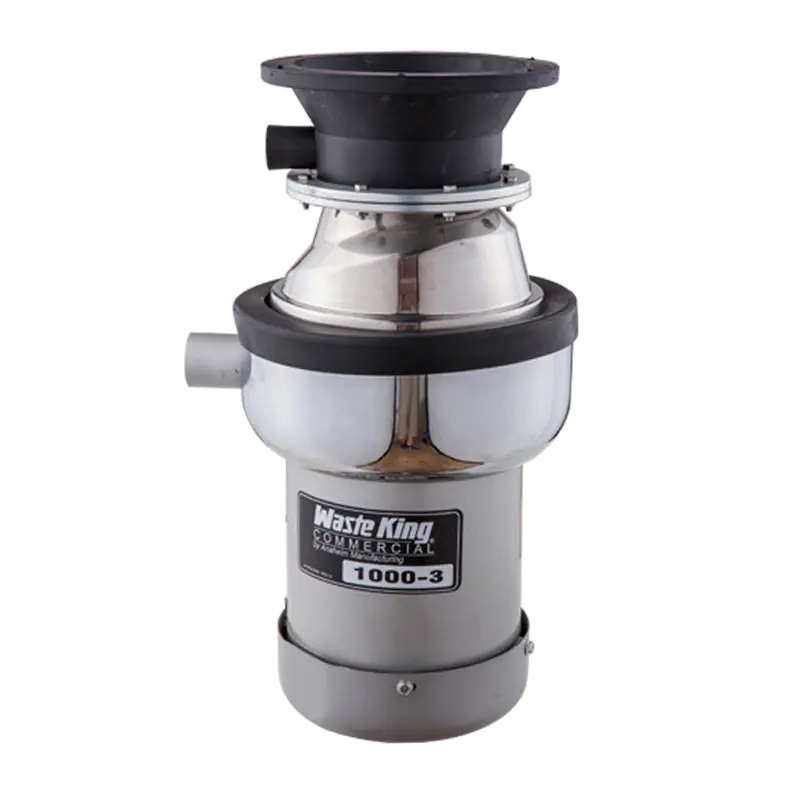
Commercial food disposers. Special motors designed for high-torque shredding duty in professional kitchens.
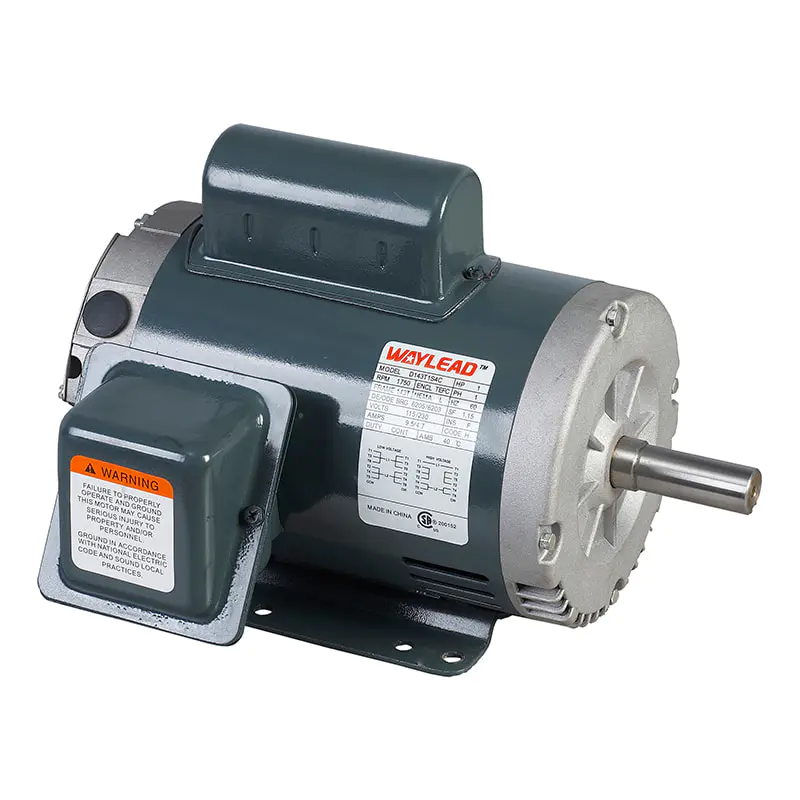 Pump Motors for Jet, Close-Coupled, and Pool ApplicationsFind 56 frame jet pump motors, JM/JP close-coupled pump motors, and pool and spa pump motors. These designs address high-torque and contamination challenges often linked to motor failures in pump systems.View Product →
Maintenance and Common Failure Modes
Most a.c. motor failures trace to bearings, overheating, or contamination, not to normal wear.
- Bearings fail most often; misalignment, over-tightened belts, and the wrong grease produce noise, vibration, and eventual seizure.
- Overheating comes from low voltage, unbalanced phases, blocked ventilation, or an undersized motor — every 10°C above rated winding temperature roughly halves insulation life.
- Contamination from dust, moisture, and oil degrades insulation and accelerates bearing wear, especially in open motors.
- Compare operating current with the nameplate current periodically; sustained over-current is usually the first reliable warning of trouble.
Scheduled checks — cleaning vents, re-torquing connections, listening for bearing noise, and verifying current draw — catch most failures before they cause unplanned downtime.
AC Motor FAQ
What is the difference between an AC motor and a DC motor?
An a.c. motor runs directly on alternating current and, in the induction type, has no brushes or commutator; a DC motor needs a commutator or controller but allows easier speed control. See the detailed comparison of AC and DC motors for the full breakdown.
Why does a single-phase motor need a capacitor?
Because one stator winding produces a pulsating field, not a rotating one. The capacitor shifts the phase in a second winding to create a rotating field at start-up; once up to speed, the motor runs on the main winding alone.
What does "slip" mean in an induction motor?
Slip is the difference between the synchronous speed of the rotating magnetic field and the actual rotor speed, in rpm or percent. Full-load slip is typically 2–8 percent; more slip means more torque but lower efficiency.
What is the difference between ODP and TEFC enclosures?
ODP (open dripproof) motors pull ambient air through the windings, so they need clean, dry surroundings; TEFC (totally enclosed fan-cooled) motors are fully enclosed with an external fan for dusty, humid, or outdoor service. Choose TEFC unless the environment is clean.
How do I know which NEMA frame size I need?
The frame number defines the mounting hole pattern, shaft diameter, and shaft height. Measure the old motor's mounting dimensions and shaft, then match the frame exactly; an adapter base can bridge small differences.