A 2 hp jet pump motor in a well house usually outlasts a 2 hp motor bolted to a grain auger in the same farmyard. Same frame size, same horsepower rating, very different service life — and the difference is rarely the motor itself. It is the installation: the enclosure, the mount, the alignment, the voltage, and the overload protection.
So here is the short answer. For agricultural duty, match the enclosure to the environment, size the motor to the real running load rather than to a guess, wire it for the supply it was wound for, protect it with a correctly sized overload, and align the driven equipment before the first start. Get those five things right and the most common farm motor failures never happen. Everything below explains why each one matters and what to check on a typical installation.
What Makes Farm Installations Different
Agricultural motor installation is harder than factory installation in four specific ways: dust and moisture never stop, rural power quality varies, nobody watches the machine all day, and the driven load changes with the season. A motor that would run a decade in a clean plant can fail in two seasons in a livestock barn.
- Dust and chaff pack into cooling fins and block airflow, so an open motor cooks itself quietly.
- Wash-down water, condensation, and livestock gas attack insulation and bearings.
- Long rural feeders sag on start-up, which raises current and heating on every run.
- Duty cycles swing hard: an irrigation pump runs twenty hours a day in July and sits idle in January, which is exactly when moisture damage begins.
Treat each of those as a design input rather than an inconvenience. That is the whole difference between an installation that lasts and one that keeps a spare motor on the shelf.
Choose the Enclosure Before the Horsepower
Enclosure type is a location decision, so settle it before you compare horsepower, price, or supplier. Put plainly: if the motor will see dust or dripping water, an open drip-proof machine is the wrong choice no matter how carefully it is installed.
| Enclosure | How it cools | Typical farm location | Installation note |
|---|---|---|---|
| ODP | Air passes directly over the windings | Clean, dry indoor pump rooms | Never in a dusty barn; requires free airflow |
| TEFC | External fan over a sealed frame | Augers, mixers, wash-down bays, outdoor mounts | Keep the fan cover clear and leave room for heat to escape |
| TEAO | Depends on the airstream from the driven fan | Livestock and poultry ventilation fans | Do not run uncoupled for long; cooling depends on airflow |
| TENV | No fan; heat leaves through the frame | Dusty, intermittent positions | Keep duty cycles short and mount on a heat-sinking surface |
Notice the pattern: the harsher the location, the more the motor depends on the installation to stay cool. A TEFC motor with two inches of feed dust on its fins behaves much like a TENV motor with no airflow at all.
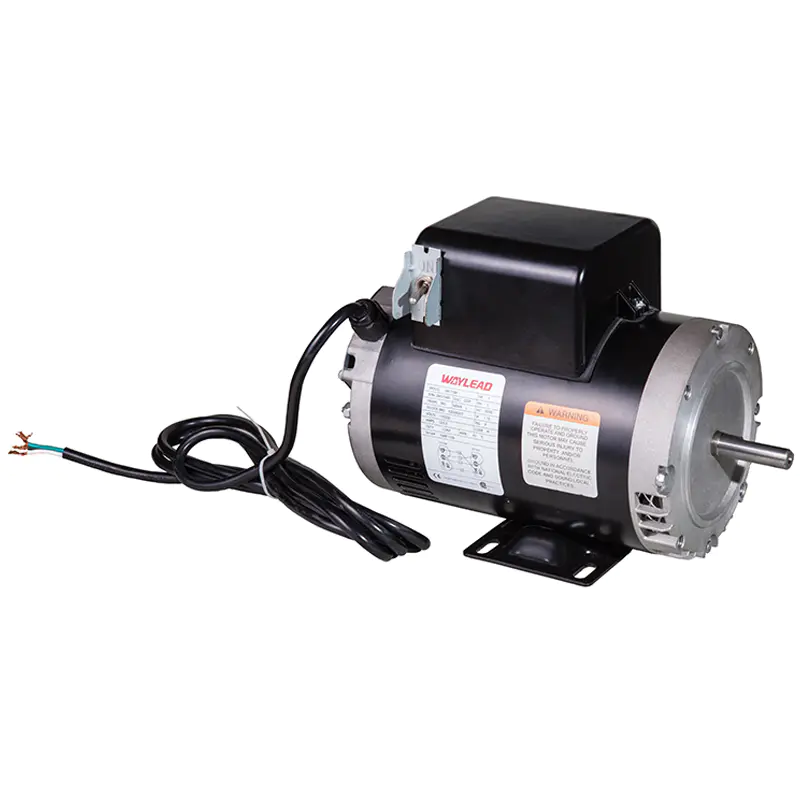
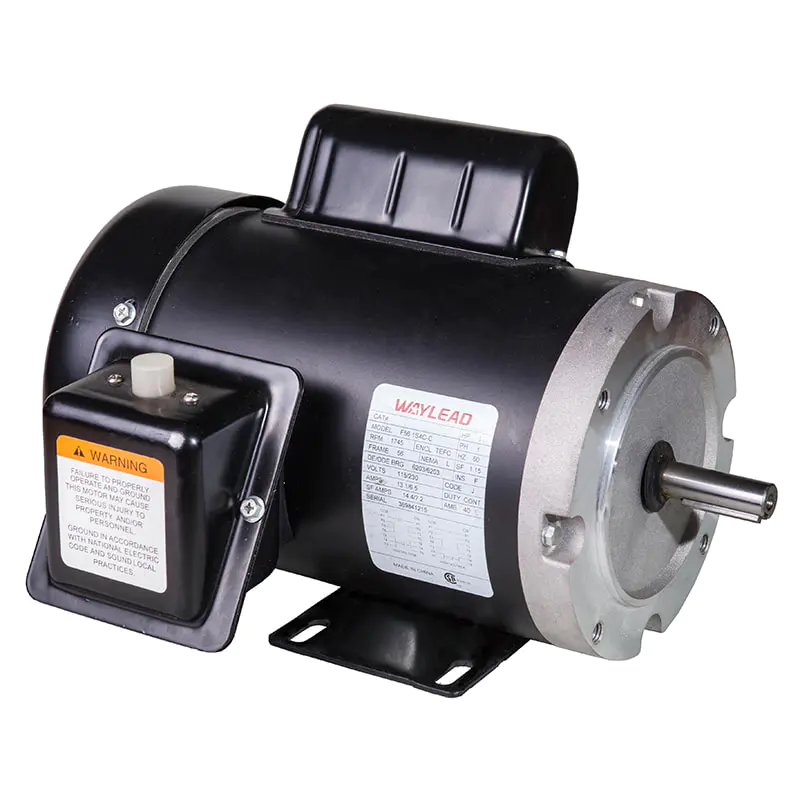
For general farm duty work — augers, silo unloaders, small compressors, and barn equipment — a NEMA 56 frame farm duty motor with capacitor start, a rigid base or C-face mount, and a 1.15 service factor covers most needs between roughly 1/3 and 2 hp.
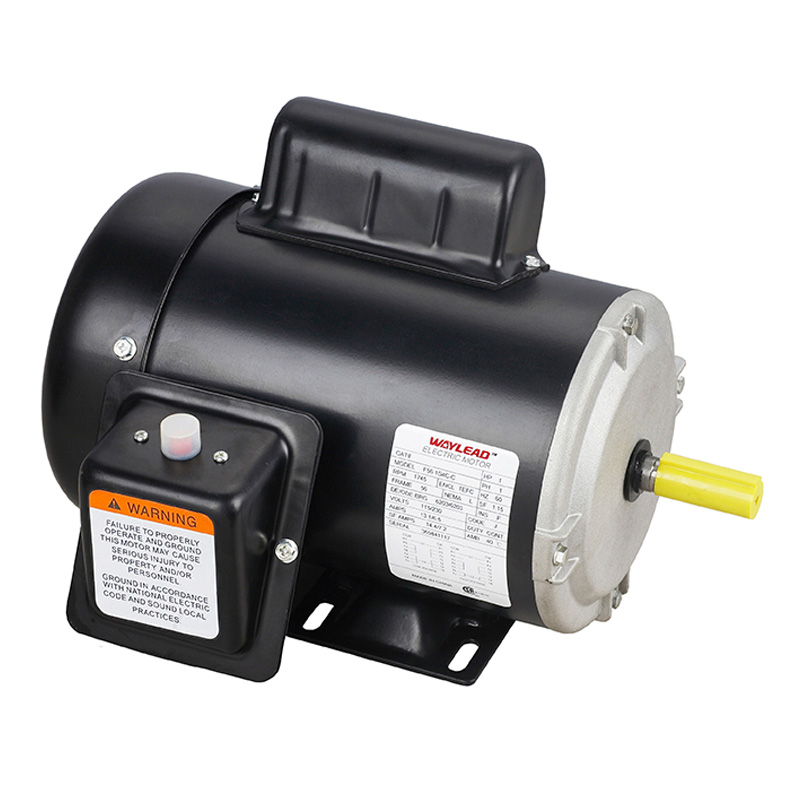 Farm Duty Electric Motor Series for Agricultural EquipmentA farm-duty motor series from 1/3 to 10 HP in NEMA 56–215T frames, useful when matching power to barn and agricultural machinery.View Product →
Single-Phase or Three-Phase: Match the Supply, Not the Catalog
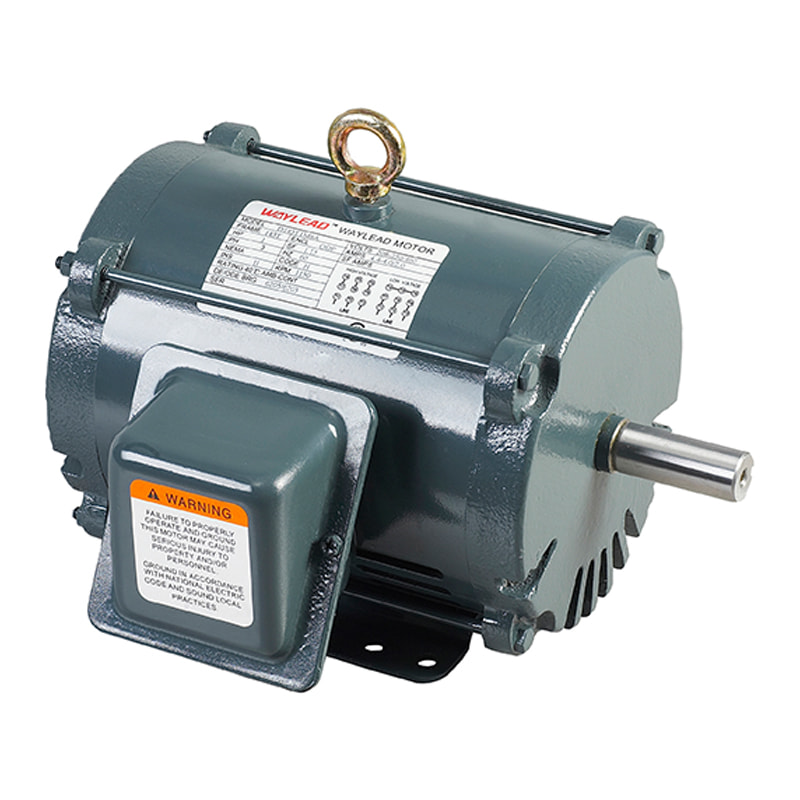
If three-phase power already reaches the barn, use it. A three-phase motor has no start capacitor or centrifugal switch to fail, draws less current per horsepower, and delivers far higher starting torque from the same frame size.
| Point of comparison | Single-phase 230 V | Three-phase 230/460 V |
|---|---|---|
| Starting torque | Moderate; depends on capacitor sizing | High and consistent |
| Parts that wear | Start capacitor, run capacitor, centrifugal switch | Bearings and contacts |
| Running current per hp | Higher | Lower |
| Typical farm use | Well pumps, small compressors, fans, door operators | Irrigation pumps, grain handling, large fans |
| Installation caution | Voltage sag on start weakens capacitor-start performance | Confirm rotation before coupling; swap any two leads to reverse |
On single-phase installations, check voltage at the motor terminals with the load running, not just at the panel. A feeder that reads 235 V at rest may drop below 210 V on start, and that drop is what kills start capacitors and windings.
Irrigation, Wells, and Pump Installations
In pump installations the winding is rarely the first thing to fail — the coupling, the suction line, and the rotation are. Before the motor is bolted down, turn the pump by hand, verify rotation with the motor uncoupled, and make sure the suction line is airtight. A pump that loses prime runs dry, and a dry-running pump destroys a motor in minutes.
- Align motor and pump shafts with a straightedge and feeler gauge; keep coupling misalignment to a few thousandths of an inch at the rim.
- Check the foot valve and suction lift; sand and debris are common causes of repeated starting.
- Fit dry-run protection on unattended well and booster pumps.
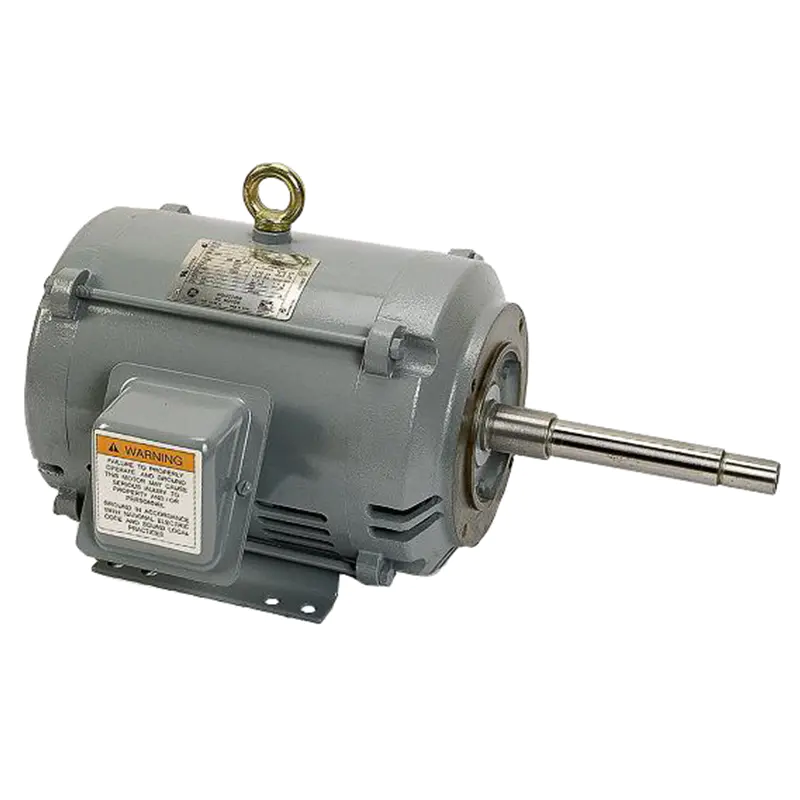
- Use close-coupled JM or JP designs where shaft alignment cannot be maintained season after season.
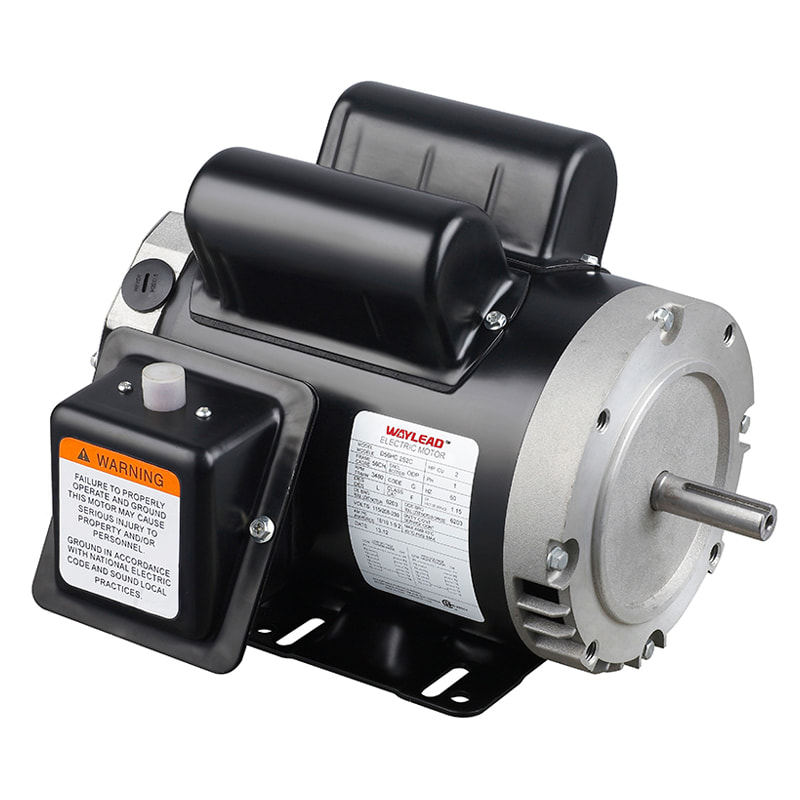 56 Frame Dripproof Single-Phase Jet Pump MotorA 56J jet pump motor for single-phase water systems and irrigation, worth considering when checking priming, installation, and pump energy use.View Product →
Irrigation also has an energy dimension that is easy to overlook: the same pump running at the wrong point on its curve can waste more electricity than the motor upgrade would have saved. That trade-off between water demand and power consumption is covered in this note on how pump motors balance water demand and energy consumption in agricultural irrigation.
Ventilation Fans and Air-Movement Installations
A ventilation fan motor is installed as part of an airflow system, not as a standalone machine. With a TEAO design, the motor is cooled by the airstream the fan pulls across its frame, so running it uncoupled or with a slipping belt removes its cooling and shortens its life.
- Set belt tension so there is about half an inch of deflection at mid-span, then re-check after the first week of running.
- Align sheaves with a straightedge across both faces; misalignment loads bearings and throws belts.
- Balance or replace damaged blades before fitting the motor, since an out-of-balance fan transfers vibration straight into the bearings.
- Refit guards and confirm the motor is not restricting the fan opening.
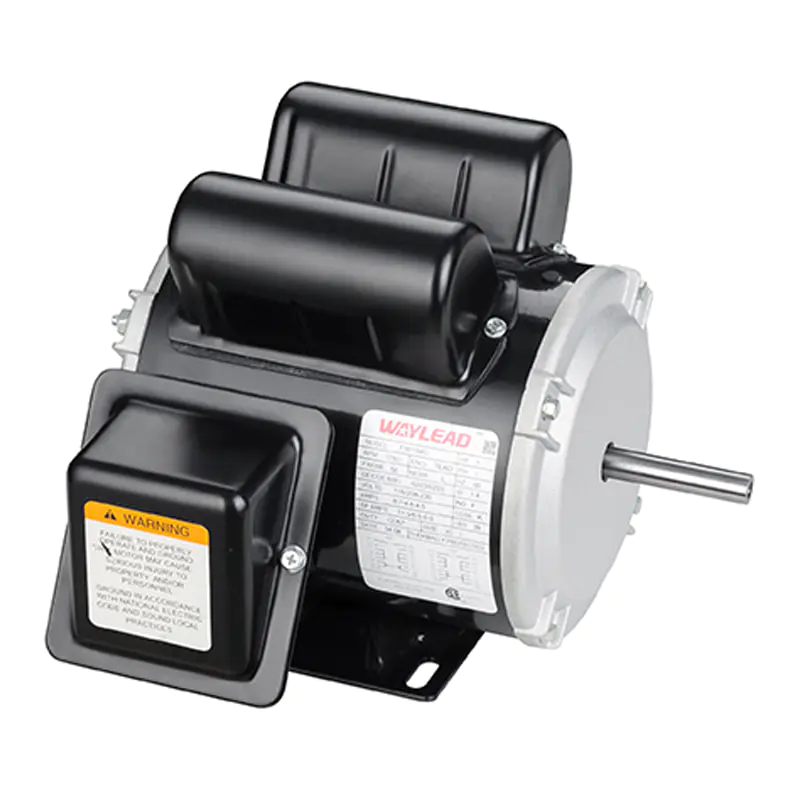 TEAO 48/56 Frame Fan Duty MotorA TEAO fan-duty motor in NEMA 48/56 frames for airflow systems, relevant when correct coupling, supply voltage, and overload protection affect reliability.View Product →
Wiring, Protection, and Start-Up Checks
Most premature failures trace back to the supply and the protective device, not to the windings. A motor wound for 230 V running on a sagging 208 V feeder draws more current for the same work, and a wrong heater size in the starter removes the protection altogether.
- Read the nameplate first: voltage, phase, hertz, full-load amps, service factor, ambient rating, and mounting type.
- Set the overload to nameplate full-load current, using the correct heater or dial range for the starter.
- Ground the frame, bond the conduit, and fit a drip loop at every outdoor connection.
- Check rotation with the motor uncoupled, then couple and re-check before the first loaded run.
- Record baseline readings: no-load current, loaded current, frame temperature, and vibration.
- Re-check belt tension, alignment, and terminal tightness after the first week of operation.
Frequently Asked Questions
Can a general-purpose motor be installed outdoors on a farm?
Only if it is totally enclosed fan cooled, mounted under a cover, fitted with a drip loop in the conduit, and positioned so water cannot collect around the shaft. An open drip-proof motor mounted outdoors will collect rain, dust, and condensation and will fail early.
How should the overload be set?
Set the heater or dial to the full-load current printed on the nameplate. A 1.15 service factor permits short-term overload; it is not a permanently raised trip point.
Does a single-phase farm motor need a magnetic starter?
Small capacitor-start motors often have integral thermal protection, but anything above roughly 1 hp, and any motor that starts under load, is better served by a magnetic starter with correctly sized heaters and a proper disconnect.
How long should a correctly installed farm motor last?
A properly enclosed, aligned, and protected motor on light duty can run ten years or more. Undervoltage, misalignment, blocked cooling, or an oversized overload often cut that to two or three seasons.
Getting the Installation Right the First Time
None of this requires an engineering department. It requires deciding enclosure, phase, and frame before the order is placed, then spending one extra hour on alignment, rotation, and overload settings at commissioning. That hour is what separates a motor that runs for a decade from one that is replaced every other season.
Suppliers who build for this market make the job easier. WAYLEAD, the brand of Cixi Waylead Electric Motor Manufacturing, produces NEMA 48 through 250 frame motors from 1/10 to 20 hp in 2, 4, 6, and 8 pole versions, spanning single-phase, three-phase, farm duty, pump, TEAO fan, brake, and premium efficiency ranges, plus IEC IE2 and IE3 designs. The line is CSA CUS certified with UL listing on selected models, the three-phase high and premium efficiency motors hold US and Canadian energy department certification, and production follows ISO 9001 with 6S shop-floor management — useful paperwork when a customer asks for certification before an installation is signed off.
Install it once, measure it on day one, and let the motor do the rest.