Two motors with the same horsepower on the nameplate can behave completely differently on the same production floor, and the difference is usually the enclosure. The short answer: open drip-proof (ODP) belongs in clean, dry indoor locations; totally enclosed fan-cooled (TEFC) is the default for almost everything else; totally enclosed non-ventilated (TENV) and totally enclosed air-over (TEAO) designs work only where mounting and airflow genuinely support them; and explosion-proof enclosures belong to classified areas alone.
An enclosure type is a compact way of describing three things at once: how well the housing keeps out dust, water and fingers; how heat leaves the windings; and, in NEMA MG 1, the frame and mounting dimensions that go with it. Under IEC 60034 the same information is split into an IP code for ingress protection (IEC 60529) and an IC code for cooling method, which is why a European datasheet and a North American one can look like they describe two different motors when they describe one.
That split matters at the selection stage, because the enclosure is what decides where a motor may be installed, how long it lasts and how much maintenance it consumes.
What an Enclosure Type Actually Tells You
An enclosure type answers three purchasing questions and nothing more: where the motor may be installed, how it stays cool, and what upkeep it will demand.
Ingress protection
The first job is keeping solids and liquids away from live parts and windings. The IEC IP code uses two digits, the first for solids and the second for liquids, so IP54 and IP55 differ only in whether the motor tolerates splashes or directed water jets. NEMA folds the same idea into the enclosure designation itself, which is why fractional horsepower nameplates in North America rarely show an IP number at all.
Cooling path
Heat has to leave the stator somehow. An ODP motor exchanges air directly with the room, so the winding runs relatively cool, but it breathes whatever is in the air around the machine. A TEFC motor never exchanges internal air: a shaft-mounted fan blows air across a ribbed frame while the internal air circulates inside a sealed shell. TENV designs have no fan and radiate heat from the frame surface, and TEAO motors borrow cooling air from the driven fan instead of making their own.
What it does not tell you
Enclosure language says nothing about efficiency class, insulation system, bearings, service factor or insulation class. A premium efficiency TEFC and an older standard-efficiency TEFC can carry identical enclosure wording while differing by several points of efficiency and several years of service life.
The Main NEMA Enclosure Types Side by Side
For most industrial and agricultural buyers, five enclosure families cover the realistic options, and each one trades protection against heat removal in a different way.
| Enclosure | Cooling path | Typical protection | Where it fits | Watch-outs |
|---|---|---|---|---|
| Open drip-proof (ODP) | Room air passes over the windings; drip shields cover the openings | Roughly IP22–IP23, NEMA 1 style | Clean, dry, heated indoor space: machine tools, garage doors, workshops | Dust, moisture and corrosive fumes shorten winding life; windings need periodic cleaning |
| Totally enclosed fan-cooled (TEFC) | External fan drives air over a ribbed frame; internal air is sealed | IP54 or IP55, IC411 | Most industrial, agricultural and sheltered outdoor duty | The fan adds drag, noise and a place for debris to collect; washdown versions need correct seals and drain plugs |
| Totally enclosed non-ventilated (TENV) | Frame surface radiates heat by convection only | IP54–IP55, IC410 | Intermittent duty, washdown stations, food handling, low-speed drives | Lower continuous output for the same frame; needs unobstructed air around the housing |
| Totally enclosed air-over (TEAO) | Cooling depends on airflow from the driven fan or blower | IP54–IP55, IC418 | Fan and blower duty where the impeller sits on the motor shaft | Cannot be run or tested outside the application; overheats quickly when a drive slows the fan |
| Explosion-proof (NEMA 7/9, IEC Ex d) | Flame-path construction with design-specific cooling | Listed hazardous-location enclosures | Class I and Class II areas: grain handling, solvents, combustible dust | Not a general upgrade; heavier, costlier, and valid only when the whole installation is listed |
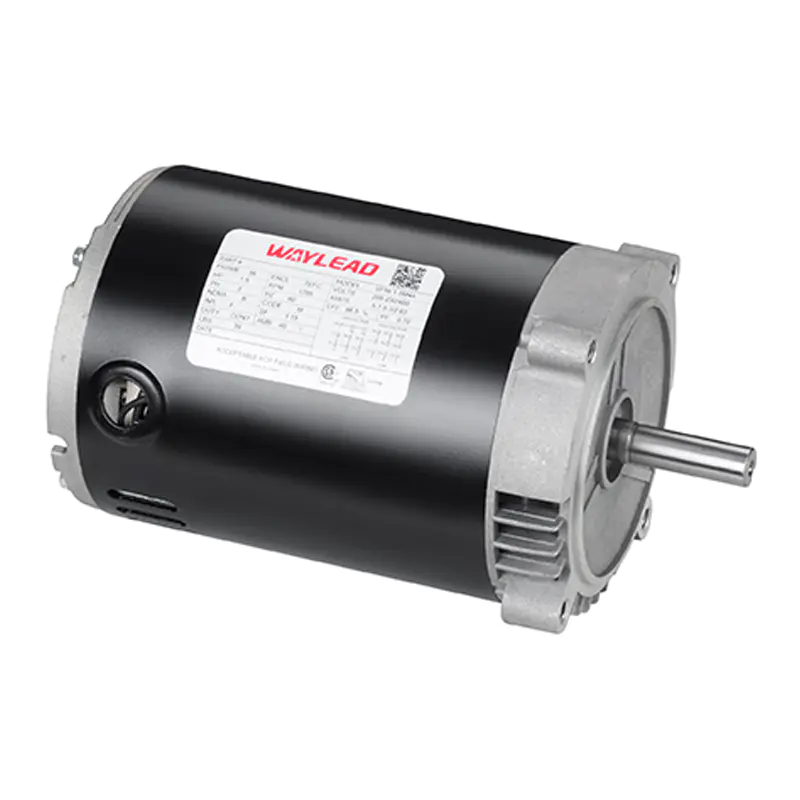
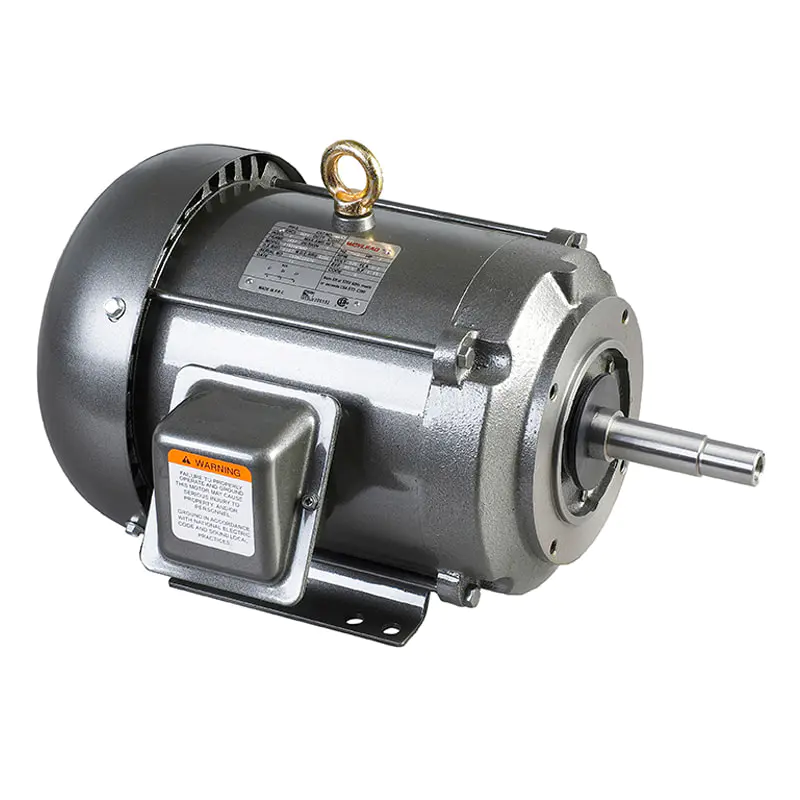
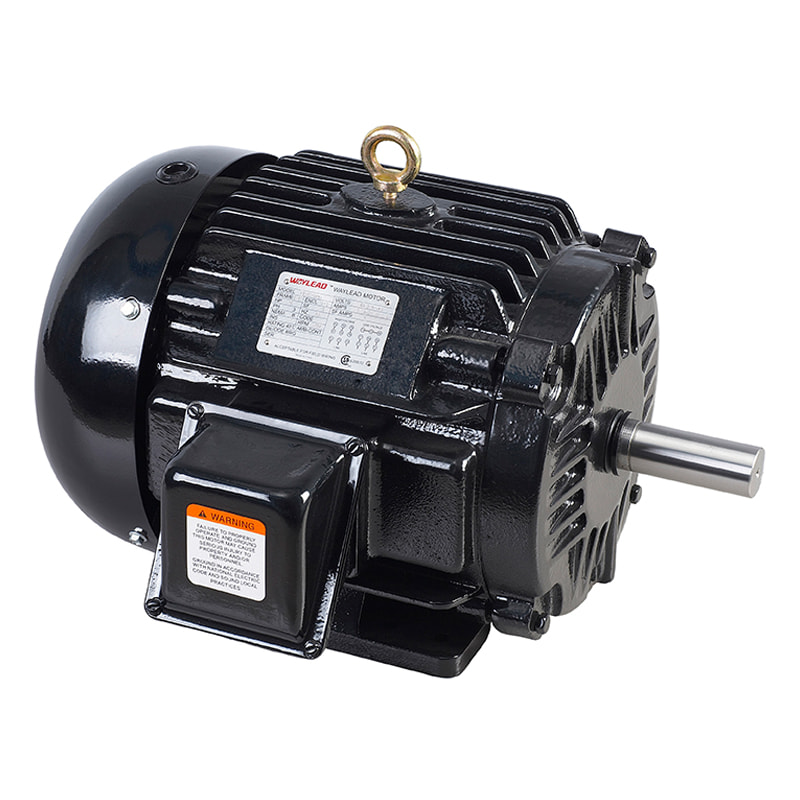
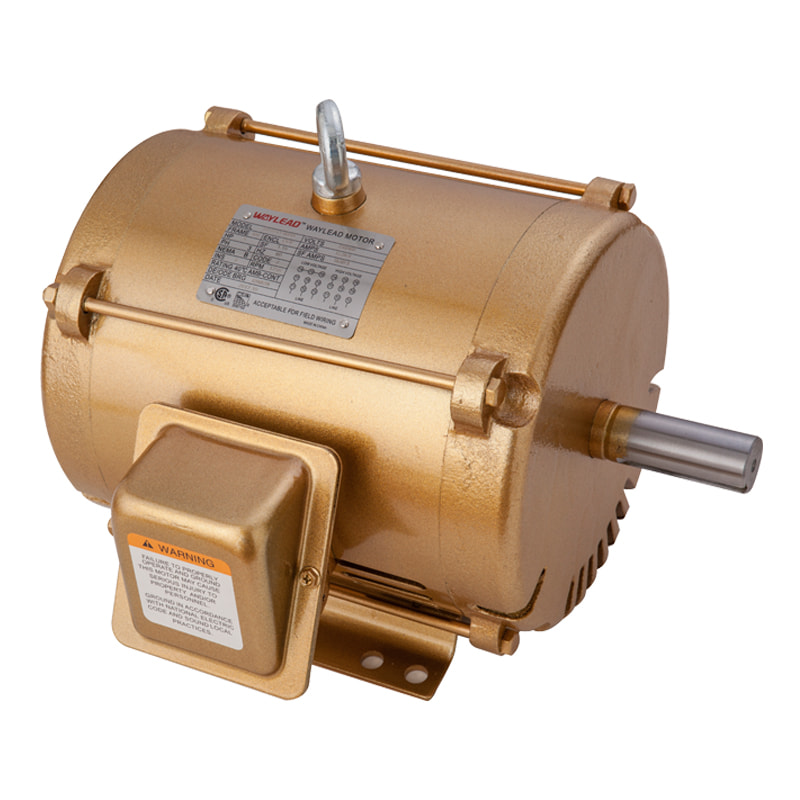 TEFC Premium Efficiency Three-Phase Motor, NEMA 56–215TReview this TEFC motor series when comparing enclosure trade-offs; it covers NEMA 56–215T frames, 1–10 HP, and 208–230/460 V or 575 V.View Product →
TEFC accounts for the largest share of industrial orders, and most North American suppliers build their catalog around it. Waylead, for instance, covers NEMA and IEC motor ranges from 48 to 250 frames in ODP, TEFC, TENV, TEAO and brake-motor versions, so a buyer can keep one frame footprint while changing the enclosure to suit a different room.
IEC IP Codes and How They Line Up With NEMA Types
IP ratings describe protection only, so IP55 does not automatically mean TEFC — but in practice most TEFC motors are built to IP54 or IP55, and that overlap is what makes the two systems easy to translate at the purchasing desk.
| IP code | Solids | Water | NEMA-style equivalent | Notes for buyers |
|---|---|---|---|---|
| IP23 | Fingers and objects over 12.5 mm | Rain at up to 60 degrees from vertical | Open drip-proof | Typical of ODP motors and older ventilated designs |
| IP44 | Objects over 1 mm | Splash from all directions | Totally enclosed | Common on small single-phase motors |
| IP54 | Dust protected | Splash from all directions | TEFC | Dust can still enter in small quantities; suited to most machine shops |
| IP55 | Dust protected | Directed water jets | TEFC washdown, jet pump motors | The usual dust-and-hose level for food and farm duty |
| IP56 | Dust protected | Strong jets, heavy seas | Heavy-duty washdown | Only as good as the shaft seals and cable entry |
| IP65 | Dust tight | Directed water jets | Watertight designs | Often specified for outdoor pump and spa duty |
Two consequences follow. Upgrading from IP54 to IP55 changes neither cooling, dimensions nor efficiency, so it is a cheap specification change rather than a redesign. And because IEC separates protection from cooling, an IP55 motor may still be IC411 fan-cooled or IC410 non-ventilated, so check the IC code before assuming the two systems match line for line.
Matching Enclosure Type to Real Operating Environments
Once the application is clear, the enclosure usually chooses itself. Match the design to the three conditions that actually kill motors: water striking the housing, dust collecting on windings, and a fan that stops moving air.
Washdown, food and beverage areas
Hose-down areas are the classic case where the choice is made for you. A TEFC motor works if it is built to IP55 with sealed bearings, proper shaft seals and drain holes, and if nobody sprays straight into the fan cowl. At lower horsepower, TENV is often the better answer, because removing the fan removes the part that traps water and food debris.
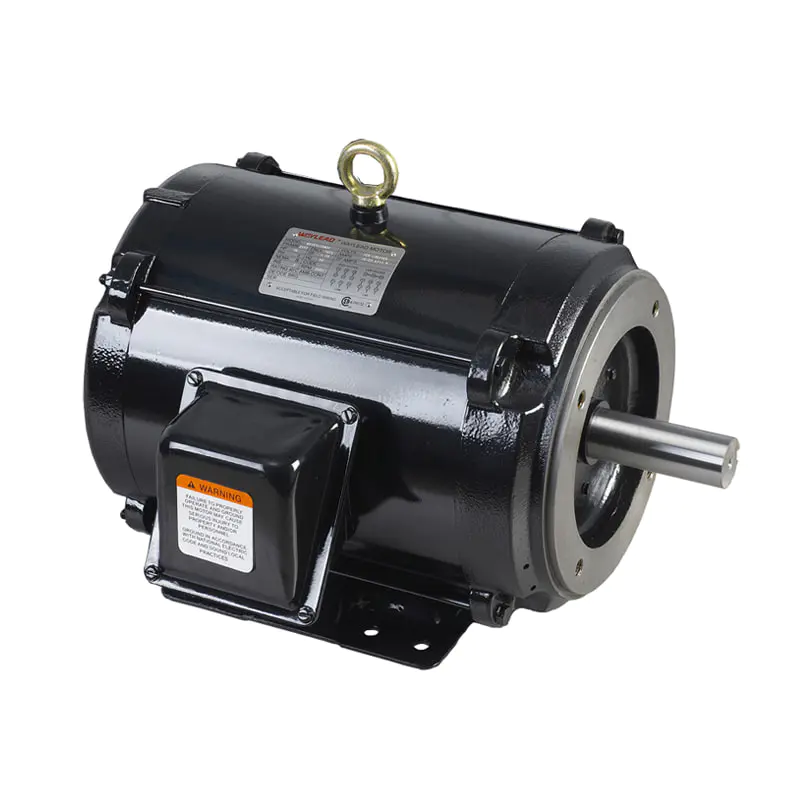 TENV Motor Series, NEMA 56–215T, 1/3–10 HPThis TENV motor range is relevant when hose-down areas or debris buildup make fan-free cooling preferable; it covers NEMA 56–215T frames and 1/3–10 HP.View Product →
Grain, feed and farm buildings
Dusty agricultural buildings punish ODP motors faster than almost any other environment, since airborne dust settles on windings and insulates them. TEFC gives basic protection; TEAO fan motors make sense where the motor is bolted to a fan or blower that supplies its own cooling air. In grain or solvent areas, the enclosure must be listed for the hazard rather than merely sealed.
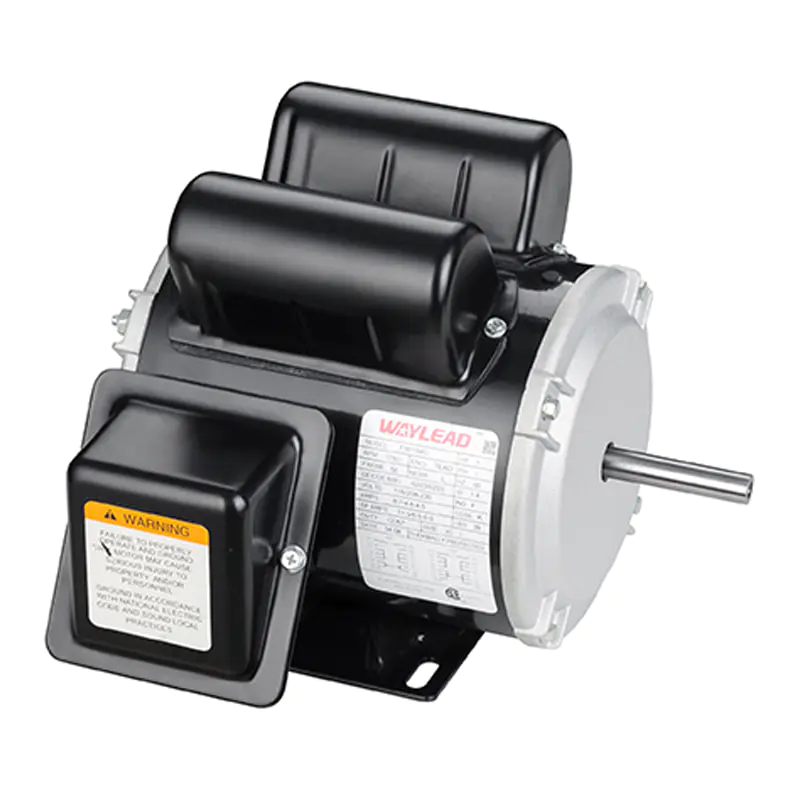 TEAO Fan Motor, NEMA 48 and 56 FramesThis TEAO fan-duty motor suits fan or blower mounting where driven equipment supplies cooling air; it covers NEMA 48/56 frames and 1/10–1.5 HP.View Product →
Pump rooms, pools and humid basements
Humidity is the quiet failure mode. Even a well-sealed TEFC motor can condense moisture inside when it cycles on and off in a damp room, so drain plugs, space heaters and mounting angle matter as much as the IP number. Pool and spa duty adds chlorine-laden air to the humidity problem, which is why selecting a pump motor for a wet or humid location comes down to sealed windings weighed against serviceability.
See how enclosure and duty cycle interact when you size a pump motor for a humid installation.
Where Enclosure Choice Changes Cost, Life and Compliance
Enclosure decisions surface on three lines of the budget: purchase price, running cost and maintenance.
- Purchase price. ODP is the cheapest option because it has the fewest parts. TEFC adds a fan, cowl, ribbed frame and better seals. Explosion-proof housings can cost several times a standard enclosure at the same rating.
- Running cost. The external fan of a TEFC motor consumes a small amount of power, while an ODP motor of the same rating generally runs cooler. Efficiency standards apply across enclosure types, but they are verified under defined conditions — a TEAO motor, for example, is rated for the airflow its application is designed to deliver.
- Maintenance. ODP windings need periodic cleaning, TEFC fan cowls must stay clear, and TENV frames need free air space. A variable frequency drive adds a fourth factor: below roughly half speed, a shaft-driven fan moves too little air, so the motor may need inverter-duty insulation, a separately powered blower, or a derated rating.
- Compliance. In classified areas the enclosure must carry the correct listing, and in North America the usual evidence is a CSA or UL mark on the nameplate. An unlisted "sealed" motor is not an explosion-proof motor, no matter how robust the casting looks.
Specifying Enclosure Types on a Purchase Order
A short checklist prevents most enclosure disputes before the motor ships.
- State the NEMA enclosure designation, and for IEC supply both the IP and IC codes.
- Give ambient temperature, altitude and duty cycle, since all three affect the continuous rating.
- Describe washdown frequency and any chemicals, then ask for the corresponding seal and drain arrangement.
- Confirm mounting type and whether the motor sits inside an enclosure or cabinet that restricts airflow.
- Ask for drain plugs, breathers, space heaters and bearing details where cycling duty is expected.
- Verify certification marks and, for TEAO or TENV, confirm the airflow the application actually provides.
Frequently Asked Questions
What is the difference between TEFC and TENV?
TEFC uses an external fan to push air over a ribbed frame, while TENV has no fan and relies on convection from the frame surface. TEFC suits continuous duty and larger ratings; TENV suits intermittent duty, washdown areas and lower horsepower.
Is an IP55 motor the same as a TEFC motor?
No. IP55 describes ingress protection only. Most TEFC motors are built to IP54 or IP55, but a motor can carry an IP55 rating with a different cooling method, so always check the IC code or the NEMA enclosure designation as well.
Can I use an ODP motor outdoors?
Only with a shelter, a drip cover and dry, non-condensing conditions. Rain, insects, rodents and airborne dust all reach open windings, so a totally enclosed design is usually the cheaper decision over the life of the equipment.
Does an explosion-proof enclosure improve motor life or efficiency?
Not by itself. Hazardous-location enclosures are heavier and more expensive because of flame-path construction and listing requirements, and they are chosen for safety, not for efficiency or longevity.
Enclosure type is one of the few motor decisions that is almost impossible to correct later. Get the cooling path and the protection level right for the room the motor will actually live in, and the nameplate numbers — efficiency, service factor, bearings — are the only things left worth arguing about.