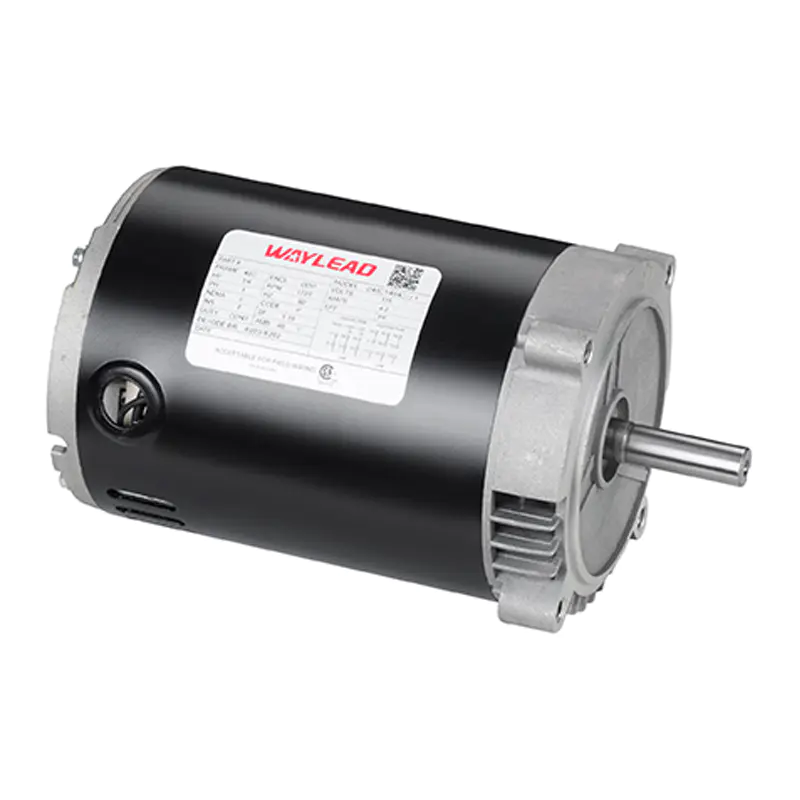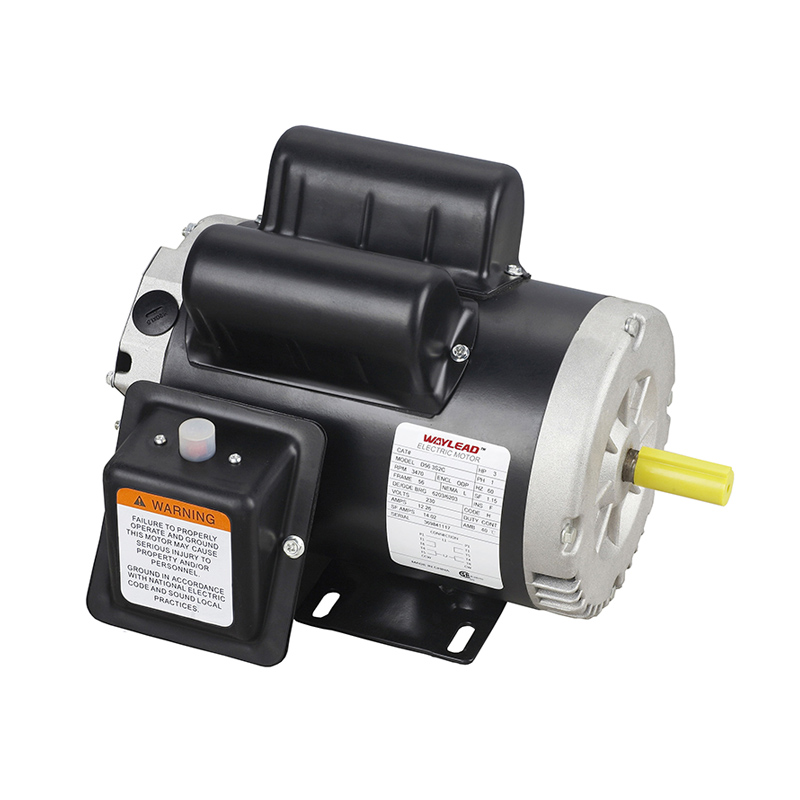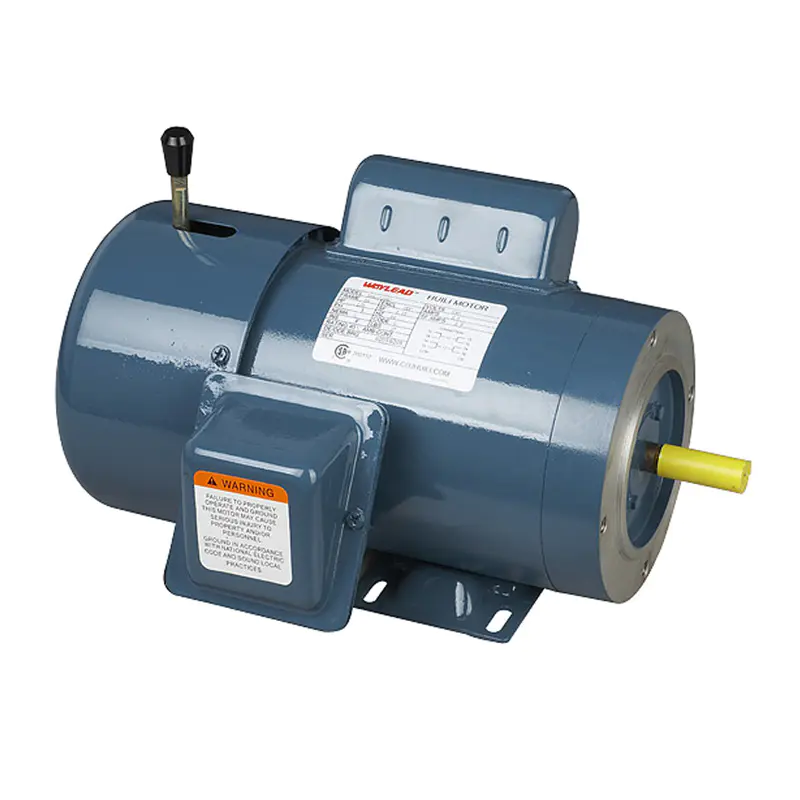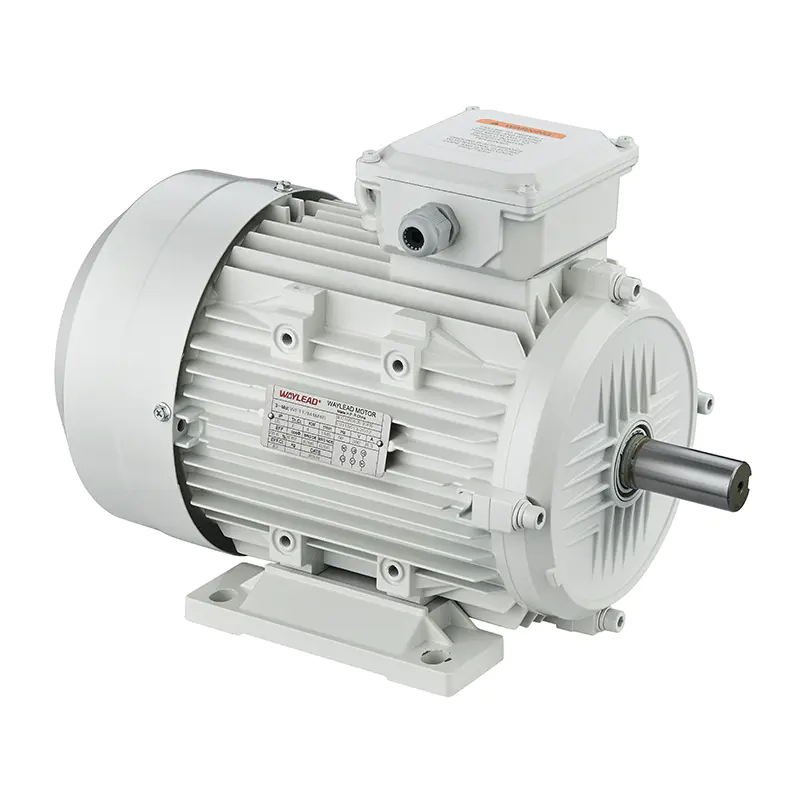
A farm motor is a single-phase electric motor rated for agricultural duty: high breakaway torque to start a loaded auger or compressor, an enclosure that tolerates chaff and damp air, and enough service factor to absorb voltage sag at the end of a long barn circuit. If you are replacing or specifying one, confirm four things before anything else — starting torque, enclosure type, NEMA frame size and full-load speed. Get those right and horsepower usually falls into place; buy on horsepower alone and you will be resetting thermal protectors all winter.
Farm motors sit on equipment that rarely appears on a motor spec sheet as "agriculture":
- Workshop air compressors and pressure washers
- Ventilation and circulation fans in animal housing
- Augers, feed conveyors and grain handling lines
- Irrigation, transfer and stock-water pumps
- Milking, cooling and wash-down equipment
The practical consequence: a motor that starts a fan without effort may stall on a full auger. Farm duty ratings exist precisely because the starting load, not the running load, decides whether a motor survives the season.
What Actually Defines a Farm Duty Motor
Farm duty is a duty rating rather than one fixed mechanical design, so two motors with the same horsepower can behave very differently on the same machine.
In practice, a farm duty motor usually carries most of the following: capacitor start for high locked-rotor torque, a service factor of 1.15 or higher, a 40 °C ambient rating, manual-reset thermal protection, dual voltage windings (115/230 V is common), and a resilient or rigid base in a NEMA 48 or 56 frame. Speeds are typically 3450, 1725, 1140 or 825 RPM, which lets you match a driven load without re-pulleying the machine.
The differences that matter at purchase time are summarised below.
| Specification | Farm duty motor | General purpose motor |
|---|---|---|
| Starting torque | High, usually capacitor start | Moderate, split phase or capacitor start |
| Typical service factor | 1.15 to 1.25 | 1.0 to 1.15 |
| Enclosure options | Drip-proof, TEFC, TEAO, TENV | Mostly drip-proof, some TEFC |
| Overload protection | Manual reset, accessible on the shell | Varies, often automatic |
| Designed for | Dusty, damp, high-cycle agricultural loads | Clean, steady indoor loads |
| Cost position | Higher than general purpose | Lowest per horsepower |
Matching the Motor to the Job
Match the motor to the hardest thing it must start, not to the average running load, because starting is where farm equipment fails.
Air compressors and pressure washers
Compressors are the harshest start on most farms: the motor has to bring the pump up against residual head pressure, often in a cold shed. Capacitor-start motors at 3450 RPM with a totally enclosed enclosure handle this best, and the pressure switch rating should be checked against the motor's locked-rotor current. A general purpose motor installed here will typically trip on thermal overload within a few cycles.
 Totally Enclosed Single-Phase Air-Compressor MotorsFor compressor duty, these TEFC single-phase motors offer 1–10 HP, ≥250% start torque, and service-factor options.View Product →
Augers, conveyors and feed lines
A loaded auger can demand two to three times its running torque at start-up, so breakaway torque and service factor matter more than nameplate efficiency. Look for capacitor start, a service factor of at least 1.15, and a duty cycle that reflects how many starts per hour the line actually makes — frequent short cycles heat a motor faster than long runs.
Ventilation and circulation fans
Fan loads are easy to start but run for very long hours, so continuous-duty rating, bearing quality and enclosure take priority over torque. Fan motors are usually low speed (1075 or 1725 RPM) and mounted directly in the air stream.
Pumps and irrigation
Jet and close-coupled pumps are normally built around 56 frame motors, and the pump curve decides the correct speed. Substituting a 3450 RPM motor for a 1725 RPM unit doubles the pump speed, which shifts flow, head and power draw at once — a costly error. Irrigation duty also means long cable runs and voltage drop, so confirm the supply at the motor terminals before blaming the motor. For background, this article on how irrigation pump motors balance water demand and energy consumption is a useful companion read.
Reading the Nameplate Before You Buy
The nameplate is a checklist, not decoration: every line on it corresponds to a failure mode you can avoid in the buying decision.
| Nameplate item | What to verify | Risk if mismatched |
|---|---|---|
| Horsepower | Actual running amps on the old unit | Oversizing wastes energy; undersizing trips overload |
| Frame size | 48 or 56, shaft diameter and bolt pattern | Will not fit the bracket or pulley |
| Full-load speed | 3450, 1725, 1140 or 825 RPM | Changes fan output, pump head, auger rate |
| Voltage | 115/230 V dual winding, supply at terminals | Low voltage raises current and heat |
| Service factor | 1.15 minimum, 1.25 for hard starts | No margin for overload or voltage sag |
| Ambient and duty | 40 °C, continuous, mounting position | Shortened insulation life, nuisance trips |
| Certification | UL or CSA recognition | Inspection and insurance complications |
Frames 48 and 56 cover the majority of barn equipment, and a well-documented range will list torque, speed and enclosure together so you can compare like for like rather than by price alone.
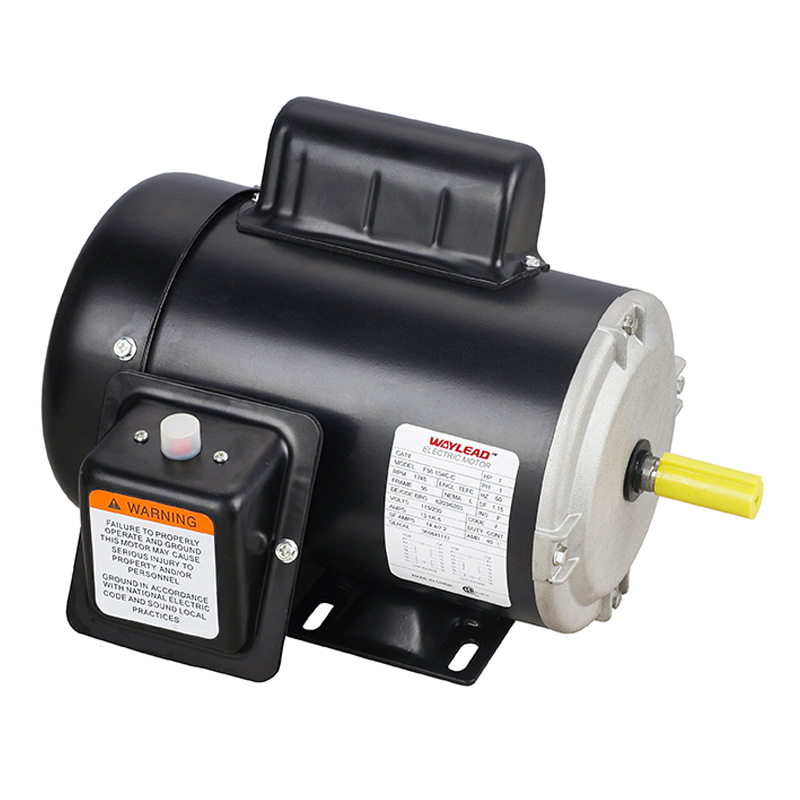 Farm Duty MotorService factor: 1.0, 1.15View Product →
Enclosure Choice: Drip-Proof, TEFC or TEAO
Enclosure decides where a motor can live and how long it lasts; it does not change how much power the motor produces.
- Drip-proof (ODP): ventilated, inexpensive, suited to dry and reasonably clean indoor locations. Not for wash-down or heavy dust.
- Totally enclosed fan cooled (TEFC): a fan cowl pushes air over a sealed shell. The default choice for dusty barns and damp sheds, provided airflow around the shell is not blocked.
- Totally enclosed air over (TEAO): relies on the driven fan's airstream for cooling, so it must sit in the airflow it serves. Standard on fan motors, unsuitable for a standalone bench application.
- Totally enclosed non-ventilated (TENV): no fan at all, limited heat rejection, best for intermittent duty or low speeds.
One practical caution: a TEFC motor packed in chaff overheats exactly like an open motor, because the cooling air never reaches the shell. Blow out the fins at every service interval.
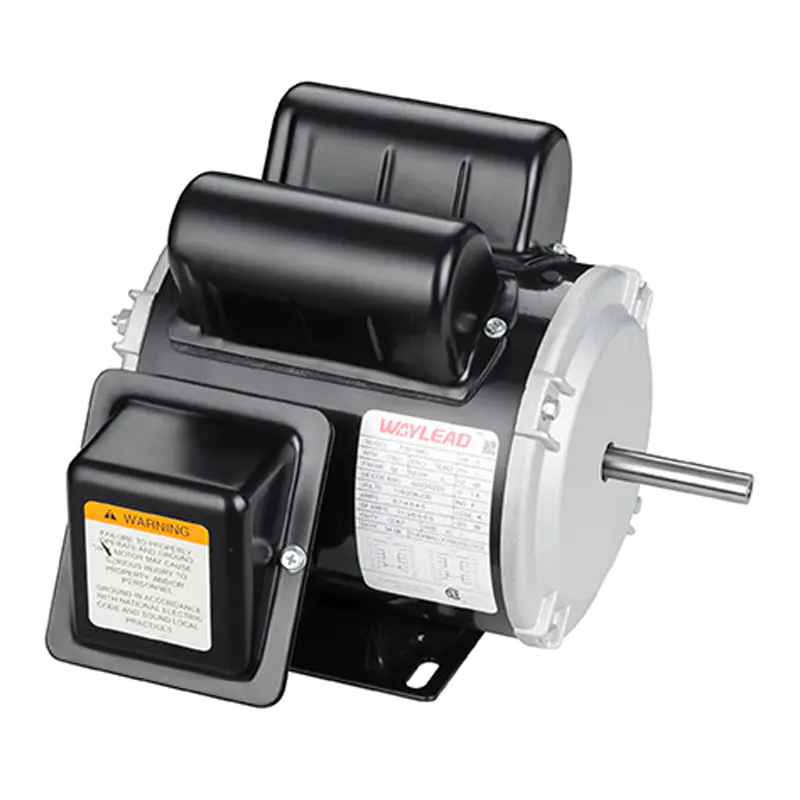 TEAO 48/56 Frame Farm-Duty Fan MotorsFarm-duty TEAO fan motors from 1/10–1.5 HP combine 48/56 frames, IP44/IP55 protection, and thermal-protector options for blower applications.View Product →
Buying Checklist
Work through these points in order and most selection errors disappear before the order is placed.
- Record the old motor's nameplate data and measure the shaft, base and bolt spacing.
- Identify the starting condition — loaded start, empty start, or start against pressure.
- Confirm the supply voltage measured at the motor, not at the panel.
- Note ambient conditions: dust, moisture, wash-down, unventilated attic heat.
- Check starts per hour against the duty rating.
- Confirm UL or CSA recognition for inspection and insurance purposes.
- Ask about spare motors or at least spare capacitors and overloads for critical equipment.
Frequently Asked Questions
Can I replace a 1725 RPM farm motor with a 3450 RPM motor?
Only if the machine is re-pulleyed or re-geared to keep the driven speed the same. Fitting a faster motor directly doubles the output speed of a fan, pump or auger and usually overloads it.
Will a general purpose motor work on an air compressor?
Rarely for long. Compressors need high starting torque and thermal margin; a general purpose motor typically trips its protector during repeated loaded starts.
What service factor should I insist on?
1.15 is the practical minimum for farm equipment, and 1.25 is preferable where voltage fluctuates or the load occasionally runs heavy.
Are farm motors suitable for wet locations?
TEFC and TEAO designs tolerate damp air and splashes but are not submersible. Wash-down areas need planned placement, drainage and regular inspection of seals and leads.
Do farm motors need an external starter?
Fractional horsepower single-phase units generally include integral thermal protection and can run from a switch or pressure control. Larger units and three-phase versions need a contactor or starter sized to the motor.
The short version: choose by starting torque and enclosure first, then by frame and speed, and treat horsepower as the last confirmation rather than the first question. A motor specified this way typically runs for years on one set of bearings; one bought on price and horsepower alone becomes a recurring maintenance item.
You can compare ratings, enclosures and frame options across the full farm duty motor range to match a specific compressor, fan, auger or pump rather than a generic average.