An exproof motor certificate is valid only for the exact combination of model, protection concept, gas or dust group, temperature class and ambient range printed on it. A motor marked "Ex db IIB T4 Gb, -20 °C to +40 °C" tells you nothing about whether it can run on a hydrogen line, sit in a 55 °C plant room, or be fed from a variable-frequency drive. Reading the document as a set of limits rather than a badge is the entire skill.
Three certificate families dominate exported motors: ATEX for the European Union and UKCA for Great Britain, IECEx for most other regulated markets, and UL or CSA listings for the United States and Canada. They overlap technically and do not substitute for one another legally. A skid built in Italy with an IECEx-only motor will not pass a US installation review, and a NEMA-frame motor with a Class I listing will not pass a European one.
What an Exproof Motor Certificate Actually Covers
A certificate covers one design at one set of limits, not a product family and not a brand. Every ATEX, IECEx, UL or CSA document is built from the same short list of parameters, and all of them must line up with your installation before the motor means anything.
- Model and frame range. Certificates name exact frames and often the rotor variant. An approval that stops at frame 250 does not cover the 280 you ordered.
- Protection concept. Ex d / Ex db (flameproof), Ex e / Ex eb (increased safety), Ex ec (Zone 2 only), Ex t / Ex tb (dust), or a combination such as Ex de. The concept dictates installation rules as much as the motor itself.
- Group and subgroup. Group I is mining; Group II is surface industry, split into IIA, IIB and IIC. An IIC motor can generally be used where IIB is required; a IIB certificate never stretches to hydrogen or acetylene.
- Temperature class. T1 to T6 for gas, or a maximum surface temperature such as T130 °C for dust.
- Ambient range. Most certificates default to -20 °C to +40 °C. A foundry at 50 °C needs an explicit certificate entry or a derated rating, not a verbal assurance.
- Specific conditions of use. Marked with an "X" after the certificate number: a mandatory overload relay setting, a specified converter type, a restriction on cable entry.
- Accessories in scope. Terminal box, cable entry threads, fan and cowl, space heater, encoder, and whether a variable-frequency supply is approved.
Most of these limits come from the enclosure and thermal design rather than the winding, which is why the practical gap between an explosionproof motor and an ordinary motor is largely a matter of flame paths, clearances and surface temperature control.
| Element | Example | What it tells you |
|---|---|---|
| Protection concept | Ex db | Flameproof enclosure, "b" level of protection, suited to Zone 1 and 2 |
| Gas subgroup | IIB | Accepts ethylene-type gases; not hydrogen |
| Temperature class | T4 | Surface never exceeds 135 °C in the stated ambient |
| Equipment protection level | Gb | Permitted in Zone 1, or Zone 2 with the matching risk assessment |
| "X" suffix | ...X | Specific conditions of use apply; read the schedule before ordering |
ATEX, IECEx or UL/CSA: Match the Certificate to the Site
The certificate follows the installation site, not the supplier's brochure. Legal status, issuing route and the standard behind the listing differ by region, so the first question is always where the motor will be installed and under which code the inspector works.
| Scheme | Where it is required | Underlying standards | What the buyer checks |
|---|---|---|---|
| ATEX | EU/EEA; UKCA in Great Britain | EN/IEC 60079 series, Directive 2014/34/EU | Notified body number, EU-type examination certificate, CE plus Ex marking |
| IECEx | Voluntary; widely accepted in Australia, the Middle East, Asia and Latin America | IEC 60079 series | Certificate of conformity number and current status in the IECEx register |
| UL listing | United States | UL 674 for Division-rated motors, UL 60079 for Zone-rated | Listing mark, file number, Class/Division or Zone marking |
| CSA certification | Canada | CSA C22.2 No. 145 and related Ex standards | CSA mark with the hazardous-location suffix and file number |
North America still runs Class I Division 1 and 2 alongside the Zone system. The two frameworks are not interchangeable on paper even when the hardware looks identical, so a dual-marked nameplate is worth asking for on projects that may move between regions.
| Class | Max surface temperature | Typical reference gases |
|---|---|---|
| T1 | 450 °C | Methane, propane |
| T2 | 300 °C | Ethylene, acetylene |
| T3 | 200 °C | Gasoline vapour, hydrogen sulfide |
| T4 | 135 °C | Acetaldehyde, diethyl ether |
| T5 / T6 | 100 °C / 85 °C | Rare solvents; carbon disulfide |
How to Verify an Exproof Motor Certificate Before Payment
Verification is a document exercise plus one physical check at goods-in. It takes about twenty minutes and prevents the most expensive failure in hazardous-area projects: a compliant-looking motor that the inspector rejects on installation day.
- Confirm the issuing route. For ATEX, the certificate must come from a notified body and its four-digit number appears beside the CE mark. For IECEx, the certificate should be findable in the IECEx online system under its own number.
- Check status and revision. Certificates are superseded when standards are revised. Ask for the current revision rather than a scan from an old project folder.
- Read the model schedule line by line. Your exact frame, speed and rating must appear; fractional-horsepower NEMA frames are often split across two certificates.
- Compare marking to nameplate, character by character. Concept, group, temperature class, EPL, ambient range, certificate number. A missing "X" or a T3 nameplate against a T4 certificate is a rejection.
- Check accessories and drive supply. Cable entry thread and size, terminal box rating, space heater allowance, converter operation. Then file the certificate number, revision and a nameplate photo with the asset record.
Certificate Problems That Surface After Delivery
Most non-conformities are not forgeries; they are scope gaps nobody read closely at quotation stage.
- VFD operation outside scope. A motor certified for direct-on-line duty is not automatically approved on a converter, because harmonics and low-speed cooling change the thermal picture.
- Ambient mismatch. A 40 °C certificate in a 50 °C compressor house invalidates the temperature class even if the motor runs cool in practice.
- Uncertified add-ons. Glands, breathers, adapters and encoders fitted after delivery can void the enclosure rating; the cable entry is part of the certification.
- Repairs that cancel the paperwork. A rewind by a shop without hazardous-area procedures usually ends the certificate's validity.
- "Ex-proof" on a datasheet. If a supplier will not put the certificate number and marking string in writing, there is no certificate.
When the Certificate Does Not Cover Your Case
Change the installation or the motor selection, never the interpretation of the document. Three routes work in practice: move the motor outside the zone boundary through a sealed wall penetration and coupling; step up a protection level (IIC instead of IIB, T4 instead of T3, a higher ambient entry); or specify purge and pressurization when nothing standard fits.
The first route is the cheapest and the most often overlooked. A totally enclosed cast iron machine placed outside the classified boundary, driving through a sealed shaft penetration, gives you a legal installation with standard paperwork and a far shorter lead time.
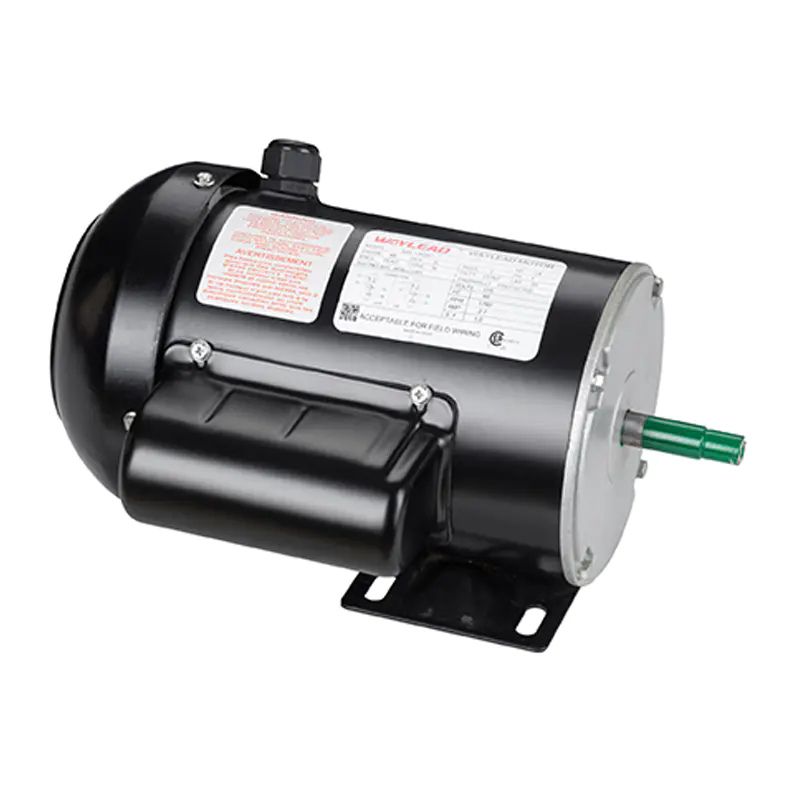
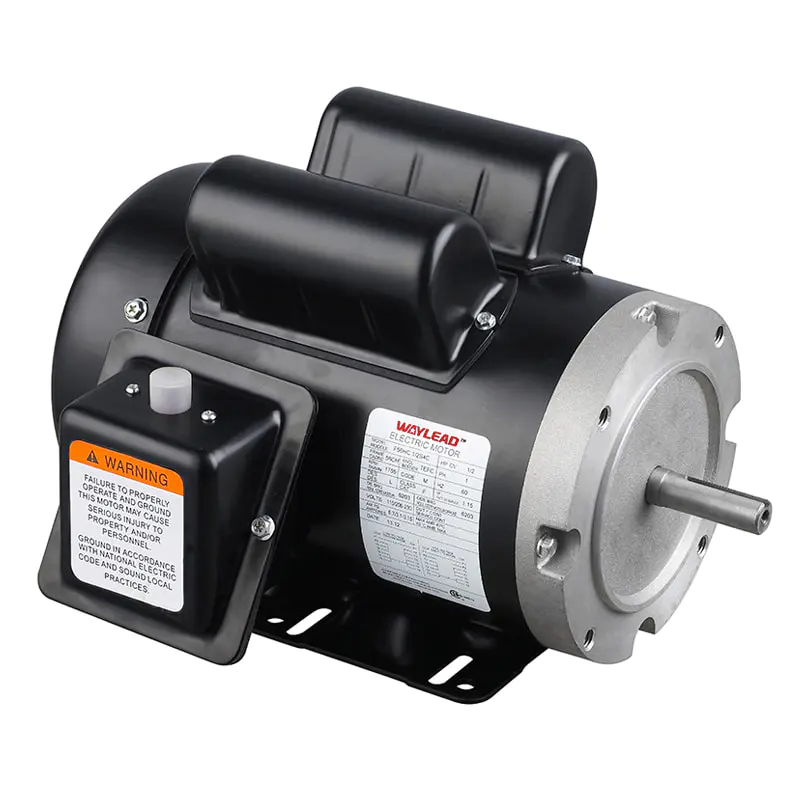
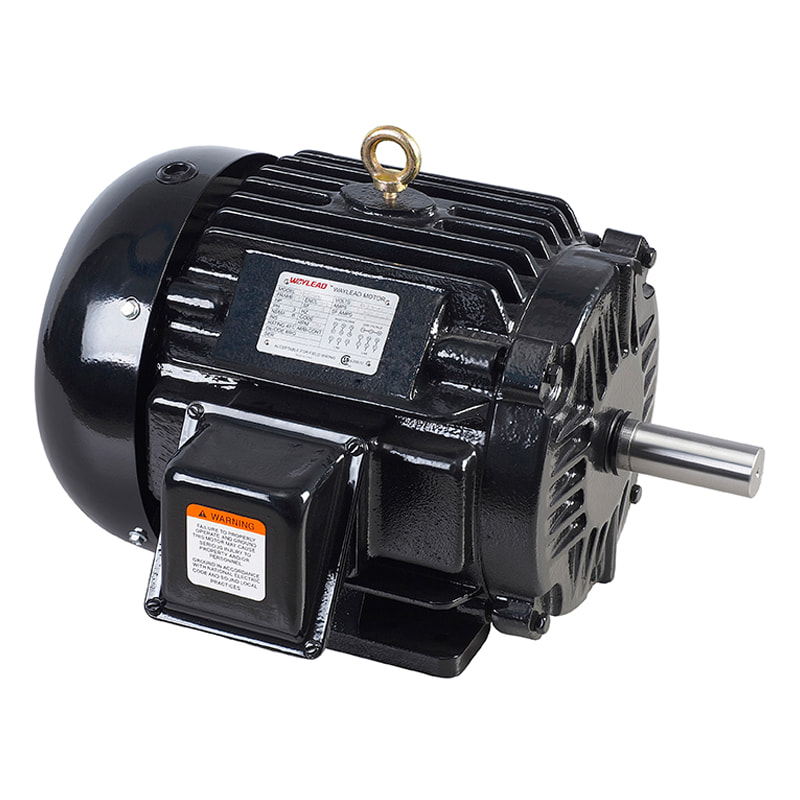 Totally Enclosed Cast Iron Premium Efficiency MotorCast iron TEFC premium-efficiency motor from 1 to 10 HP in NEMA frames 56–215T, UL/CSA certified for general industrial loads.View Product →
In grain, feed and wood-dust plants the same logic applies to Class II areas: where the motor sits outside the dust zone but the air is still thick with fines, a non-ventilated design has no cooling fan to clog and no airflow path to maintain.
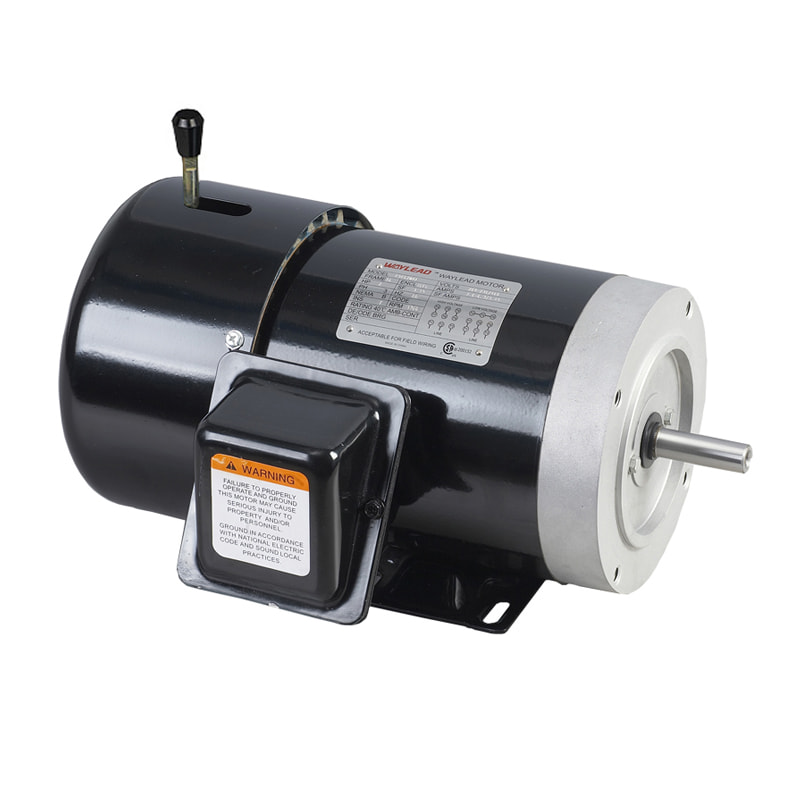
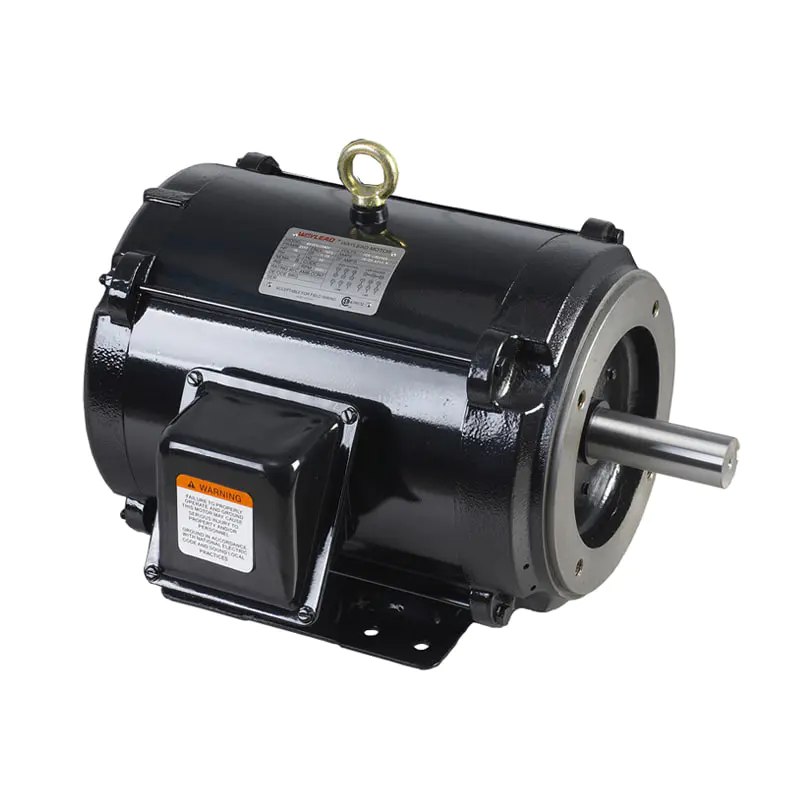 TENV Electric Motor Series for Industrial ApplicationsTotally enclosed non-ventilated motor from 1/3 to 10 HP with NEMA frames, IP44 protection, and CSA/CUS certification for North American industrial use.View Product →
What Waylead Ships With Each Motor
Waylead's documentation is built around North American market entry rather than ATEX. Motors and commercial disposers carry CSA CUS certification, selected models hold UL listing, and the three-phase high-efficiency and premium-efficiency ranges hold US and Canadian energy department certification — the files inspectors and utilities in those markets actually ask for.
The range spans NEMA 48 to 250 frames, 1/10 to 20 HP, 2 to 8 poles, in dripproof, totally enclosed and cast iron construction, alongside IEC IE2 and IE3 frames for projects outside North America. The full product range is organised by application. Where a project truly requires a hazardous-location listing, confirm the exact model, group and temperature class in writing first; a general-purpose certification is not a hazardous-location certification, and no datasheet should blur the two.
FAQ
Is an ATEX certificate accepted in the United States?
No. US installations are reviewed against the National Electrical Code and UL or CSA listings for the Class/Division or Zone system. ATEX is not a recognised approval route there.
Does IECEx replace ATEX?
No. IECEx is voluntary and standards-based, while ATEX is a legal requirement in the EU. Many manufacturers build one technical file for both, but the markings and legal status stay separate.
Can a Class I Division 1 motor be used in Zone 1?
Not automatically. Division and Zone are different frameworks; some motors are dual-marked, which is why the nameplate rather than the brochure decides.
Does a rewind void the certificate?
Generally yes, unless the work follows the hazardous-area repair standard and is carried out by a facility approved for Ex equipment. Keep the original certificate with the maintenance record.
Read an exproof motor certificate the way you read a datasheet: as a list of conditions under which the claim holds true. Model, group, temperature class, ambient and accessories must align with the installation drawing before the motor is worth its price, and those twenty minutes of comparison cost far less than a rejected delivery.