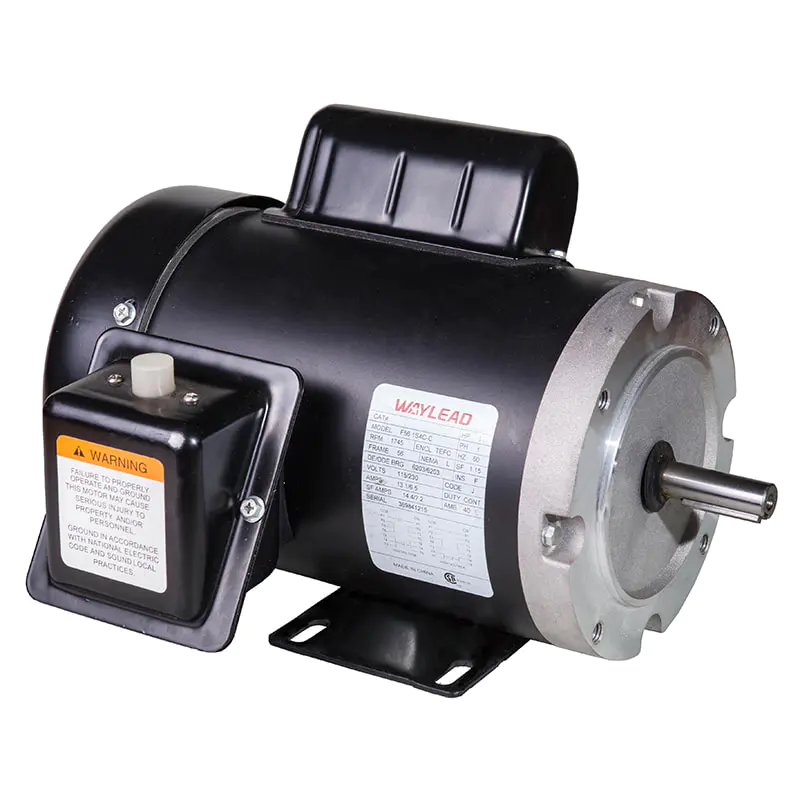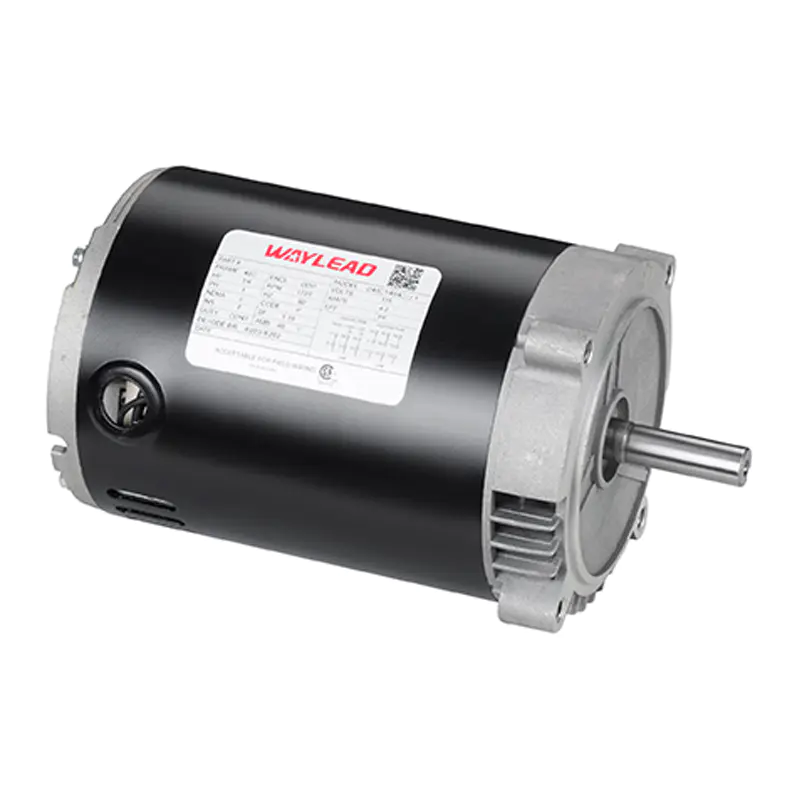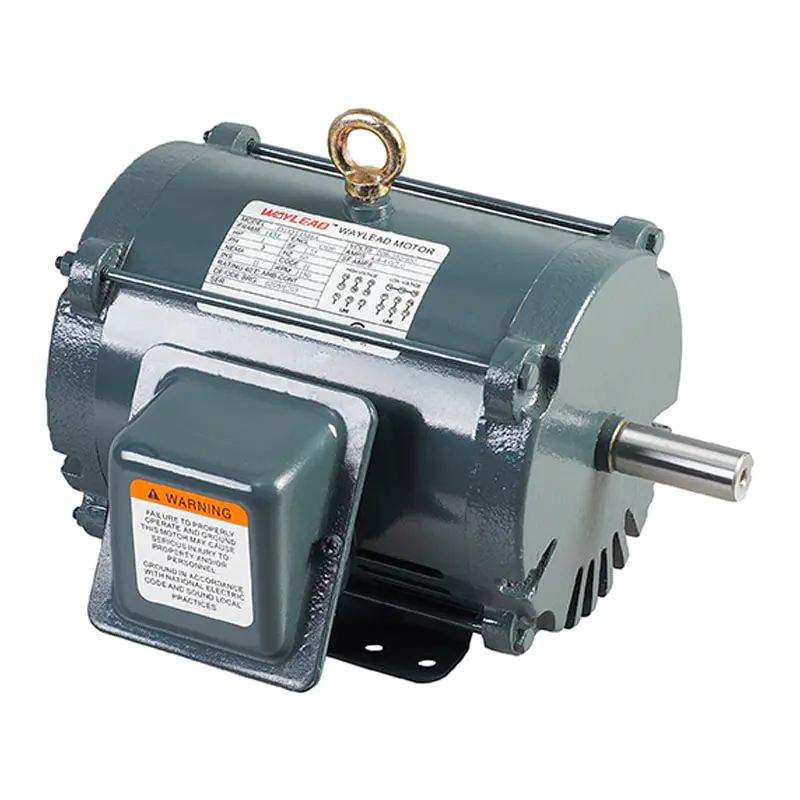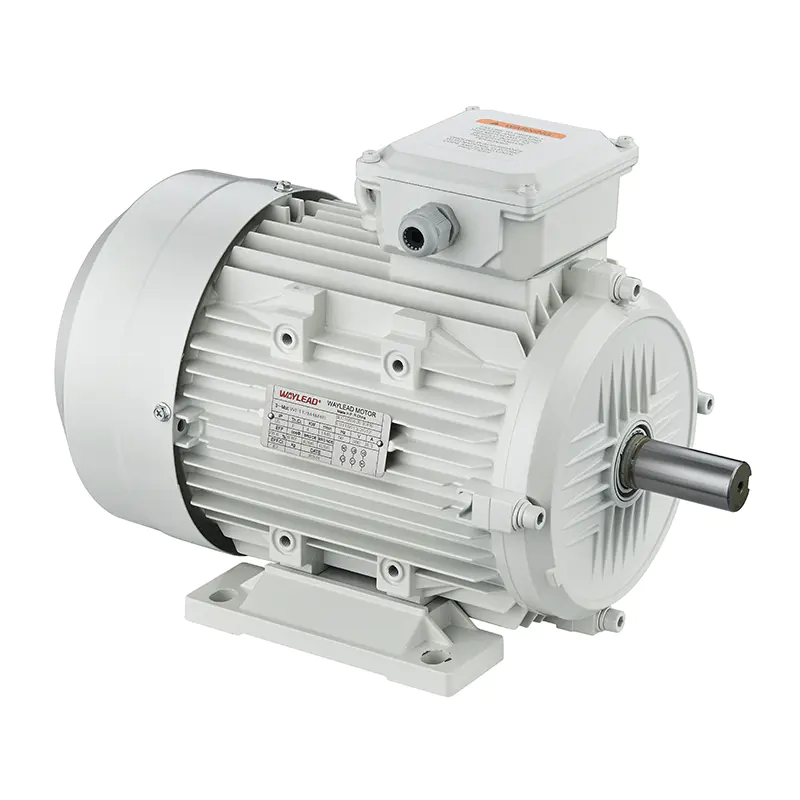
AC electric motors work by using alternating current to generate a rotating magnetic field, which induces a force on the rotor and causes it to spin. This elegant electromagnetic principle — discovered by Nikola Tesla in the 1880s — powers everything from household refrigerators and air conditioners to industrial conveyor belts and electric vehicles. Today, AC motors account for more than 90% of all electric motor energy consumption worldwide, according to the International Energy Agency (IEA).
This guide explains every layer of how AC motors work: the physics behind them, the key components inside them, the different types available, how efficiency is measured, and how to choose the right motor for a given application.
The Core Principle: Rotating Magnetic Fields
The fundamental operating principle of an AC electric motor is electromagnetic induction — a changing magnetic field induces an electric current in a nearby conductor, which then experiences a force. When alternating current flows through stator windings arranged around the motor's circumference, it creates a magnetic field that continuously rotates at a rate determined by the supply frequency. In countries using 60 Hz power (such as the United States), this field rotates at 3,600 revolutions per minute for a two-pole motor.
This rotating field is the engine behind the engine. The rotor — the moving part placed inside the stator — "sees" a magnetic field that is always one step ahead of it, like a carrot on a stick. The rotor constantly chases the field, and that pursuit is what produces mechanical rotation and useful torque.
There is no physical connection between the stator and rotor in most AC motors. The energy transfer is entirely electromagnetic, which is why AC motors can be remarkably durable and low-maintenance compared to motors that rely on brushes and commutators.
Key Components of an AC Electric Motor
An AC motor contains four primary components: the stator, the rotor, the bearings, and the enclosure — each performing a distinct role in converting electrical energy to mechanical energy.
1. Stator
The stator is the stationary outer frame of the motor. It consists of a laminated iron core wound with copper coils arranged in sets called windings. When AC current flows through these windings, it generates the rotating magnetic field. In a three-phase motor, three sets of windings are offset by 120 degrees, which is why three-phase AC motors produce an especially smooth and consistent rotating field.
2. Rotor
The rotor sits inside the stator and is the motor's rotating part. In an induction motor, the rotor contains conductive bars (often aluminum or copper) embedded in a laminated iron core. The rotating magnetic field from the stator induces currents in those bars, creating the rotor's own magnetic field, which interacts with the stator field and produces torque. In synchronous motors, the rotor may have permanent magnets or DC-excited poles.
3. Bearings
Bearings support the rotor shaft and allow it to spin freely with minimal friction. Most AC motors use ball bearings or roller bearings lubricated with grease. Bearing condition is the leading cause of motor failure in industrial settings — proper lubrication intervals can extend bearing life by more than 50%.
4. Enclosure and Cooling
The motor enclosure protects internal components from dust, moisture, and mechanical damage. TEFC (Totally Enclosed Fan-Cooled) enclosures are among the most common in industrial use. An external fan mounted on the shaft circulates air over cooling fins on the enclosure surface, preventing heat buildup that would otherwise degrade insulation and reduce motor lifespan.
Types of AC Electric Motors: Induction vs. Synchronous
The two main categories of AC motors are induction motors and synchronous motors — they differ primarily in how the rotor interacts with the stator's rotating magnetic field.
| Feature | Induction Motor | Synchronous Motor |
| Rotor speed vs. field | Slightly slower (slip) | Exactly in sync (no slip) |
| Starting torque | High (self-starting) | Low (needs auxiliary start) |
| Efficiency | Good (92–96% for IE3) | Excellent (96–99%) |
| Power factor | Lagging | Adjustable / unity |
| Cost | Lower | Higher |
| Typical applications | HVAC, pumps, conveyors | Compressors, generators |
Table 1: Comparison of induction motors and synchronous motors across key performance parameters.
Induction Motors: The Workhorses of Industry
Induction motors are the most widely used type of AC motor globally, representing an estimated 96% of all industrial motor installations. They are self-starting, robust, and require virtually no maintenance beyond bearing replacement. The "induction" name refers to the fact that the rotor current is induced electromagnetically — the rotor has no separate power supply.
A key concept in induction motor operation is slip — the difference between the synchronous speed of the magnetic field and the actual rotor speed. Slip is typically 2–5% under full load. Without slip, there would be no relative motion between the rotor and the rotating field, and therefore no induced current and no torque. Slip is not a flaw; it is a necessary feature.
Synchronous Motors: Precision Speed Control
Synchronous motors run at exactly the synchronous speed defined by the supply frequency and the number of poles. Modern permanent magnet synchronous motors (PMSMs), combined with variable frequency drives (VFDs), are increasingly used in high-efficiency applications such as electric vehicle traction, servo systems, and industrial fans because they can achieve efficiencies above 97% across a wide speed range.
Single-Phase vs. Three-Phase AC Motors
Single-phase AC motors are used in small household appliances, while three-phase motors dominate industrial applications because they are more powerful, more efficient, and inherently self-starting.
A single-phase supply cannot produce a true rotating magnetic field on its own — it produces a pulsating field. To make a single-phase motor self-starting, manufacturers add a start winding or a capacitor that creates a phase shift, simulating the rotating effect. Common single-phase types include:
- Capacitor-start motors: Use a capacitor in series with the start winding. High starting torque. Used in compressors, pumps, and power tools.
- Capacitor-run motors: Keep the capacitor in circuit during normal operation, improving power factor. Common in HVAC fans.
- Shaded-pole motors: Very simple construction with a copper shading ring on each stator pole. Low efficiency (~20–30%), limited to small appliances like bathroom fans and small refrigerators.
- Split-phase motors: Use two windings with different impedances to create a phase difference. Moderate starting torque, used in washing machines and small grinders.
Three-phase motors produce a naturally rotating magnetic field from three current waveforms offset 120 degrees apart. This makes them self-starting without auxiliary windings and gives them much smoother torque output. A 10 hp three-phase motor will be physically smaller and run cooler than an equivalent single-phase unit.
How Speed and Torque Are Controlled in AC Motors
The synchronous speed of an AC motor is determined by two factors: the supply frequency and the number of magnetic poles — and the most practical way to vary speed is to use a variable frequency drive (VFD).
The synchronous speed formula is:
Ns = (120 × f) / P
Where Ns is synchronous speed in RPM, f is supply frequency in Hz, and P is the number of poles. A four-pole motor on a 60 Hz supply runs at 1,800 RPM synchronous speed (actual rotor speed ~1,740–1,770 RPM with slip).
VFDs convert the fixed supply frequency to a variable frequency output, allowing smooth speed control from near-zero to well above base speed. This has enormous energy-saving implications: according to the U.S. Department of Energy, adding a VFD to a pump or fan motor running at 80% of full speed reduces energy consumption by approximately 49% compared to fixed-speed operation with throttle control, because power scales with the cube of speed.
Torque in an AC induction motor is proportional to the square of the supply voltage and inversely related to slip. Under normal conditions, torque rises as load increases (and slip increases), up to a peak called the breakdown torque, beyond which the motor stalls.
AC Motor Efficiency Classes Explained
AC motor efficiency is classified internationally under the IE (International Efficiency) framework, ranging from IE1 (standard) to IE5 (ultra-premium), with IE3 now being the minimum legal standard in many countries.
| IE Class | Label | Typical Efficiency (11 kW, 4-pole) | Legal Status (EU) |
| IE1 | Standard | ~88.0% | Banned for most uses |
| IE2 | High | ~89.8% | Allowed only with VFD |
| IE3 | Premium | ~91.4% | Minimum standard |
| IE4 | Super Premium | ~92.6% | Encouraged |
| IE5 | Ultra Premium | >93.5% | Emerging standard |
Table 2: IEC IE efficiency classes for AC motors, approximate values for an 11 kW, 4-pole motor at full load.
Upgrading from an IE1 to an IE3 motor in a 24/7 industrial operation running a 22 kW pump can save over 3,000 kWh per year. At an industrial electricity rate of $0.08/kWh, that is $240 annually — with a payback period that rarely exceeds three years.
Common Applications of AC Electric Motors
AC electric motors are used in virtually every sector of the modern economy — from residential HVAC systems drawing under 1 kW to industrial compressors exceeding 10 MW.
- HVAC systems: Air conditioners, heat pumps, and ventilation fans rely almost exclusively on single-phase or three-phase induction motors. A central air system's compressor motor typically consumes 3–5 kW.
- Industrial pumps and fans: The single largest category of motor use globally. Centrifugal pumps in water treatment, chemical processing, and oil refining use large three-phase induction motors.
- Conveyors and hoists: Three-phase induction motors paired with gearboxes move materials in factories, warehouses, and mining operations.
- Electric vehicles: Modern EVs primarily use permanent magnet synchronous AC motors for their high power density and wide efficiency range. Traction motors in passenger EVs typically produce 100–300 kW peak.
- Home appliances: Washing machines, refrigerator compressors, dishwasher pumps, and ceiling fans all use small AC motors, most under 500 W.
- Machine tools: CNC machining centers use servo-grade synchronous AC motors for precise speed and positioning control.
How to Read an AC Motor Nameplate
Every AC motor has a nameplate that specifies the exact electrical and mechanical conditions under which it operates safely at rated performance — understanding these values is essential for correct installation and troubleshooting.
- HP or kW: Output shaft power at full load. A motor rated 10 HP (7.46 kW) delivers that at the shaft; electrical input will be higher due to losses.
- Voltage / Hz: Supply voltage and frequency. Dual-voltage motors (e.g., 230/460 V) can be rewired for different supplies.
- FLA (Full Load Amps): Current drawn at rated load and voltage. Used for wire sizing and overload protection settings.
- RPM: Nameplate speed is the rotor speed at full load, which is slightly below synchronous speed for induction motors.
- SF (Service Factor): A multiplier indicating how much beyond nameplate load the motor can handle continuously. SF 1.15 means 15% overload capacity.
- Insulation Class: The temperature rating of the winding insulation. Class F (155°C) and Class H (180°C) are most common in modern motors.
Frequently Asked Questions About AC Electric Motors
Q: What is the difference between an AC motor and a DC motor?
AC motors use alternating current and generate a rotating magnetic field through the stator windings. DC motors use direct current and rely on brushes and a commutator (or, in brushless designs, electronic commutation) to switch the magnetic field direction. AC motors are generally simpler, cheaper to manufacture, and require less maintenance. DC motors historically offered easier speed control, but modern AC motors with VFDs have largely closed that gap in industrial applications.
Q: Why does an AC induction motor have slip?
Slip exists because the rotor must rotate slower than the rotating magnetic field to keep experiencing a relative change in flux — which is what induces the rotor current and produces torque. If the rotor were to catch up to and match the field speed (zero slip), there would be no induced current, no rotor magnetic field, and therefore no torque. Slip is the essential mechanism that keeps an induction motor turning under load.
Q: Can an AC motor run on DC power?
No, a standard AC induction motor cannot run on DC power. DC does not produce a rotating magnetic field; instead, it would magnetize the stator permanently. Running AC motor windings on DC can cause excessive current, overheating, and rapid motor burnout. However, a VFD converts DC bus voltage (often from rectified AC) back into variable-frequency AC to drive the motor, so DC is involved internally in VFD-driven systems.
Q: How long does an AC electric motor last?
A well-maintained AC induction motor has an expected service life of 15–20 years in typical industrial service, and up to 30 years in clean, light-duty environments. The most common failure modes are bearing wear (typically replaceable), insulation degradation from heat cycling, and winding damage from voltage transients or contamination. Keeping a motor cool — every 10°C rise above rated temperature approximately halves winding insulation life — is the single most effective way to extend service life.
Q: What causes an AC motor to overheat?
Overheating in AC motors typically results from one or more of the following: sustained overloading beyond the motor's service factor, high ambient temperature, blocked ventilation, voltage imbalance between phases (even a 3.5% imbalance can increase temperature rise by 25%), single-phasing (loss of one supply phase in a three-phase system), or excessive starting frequency. Thermal protection devices such as thermistors embedded in the windings or external overload relays are used to trip the motor before damage occurs.
Q: What is a variable frequency drive (VFD) and why is it used with AC motors?
A VFD is an electronic controller that converts fixed-frequency AC supply power to a variable-frequency, variable-voltage output. By adjusting the output frequency, a VFD controls the motor's synchronous speed continuously and precisely. VFDs reduce energy consumption in variable-load applications (pumps, fans, compressors) by avoiding throttling losses. They also provide soft-start capability, reducing mechanical stress and inrush current — AC motors can draw 6–10 times their full-load current during direct-on-line starting, which a VFD limits to 1.5–2 times.
Conclusion
AC electric motors work through a beautifully simple but remarkably effective electromagnetic process: alternating current creates a rotating magnetic field in the stator, which induces currents in the rotor and produces torque. This principle, unchanged since Tesla's original designs, now drives more than half of all electricity consumed in industrial countries.
Understanding the difference between induction and synchronous motors, appreciating the role of slip, knowing how to read a nameplate, and recognizing when a VFD can save energy are practical skills that translate directly into better equipment selection, lower operating costs, and longer motor service life.
Whether you are selecting a motor for a new installation, diagnosing a fault, or simply trying to understand the machines that keep modern infrastructure running, the fundamentals covered here provide a solid and actionable foundation.