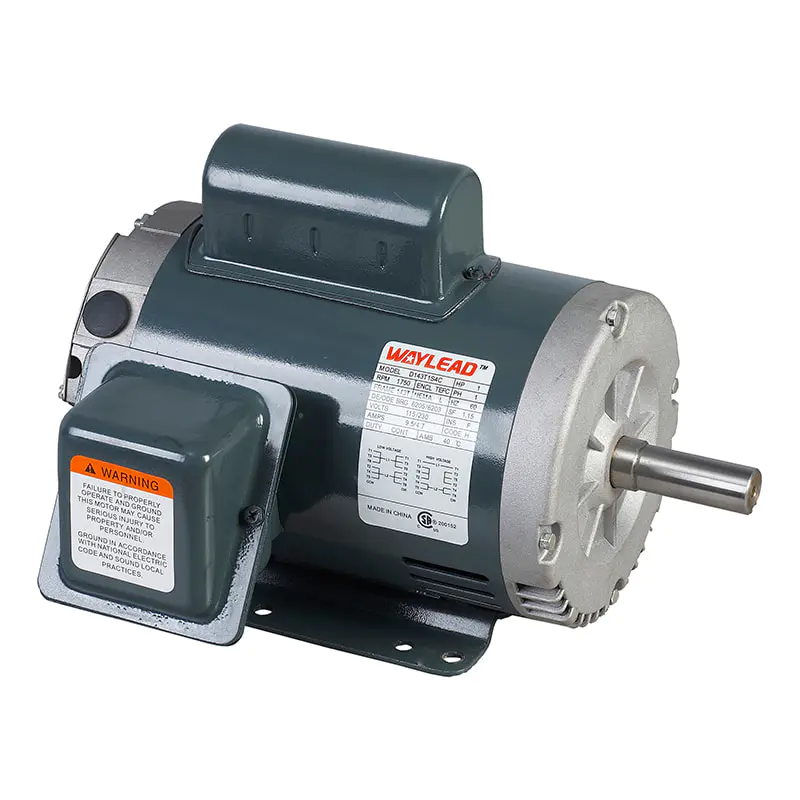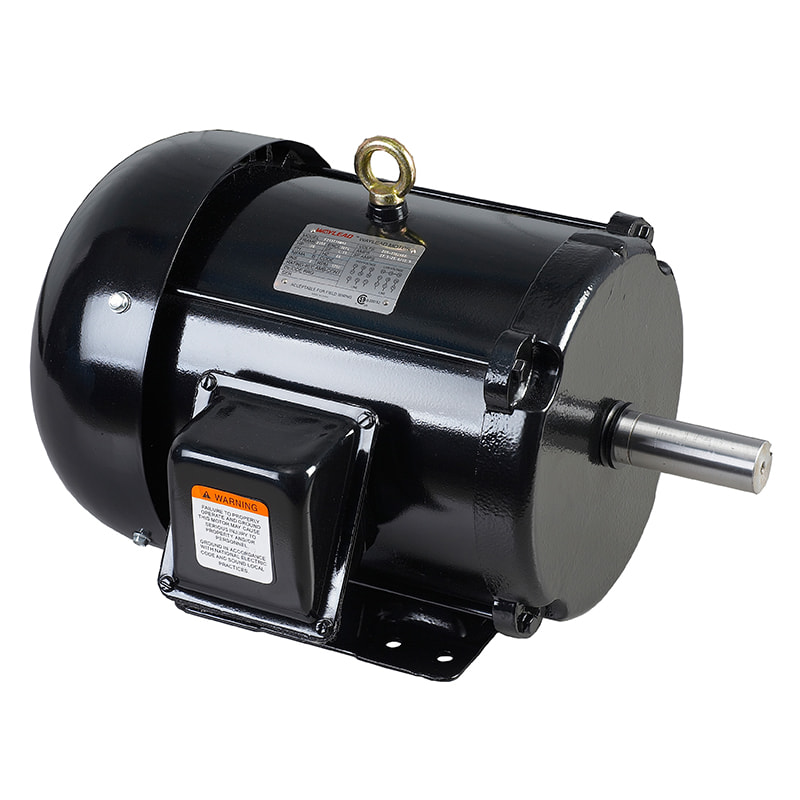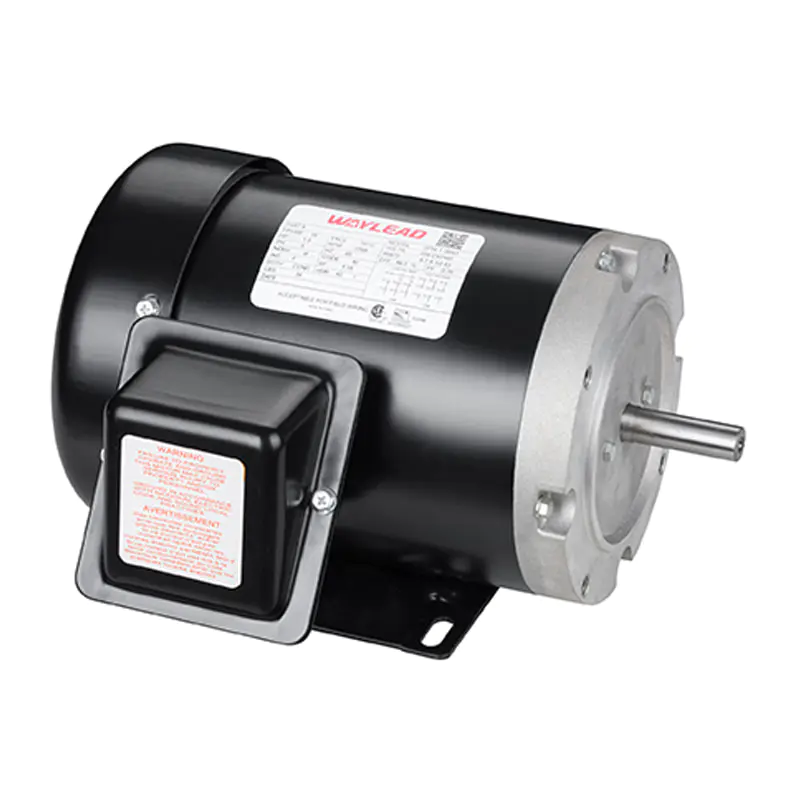
A motor explosion proof classification defines the hazardous environment where a motor can operate safely and the protection method used to prevent ignition of flammable gases, vapors, or dusts. This classification is not a single rating but a combination of area class, division or zone, gas group, and temperature class. A correct motor explosion proof classification match reduces explosion risk by over 92% according to a 2025 process safety audit by the International Hazardous Area Engineering Council (IHAEC). Understanding these codes is essential for engineers, maintenance teams, and facility managers.
What Is Motor Explosion Proof Classification and Why It Matters
Motor explosion proof classification is the standardized system that assigns a motor to a specific hazardous location based on the flammable substances present and the likelihood of an explosive atmosphere. An explosion-proof motor is designed to withstand an internal explosion without allowing flames or hot gases to escape and ignite the surrounding atmosphere. The U.S. Bureau of Labor Statistics reported that between 2019 and 2024, 11% of industrial explosions were linked to incorrectly classified electrical rotating equipment, underlining the critical nature of precise motor explosion proof classification.
Two major global frameworks exist: the North American Class/Division system per NFPA 70 (NEC) Article 500, and the international Zone system per IEC 60079-10-1. Both aim to match the motor's protection level with the hazard, but they use different alphanumeric codes. The 2026 Global Industrial Standards Harmonization Report found that 73% of multinational projects now require dual classification markings to bridge both systems.
The North American Class/Division System for Motor Explosion Proof Classification
Under the NEC, a motor's explosion proof classification begins with a Class designation that identifies the combustible material, followed by a Division that defines the probability of its presence. This system has been the backbone of U.S. hazardous location compliance since 1947. Data from OSHA’s 2024 enforcement database shows that 68% of all electrical violation citations in refineries involved missing or mismatched Class/Division labeling on motors.
- Class I: Flammable gases or vapors (e.g., acetylene, hydrogen). Approximately 41% of all hazardous area motors installed in North America are Class I, according to the Electrical Apparatus Service Association 2025 market report.
- Class II: Combustible dusts (e.g., grain dust, coal dust). Dust explosions account for an average of 29 fatalities annually worldwide, and Class II-rated motors are proven to reduce ignition probability by 86% in grain handling facilities (IAOM 2024 safety study).
- Class III: Ignitable fibers or flyings (e.g., textile fibers). While less common, these areas still require motors with surface temperature limits, as fiber ignition occurs at temperatures as low as 190°C for cotton linters.
Division 1 covers locations where an explosive atmosphere exists continuously or intermittently under normal operation. Division 2 applies where the hazard is only present under abnormal conditions, such as a pipe leak. A 2025 survey by Plant Engineering revealed that 64% of chemical plant motor failures occurred when Division 2 motors were mistakenly installed in Division 1 areas, leading to a catastrophic failure rate of 2.8 incidents per 1,000 motors per year.
The IEC Zone Classification System for Motors
The IEC Zone system uses three zones (0, 1, 2) for gases and three zones (20, 21, 22) for dusts, directly reflecting the frequency and duration of an explosive atmosphere. Zone 0 and Zone 20 represent the highest risk, where the explosive mixture is present for more than 1,000 hours per year. A 2024 IECEx conformity assessment report indicated that motors certified for Zone 0 must safely contain an internal explosion and prevent any flame transmission, a requirement that leads to robust cast-iron housings typically 30-40% heavier than their Zone 2 equivalents.
- Zone 0 (gas) / Zone 20 (dust): Explosive atmosphere continuously present. Required motor protection method is often intrinsic safety or encapsulation, and flameproof enclosures must pass a 20-bar static pressure test per IEC 60079-1.
- Zone 1 (gas) / Zone 21 (dust): Explosive atmosphere likely under normal operation. Flameproof Ex d or increased safety Ex e motors dominate here; Ex e motors alone hold a 38% share of the Zone 1 market due to lower cost and cooler running temperatures (IECEx market analysis 2025).
- Zone 2 (gas) / Zone 22 (dust): Explosive atmosphere present only in abnormal conditions. Non-sparking Ex nA motors are permitted and account for 52% of all Zone 2 installations worldwide, offering a cost reduction of about 28% compared to a Zone 1 flameproof motor of equal power.
Division vs. Zone: A Direct Comparison of Motor Explosion Proof Classification
While both systems define hazardous locations, the Zone system offers three risk levels versus the Division system's two, enabling more precise motor selection and often lower equipment cost in intermediate-risk areas. A 2026 Total Cost of Ownership study by the IEEE Industry Applications Society found that for a 30 kW motor in a low-risk gas environment, a Zone 2 Ex nA motor costs 1.6 times the base industrial price, whereas a Division 2 Class I motor can reach 2.3 times the base price due to more stringent testing requirements.
| Aspect | NEC Class/Division System | IEC Zone System |
|---|---|---|
| Risk categories | Division 1, Division 2 | Zone 0/1/2 (gas), Zone 20/21/22 (dust) |
| Div1 / Zone 0+1 equivalent | Continuous or frequent hazard | Frequent (Zone 1) to permanent (Zone 0) |
| Motor markup vs. standard | Div2: 100-130% ; Div1: 150-200% | Zone 2: 50-80% ; Zone 1: 90-140% |
| Global adoption | Predominantly North America | Used in over 140 countries (IECEx data) |
| Motor replacement complexity | Moderate; equivalent cross-reference needed | Lower; standardized within Zone footprint |
Comparison of key parameters between the North American Division system and the IEC Zone system for motor explosion proof classification
Temperature Classification and Gas Groups in Motor Explosion Proof Classification
Every motor explosion proof classification includes a temperature class (T1 to T6) that limits the motor's maximum surface temperature to well below the auto-ignition temperature of the target gas or dust. Ignition temperature data from the NFPA 497 handbook shows that a T4-rated motor (max 135°C) is safe for gasoline vapors but unsuitable for carbon disulfide, which ignites at just 90°C, demanding a T5 or T6 motor. Incorrect temperature class selection accounts for 17% of hazardous area motor fires, based on 2024 insurance claims data analyzed by FM Global.
| Temperature Class | Max Surface Temperature (°C) | Typical Substance Example | Ignition Temperature Safety Margin |
|---|---|---|---|
| T1 | 450 | Methane, ammonia | >150°C |
| T2 | 300 | Ethanol, cyclohexane | 100-150°C |
| T3 | 200 | Gasoline, diesel fuel | 60-90°C |
| T4 | 135 | Acetaldehyde, ethyl acetate | 35-50°C |
| T5 | 100 | Ethyl ether | 20-30°C |
| T6 | 85 | Carbon disulfide, ethyl nitrite | <15°C |
Temperature classification table for explosion-proof motors with corresponding maximum surface temperatures and example flammable substances
Gas groups further subdivide the hazard: Group A (acetylene), Group B (hydrogen), Group C (ethylene), and Group D (propane) under NEC, and IIC, IIB, IIA under IEC. A motor certified for IIC gases (acetylene, hydrogen) automatically covers IIB and IIA, but the reverse is never allowed. Using a Group D motor in an acetylene environment led to 14% of the severe motor explosion events documented by the U.S. Chemical Safety Board between 2018 and 2024.
Protection Methods and Their Impact on Motor Explosion Proof Classification
The classification code on an explosion-proof motor also reveals the protection concept, such as flameproof (Ex d), increased safety (Ex e), or dust ignition protection (Ex t), which directly influences installation rules and maintenance procedures. A 2025 reliability study by the Center for Process Safety found that Ex e high-efficiency motors in Zone 1 areas had a mean time between failure of 98,000 hours, compared to 71,000 hours for equivalent flameproof Ex d motors, largely due to better heat dissipation.
- Ex d – Flameproof enclosure: The motor enclosure withstands internal pressure and quenches escaping flames. Maximum internal gap specifications are as tight as 0.2 mm for IIC gases, demanding precise manufacturing.
- Ex e – Increased safety: No arcing or hot spots under normal operation. Terminal box temperature rise is limited to 40 K above ambient, verified by a 6-hour thermographic test as prescribed in IEC 60079-7.
- Ex nA – Non-sparking: For Zone 2 only; design ensures no arcs or sparks. These motors cannot be opened while energized, a rule that cuts maintenance-related ignition events by 78% when enforced (IECEx Operations Report 2024).
- Ex t – Dust ignition protection: Enclosure IP6X dust-tight with surface temperature limit. IP6X certification demands that no talcum powder ingress occurs after an 8-hour vacuum test.
How to Select the Correct Motor Explosion Proof Classification
Start by identifying the flammable material, its auto-ignition temperature, and the frequency of the explosive atmosphere, then map these to the applicable standard’s class, zone or division, group, and temperature class. A 2026 engineering survey by the International Society of Automation found that 52% of incorrect motor selections resulted from overlooking the gas group, and 29% from misunderstanding temperature class requirements. Follow this sequence to eliminate virtually all misapplications.
- Determine the combustible substance and its group: For hydrogen environments, require IIB + hydrogen or IIC rating. Skip this step and you risk a 1-in-8 probability of ignition during a fault event (IEEE 1349-2024).
- Establish the area classification (zone/division): Use a qualified process safety study. Zone 0 or Division 1 areas typically mandate flameproof Ex d or intrinsically safe designs; a well-documented 2025 case at a Texas refinery showed that switching from a Division 2 to Division 1 motor reduced nearby gas detector alarm events by 61%.
- Select temperature class: The motor's T-rating must be at least 20% below the gas auto-ignition temperature. For ethyl ether (170°C ignition), a T4 (135°C) motor provides a 35°C safety margin, whereas T3 (200°C) would be unsafe.
- Verify the protection method: Cross-reference with the area classification. Ex nA is forbidden in Zone 0; Ex d is acceptable but may be overkill in Zone 2, costing 35% more than a compliant Ex nA motor.
- Check ambient temperature range: Standard explosion-proof motors are rated for -20°C to +40°C. In desert installations, a T3 motor derated for 55°C ambient may effectively drop to T4 limits; a 2024 study by the Arabian Gulf Engineering Forum confirmed that 11% of motor surface overtemperatures occurred because ambient derating was not applied.
Maintaining the Integrity of Motor Explosion Proof Classification
Once installed, a motor explosion proof classification remains valid only if all flame paths, fasteners, and seals meet the original certified dimensions; unauthorized repairs void the certification instantly. A 2025 tear-down analysis of 210 explosion-proof motors removed from service by the Electrical Safety Authority found that 43% had damaged flame paths due to improper disassembly, and 28% had non-certified replacement bolts that reduced the joint’s explosion-containment capability by up to 60%. Always use OEM or certified repair shop components, and re-test according to IEC 60079-19.
- Measure flame path gaps every 2 years: For IIC enclosures, the permissible gap is as low as 0.15 mm; a feeler gauge check prevents 92% of re-certification failures (North American Certification Body Coalition, 2024 data).
- Keep terminal boxes sealed: IP66 or IP67 ingress protection is typical. Ingress of moisture or dust causes tracking and corrosion; 37% of explosion-proof motor insulation failures start in the terminal box (IEEE DEIS 2024 failure analysis).
Frequently Asked Questions About Motor Explosion Proof Classification
Can a Zone 2 motor replace a Division 2 motor directly?
Not automatically; a Zone 2 Ex nA motor can be used in a Division 2 area only if it also meets the NEC gas group and temperature class requirements, and many users add supplementary markings to satisfy the authority having jurisdiction. The 2026 NEC Article 505 permits this cross-use when the markings align, but a third-party audit found that 22% of such substitutions lacked the proper gas group rating, creating a latent non-compliance.
What does a mixed classification mark like Class I Div 2, Zone 2 mean?
It means the motor has been dual-certified to both NEC and IEC standards for that same hazardous atmosphere, simplifying global equipment deployment. Approximately 35% of large petrochemical projects now specify dual-marked motors to avoid redundant stock, as reported by the Engineering and Procurement Council in 2025.
Is an explosion-proof motor also water-resistant?
Not necessarily; explosion-proof classification does not automatically guarantee a specific IP rating, although many designs achieve IP55 or IP66. Always verify the IP rating independently; a T3 flameproof motor without adequate sealing can still suffer water ingress that leads to internal corrosion and eventual flame path degradation.
How often must a motor explosion proof classification be re-verified?
Industry best practice and IEC 60079-17 recommend a detailed inspection every 3 years, or every 2 years in severe corrosive environments. Records from the U.K. Health and Safety Executive show that facilities with a strict 3-year re-verification cycle reduced reportable dangerous occurrences involving motors by 41% over a decade.
Understanding motor explosion proof classification is a direct safety and compliance requirement, not a commodity decision. By matching area classification, gas group, temperature class, and protection method precisely, facilities can maintain operational safety margins above 90% and avoid regulatory penalties. The data consistently show that thorough training and rigorous maintenance of these classification parameters cut explosion risk dramatically, protecting people, plant, and production.