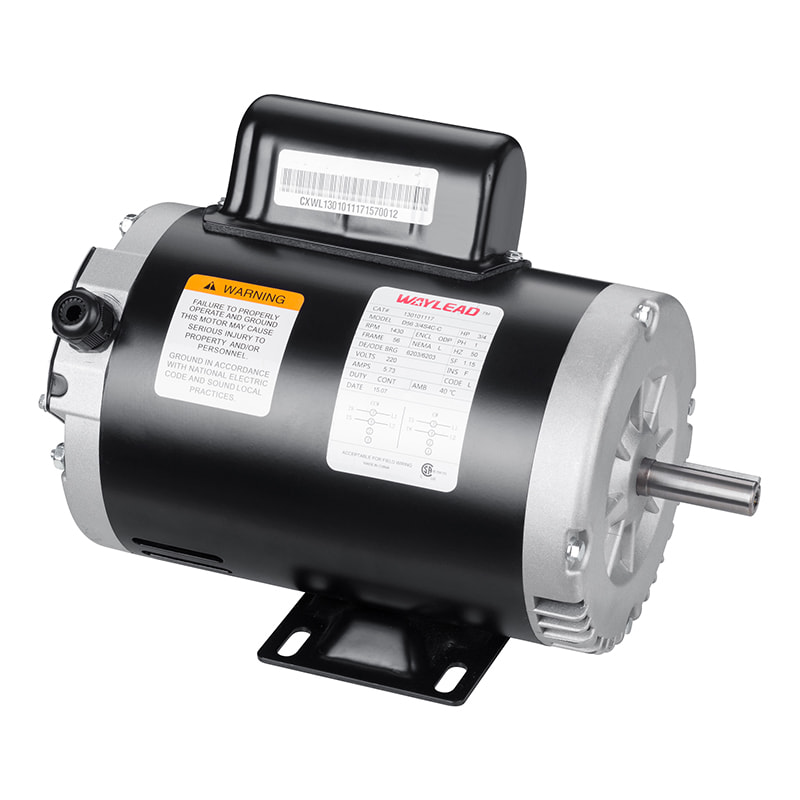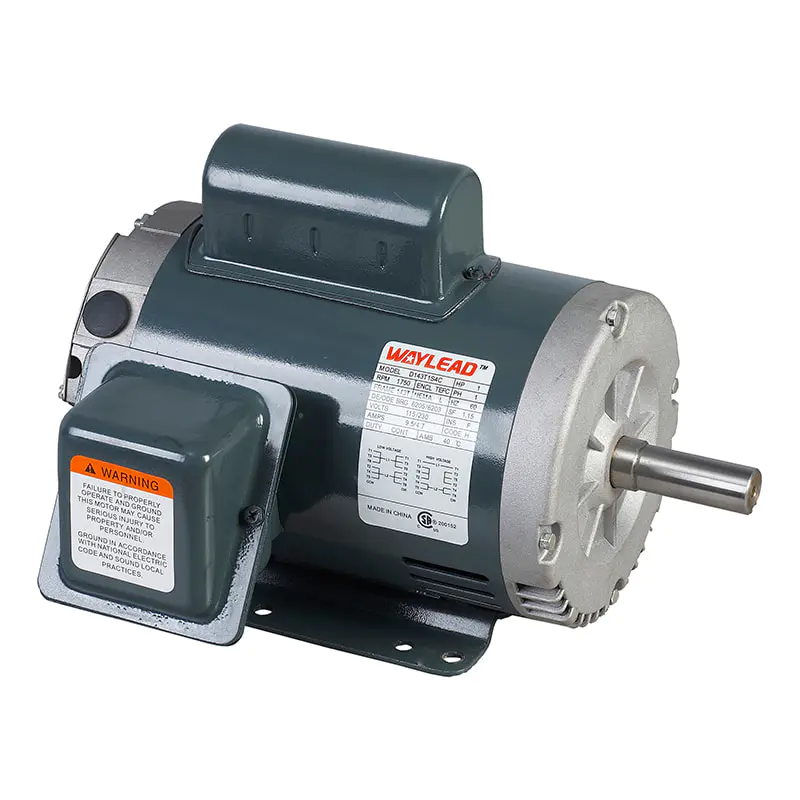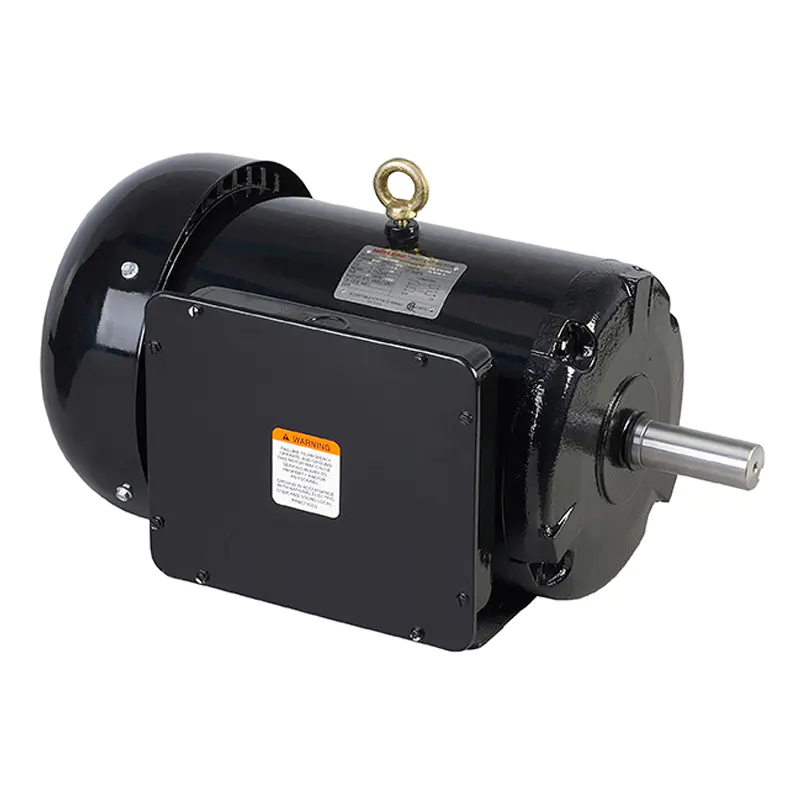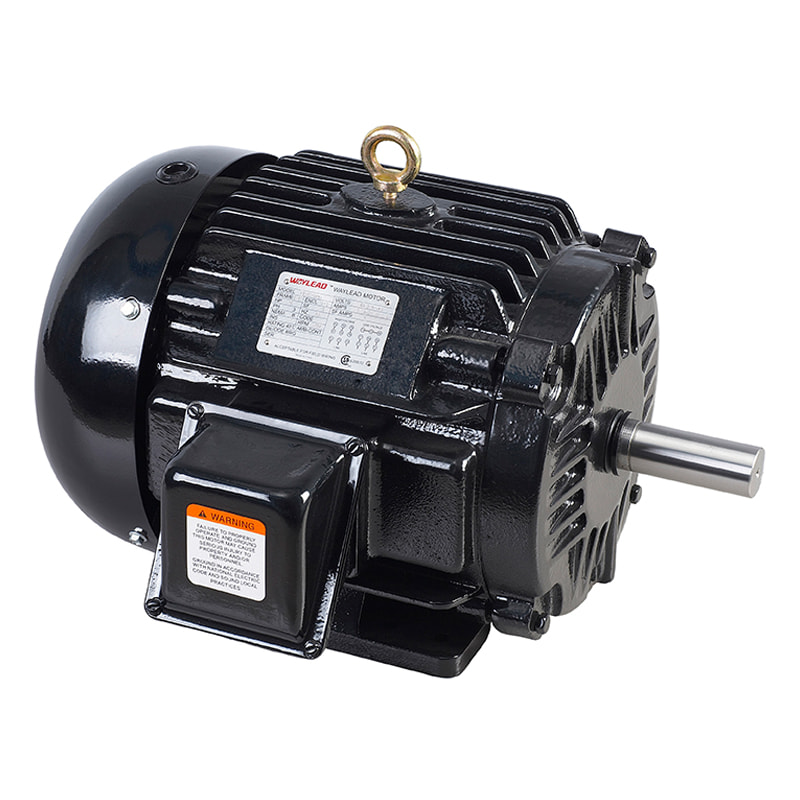
Three-phase motors are alternating current (AC) electric motors that run on a three-phase power supply. In the simplest definition, what are 3 phase motors? They are rotating machines that convert electrical energy into mechanical energy using three separate alternating currents, each phase displaced by 120 electrical degrees. This three-phase input produces a smooth rotating magnetic field without the need for starting capacitors or additional auxiliary windings, making these motors the dominant choice for industrial and high-power applications worldwide. According to the U.S. Department of Energy, three-phase motor-driven systems account for approximately 70% of all electricity consumed in industrial facilities, underscoring how central they are to modern manufacturing, water treatment, and HVAC infrastructure.
How Three-Phase Motors Generate Rotational Force
The defining characteristic of a 3 phase motor is its ability to create a rotating magnetic field from the staggered timing of the three supply phases, which directly induces torque in the rotor without pulsing. Inside the stator, three sets of windings are physically placed 120 degrees apart. When each winding is connected to one phase of the supply, the current in each coil reaches its peak at a different moment. The magnetic field that results appears to spin continuously around the stator core. In a 60 Hz system, this field rotates at a synchronous speed of 3,600 rpm for a 2-pole motor or 1,800 rpm for a 4-pole motor. The rotor, whether it contains conductive bars or permanent magnets, is pulled along by this rotating field. The lag between the field speed and the rotor speed is what produces usable torque. In induction motors, that slip is typically between 1% and 5% at full load, a figure verified by IEC 60034-1 testing standards.
Because the magnetic field never collapses to zero as it does in a single-phase motor, a 3 phase motor produces constant torque and starts on its own. This inherent self-starting capability eliminates the humming, vibration, and efficiency losses that single-phase motors experience without start windings or capacitors.
Main Categories of 3 Phase Motors
All 3 phase motors fall into two broad categories—induction motors and synchronous motors—each optimized for different speed and torque requirements. Understanding the operating principle of each type is essential when selecting or troubleshooting a motor.
Squirrel-Cage Induction Motor
This is by far the most common 3 phase motor in industry, representing over 90% of all installed electric motors. Its rotor consists of aluminum or copper bars shorted at both ends by end rings, resembling a squirrel cage. When the stator's rotating field sweeps past these bars, it induces a current that generates a magnetic field opposing the stator field, and the rotor turns. There are no brushes, no slip rings, and no permanent magnets, which makes the squirrel-cage motor extremely rugged and cost-effective. Efficiency ratings for modern premium-efficiency designs reach up to 96% for units above 50 horsepower, as classified under the IE3 premium efficiency standard.
Wound-Rotor Induction Motor
Instead of a cage, the rotor carries three-phase windings connected to external resistors through slip rings. By varying the rotor resistance, the operator can control the starting current and torque. This design is used where a soft start and high starting torque are needed, such as in large conveyor systems or hoists. However, the slip rings and brushes require more maintenance than a cage rotor, making this motor less common in new installations.
Synchronous Motor
A synchronous 3 phase motor runs at exactly the speed of the rotating magnetic field, with zero slip. The rotor carries either permanent magnets or a wound field excited by a DC supply. Because the rotor locks to the rotating field, the motor provides precise speed regulation and can even operate at a leading power factor, acting as a power factor correction device for the facility. Large synchronous motors rated above 1,000 horsepower are frequently installed in compressor stations and mine ventilation fans to improve the overall power quality of the grid they are connected to.
Three-Phase vs Single-Phase Motors: A Direct Comparison
When comparing a 3 phase motor to a single-phase motor of equivalent horsepower, the three-phase unit is always smaller, lighter, more efficient, and more reliable. The table below summarizes the key differences that explain why three-phase dominates industrial settings.
| Characteristic | 3 Phase Motor | Single-Phase Motor |
|---|---|---|
| Starting mechanism | Self-starting via rotating field | Requires capacitor, shaded pole, or split-phase circuit |
| Efficiency at 5 HP | Typically 89–92% (IE3 premium) | Typically 78–85% |
| Power per frame size | Higher output in a smaller, lighter frame | Larger and heavier for the same horsepower |
| Torque ripple | Constant torque, no pulsation | Pulsating torque due to single-phase field collapse |
| Typical power ceiling | Up to thousands of horsepower | Rarely exceeds 10 HP in practical use |
Efficiency and Energy Impact of 3 Phase Motors
The superior efficiency of three-phase motors translates into measurable energy cost savings, often recovering the motor's purchase price within one to two years of continuous operation. Under the IEC 60034-30-1 international efficiency classification, a standard 15 kW (20 HP) IE3 premium-efficiency 3 phase motor achieves an efficiency of 93.6% at full load, while an older IE1 standard-efficiency motor of the same size might only reach 88.5%. Over 6,000 operating hours per year and an electricity cost of $0.10 per kWh, that difference of 5.1 percentage points saves approximately $600 annually per motor. In a plant running 50 such motors, the annual saving exceeds $30,000. These figures, derived from the U.S. Department of Energy's MotorMaster+ calculation tool, explain why many governments mandate premium-efficiency standards for new industrial motor sales.
Power factor also plays a significant role. While a single-phase motor typically operates at a power factor of 0.7 to 0.8, a properly loaded 3 phase motor maintains a power factor between 0.85 and 0.92. A higher power factor means that less reactive current is drawn from the grid for the same useful mechanical output, reducing losses in the entire distribution system and potentially avoiding utility penalties for low power factor.
Where 3 Phase Motors Are Used Every Day
Three-phase motors drive nearly every continuous-process load in industry, from water pumps and HVAC compressors to conveyor belts and machine tool spindles. The key industries and their typical motor sizes include:
- Municipal water and wastewater: Submersible pumps and booster pumps from 10 HP to over 500 HP, running 24 hours a day, rely exclusively on three-phase induction motors for their reliability and high starting torque.
- HVAC and refrigeration: Chiller compressors, cooling tower fans, and large air-handling units use 3 phase motors ranging from 3 HP to hundreds of horsepower. A centrifugal chiller in a commercial building often contains a 200 HP to 500 HP synchronous motor.
- Manufacturing and material handling: Conveyors, mixers, extruders, and CNC machine tool spindles all benefit from the constant torque and wide speed range possible with a three-phase motor driven by a variable frequency drive.
How to Read a 3 Phase Motor Nameplate
The nameplate of a 3 phase motor contains all the data needed to select, install, and protect the motor correctly, and misinterpreting a single value can lead to burnout or efficiency loss. Key parameters include the rated voltage and the winding connection. A motor listed as 230/460V means it can be connected in delta for a 230V three-phase supply or in wye for a 460V supply. The full-load current listed tells the installer what size overload relay to use. The service factor, typically 1.15 for general-purpose motors, indicates that the motor can operate continuously at 15% overload within its insulation class temperature limit without damage. The insulation class, usually Class F (155 degrees Celsius maximum winding temperature) or Class H (180 degrees Celsius), determines the safe thermal rise. Finally, the efficiency rating and the NEMA or IEC frame size define the mechanical mounting dimensions, ensuring the replacement motor bolts directly into the existing footprint.
Frequently Asked Questions About 3 Phase Motors
Can a 3 phase motor run on a single-phase supply?
Yes, but only with an external phase converter or a variable frequency drive designed to create three-phase output from a single-phase input. Simply connecting two of the three leads to a single-phase line will not start the motor and will quickly overheat the windings. A static phase converter can start the motor but delivers only about two-thirds of the rated horsepower. A rotary phase converter or a VFD rated for single-phase input is the proper solution for running a 3 phase motor where three-phase utility power is not available.
What does the "poles" number mean in a 3 phase motor?
The number of poles determines the synchronous speed of the rotating magnetic field. A 2-pole motor spins at approximately 3,600 rpm on a 60 Hz supply, a 4-pole motor at 1,800 rpm, and a 6-pole motor at 1,200 rpm. The actual rotor speed is slightly lower due to slip in induction motors. Selecting the number of poles is a fundamental design choice that matches the motor speed to the driven load without using a gearbox.
Why do 3 phase motors not need a neutral wire?
A balanced three-phase load carries equal currents in all three phase conductors, which sum to zero at any instant. Therefore, no return current flows through a neutral, and the motor is connected to the three hot conductors only. This property allows the supply cable to be a 3-wire circuit, saving material cost and reducing weight in long cable runs.
How do you reverse the direction of a 3 phase motor?
Swapping any two of the three power supply leads reverses the phase sequence and causes the rotating magnetic field to spin in the opposite direction. This is typically done with a motor reversing contactor or by programming a VFD to invert the output phase rotation, never by physically rewiring the motor while power is applied.
What is the typical lifespan of a well-maintained 3 phase motor?
In clean, dry conditions with proper bearing lubrication, a standard industrial squirrel-cage induction motor can operate reliably for 20 to 30 years. The failure rate increases sharply if the winding temperature consistently exceeds its insulation class limit by as little as 10 degrees Celsius. The Arrhenius life expectancy rule for electrical insulation suggests that every 10-degree Celsius rise above the rated temperature halves the insulation life, making correct overload protection critical for long motor life.
Once you understand what are 3 phase motors and the physics that drive their self-starting, constant-torque rotation, it becomes clear why they are irreplaceable in nearly every sector of industry. Their efficiency, durability, and simple construction continue to make them the default choice whenever three-phase power is available, and advancements in drive technology are extending their precision and energy-saving potential even further.