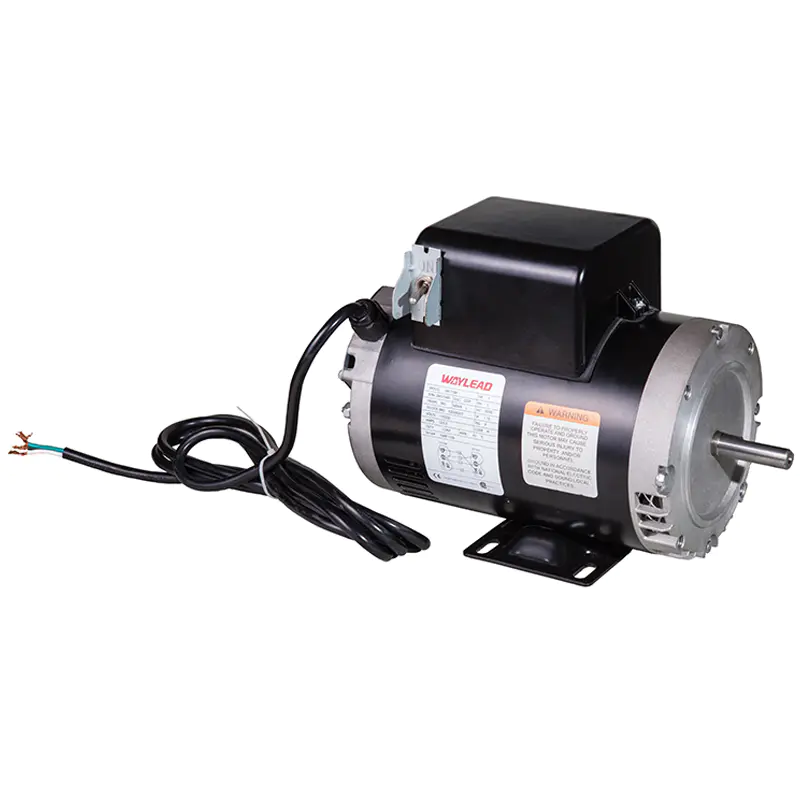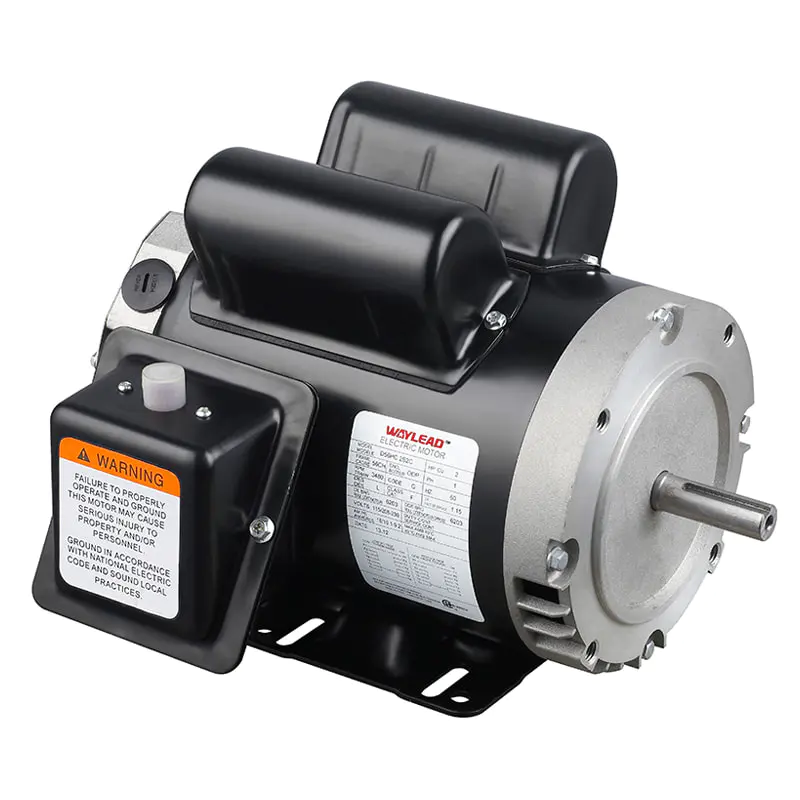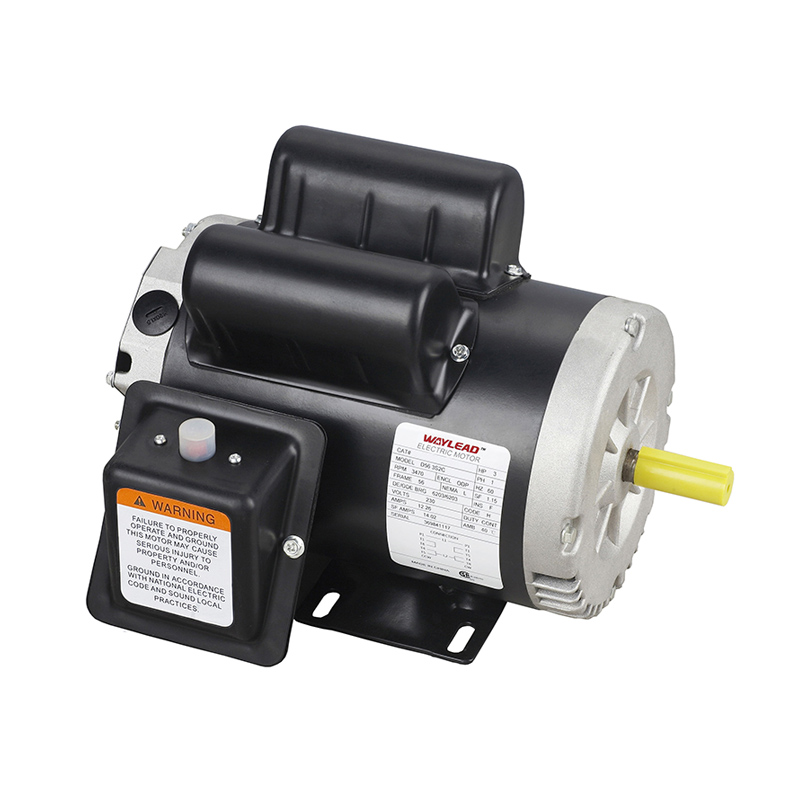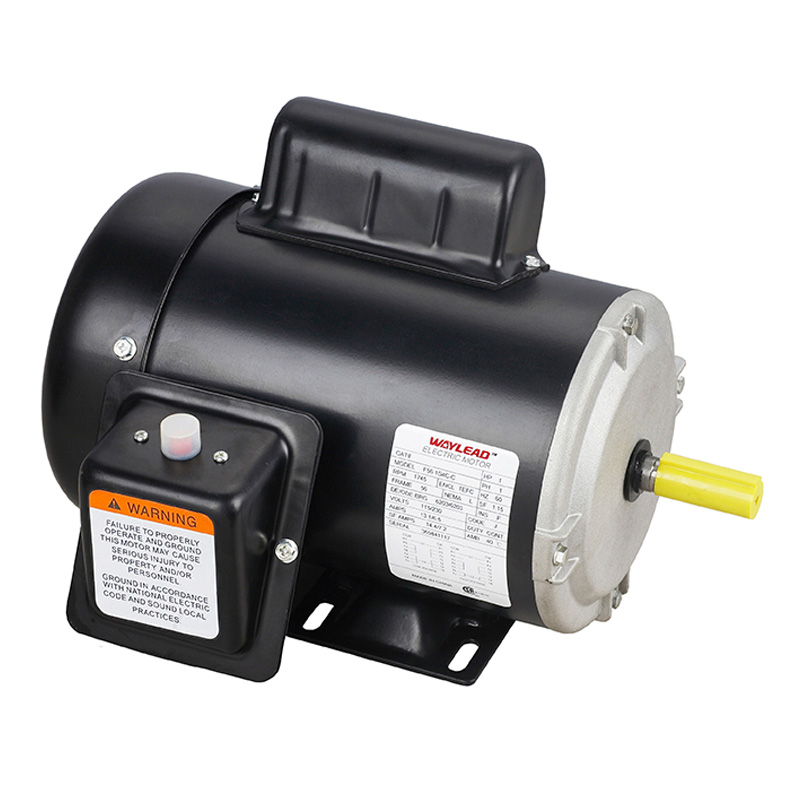
A TEFC motor stands for Totally Enclosed Fan-Cooled motor — an electric motor enclosed in a sealed housing that prevents outside air, dust, moisture, and contaminants from entering the motor's interior, while an external fan mounted on the motor shaft circulates ambient air over the outer frame to dissipate heat. Understanding the full TEFC motor meaning is essential for engineers, maintenance teams, and buyers who need reliable motor solutions for harsh or demanding environments.
Quick Answer: TEFC = Totally Enclosed Fan-Cooled. It is a type of electric motor enclosure where the interior is sealed from the environment, and cooling is achieved by an external fan blowing air over finned housing. TEFC motors are the most widely used enclosure type in industrial applications worldwide.
The TEFC motor meaning breaks down into two distinct concepts that together define its design philosophy:
Together, these two characteristics give the TEFC motor its defining feature: industrial-grade protection without sacrificing cooling performance. The motor's IP (Ingress Protection) rating, commonly IP55 or IP65, further quantifies its resistance to dust and water ingress under international standards.
It is worth noting that "totally enclosed" does not mean hermetically sealed. TEFC motors are not airtight like pressure vessels — minor pressure equalization can occur through shaft seals and gaskets, but the design prevents direct airflow exchange between interior and exterior.
Understanding TEFC motor operation involves two simultaneous processes: electromagnetic energy conversion and thermal management.
Like all AC induction motors, a TEFC motor converts electrical energy into mechanical rotation. When alternating current flows through the stator windings, it creates a rotating magnetic field. This field induces currents in the rotor (through electromagnetic induction), which in turn generates the mechanical torque that drives the shaft. The slip between the rotating field and the rotor speed is what enables continuous torque production.
The electromagnetic process generates resistive heat in both the stator windings and the rotor. In a TEFC motor, this heat cannot escape through internal ventilation. Instead:
Important note: Because the external fan's cooling capacity is directly linked to shaft speed, TEFC motors may experience thermal management challenges when operated at very low speeds for extended periods under variable-frequency drive (VFD) control. In such cases, auxiliary forced-air cooling or specially designed VFD-rated TEFC motors may be required.
A standard TEFC electric motor consists of the following primary components:
| Component | Function | TEFC-Specific Feature |
| Stator | Creates rotating magnetic field | Fully enclosed, no direct air cooling |
| Rotor | Converts magnetic force to rotation | Sealed inside housing, no external air contact |
| Motor Frame (Housing) | Structural support and heat dissipation | External fins maximize surface area for cooling |
| External Cooling Fan | Circulates air over motor exterior | Shaft-mounted; speed-dependent cooling |
| Fan Cover / Cowl | Directs airflow over fins | Protects fan blades; guides airstream |
| End Shields / Brackets | Seal both ends of the motor | Gasket-sealed for IP rating compliance |
| Shaft Seals / Bearings | Support rotation and prevent ingress | Lip seals prevent moisture/dust penetration |
| Terminal Box | Electrical connection point | Sealed entry with cable glands |
When evaluating motor enclosure types, the three most commonly compared options are TEFC, TEAO (Totally Enclosed Air Over), and ODP (Open Drip-Proof). Here is a comprehensive comparison:
| Feature | TEFC Motor | TEAO Motor | ODP Motor |
| Full Name | Totally Enclosed Fan-Cooled | Totally Enclosed Air Over | Open Drip-Proof |
| Enclosure | Sealed | Sealed | Open (ventilated) |
| Cooling Method | Integral external fan | Relies on external airflow (e.g. from driven fan) | Internal air circulation through vents |
| Dust Protection | Excellent (IP55+) | Good (IP54+) | Poor (IP22) |
| Moisture Protection | Excellent | Good | Limited (drip-proof only) |
| Self-Cooling | Yes (shaft-driven fan) | No (external airflow required) | Yes (internal vents) |
| Typical Applications | Pumps, compressors, conveyors, HVAC | Direct-drive fans, blowers | Clean, dry indoor environments |
| Relative Cost | Moderate–High | Moderate | Lower |
| VFD Compatibility | Good (with VFD-rated versions) | Limited (cooling depends on speed) | Moderate |
| Noise Level | Moderate (fan noise) | Low (no integral fan) | Moderate |
Key Takeaway: TEFC motors offer the best balance of environmental protection and self-contained cooling for the vast majority of industrial environments. ODP motors are only suitable where cleanliness is controlled; TEAO motors require the application itself to provide the cooling airflow.
The widespread adoption of TEFC electric motors in industrial settings is driven by several compelling advantages:
The sealed enclosure prevents the ingress of dust, debris, moisture, chemicals, and insects. This makes TEFC motors suitable for outdoor installation, washdown environments (food processing, pharmaceuticals), and areas with airborne contaminants such as sawdust, grain particles, or metal shavings.
By protecting windings and insulation from contamination and moisture, TEFC motors experience less winding degradation, bearing corrosion, and insulation failure. This significantly extends mean time between failures (MTBF) and reduces costly unplanned downtime.
Because contaminants cannot enter the motor, internal cleaning is rarely required. Maintenance is largely limited to periodic bearing lubrication and external inspection of the cooling fan and fins. This translates to reduced maintenance labor costs over the motor's lifecycle.
Unlike TEAO motors, the TEFC motor does not depend on external airflow from the application. The integral shaft-mounted fan provides cooling in any installation orientation or location, making it highly versatile.
TEFC motors are manufactured in all standard NEMA and IEC frame sizes, power ratings (fractional HP to several thousand HP), voltages, and speed configurations. Replacement and spare parts sourcing is straightforward.
TEFC motors are readily available in Premium Efficiency (IE3/NEMA Premium) and Ultra-Premium Efficiency (IE4) ratings, supporting energy-saving initiatives and compliance with regulations such as DOE 10 CFR 431 in the United States.
Despite their popularity, TEFC motors do have limitations that must be considered during motor selection:
TEFC motors are found across virtually every sector of industry. Their durability and adaptability make them the default choice in countless applications:
Choosing the correct TEFC motor requires evaluating several technical and operational parameters:
| Selection Parameter | Guidance |
| Power Rating (HP / kW) | Size to 110–125% of required load to avoid overheating and extend motor life |
| Voltage & Phase | Match to available supply (208V, 230V, 460V, 575V; single-phase or three-phase) |
| Synchronous Speed / Poles | 2-pole (3600 RPM), 4-pole (1800 RPM), 6-pole (1200 RPM), 8-pole (900 RPM) |
| Frame Size | NEMA or IEC standard frame; must match mounting and shaft dimensions |
| IP Rating | IP55 for general use; IP65 for washdown; IP66 for high-pressure cleaning |
| Insulation Class | Class F (155°C) standard; Class H (180°C) for high-temperature environments |
| Service Factor (SF) | SF 1.15 allows 15% overload short-term; higher SF = greater thermal reserve |
| Efficiency Class | IE3 / NEMA Premium minimum for most new installations; IE4 for premium efficiency |
| VFD Compatibility | Specify "inverter-duty" or "VFD-rated" if used with variable frequency drives |
| Ambient Temperature | Standard rating is 40°C; de-rate or specify high-ambient version for hotter locations |
Pro Tip: When operating a TEFC motor with a VFD below 50% rated speed for sustained periods, always specify an "inverter-duty" TEFC motor with Class F insulation and a separately powered constant-speed cooling fan (also called an auxiliary blower). This ensures adequate cooling regardless of output shaft speed.
The TEFC motor meaning — Totally Enclosed Fan-Cooled — encapsulates a design philosophy that has made this motor type the dominant choice in global industrial applications: maximum environmental protection, self-contained cooling, and long-term reliability across demanding conditions.
Whether you are driving a pump in a wastewater facility, running a conveyor in a dusty grain handling facility, or powering HVAC equipment on a rooftop, the TEFC motor delivers the combination of protection, durability, and performance that other enclosure types cannot match in most real-world environments.
When selecting a TEFC motor, always evaluate the full application requirements: power, speed, environment, IP rating, efficiency class, and VFD compatibility. Matching these parameters precisely to your application will ensure optimal performance and the longest possible service life from your investment.
Copyright © 2018 Cixi Waylead Motor Manufacturing Co., Ltd.All Rights Reserved.
 Login
Wholesale AC Motor Manufacturers
Login
Wholesale AC Motor Manufacturers