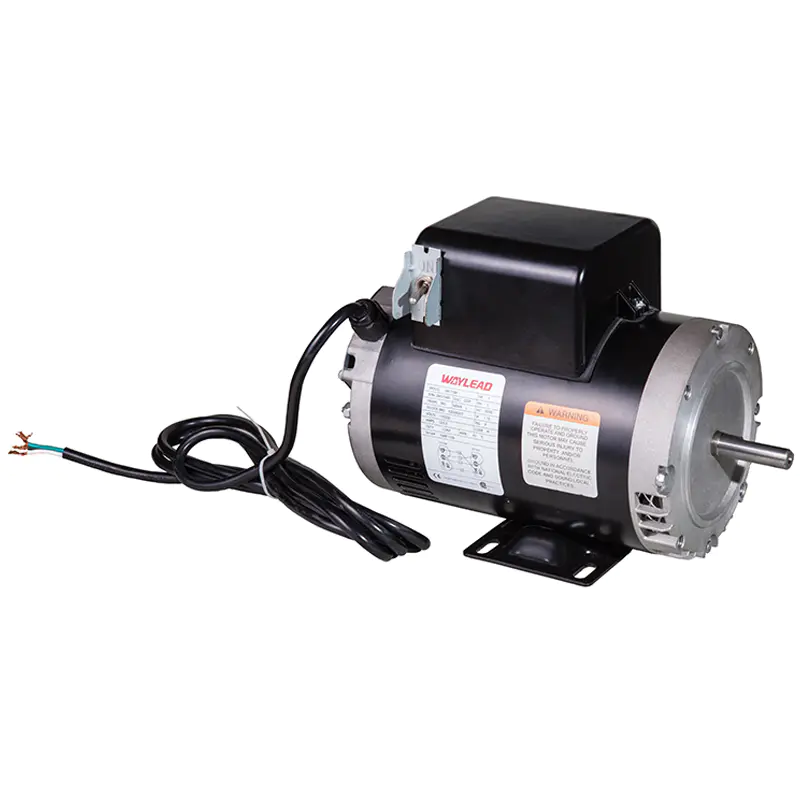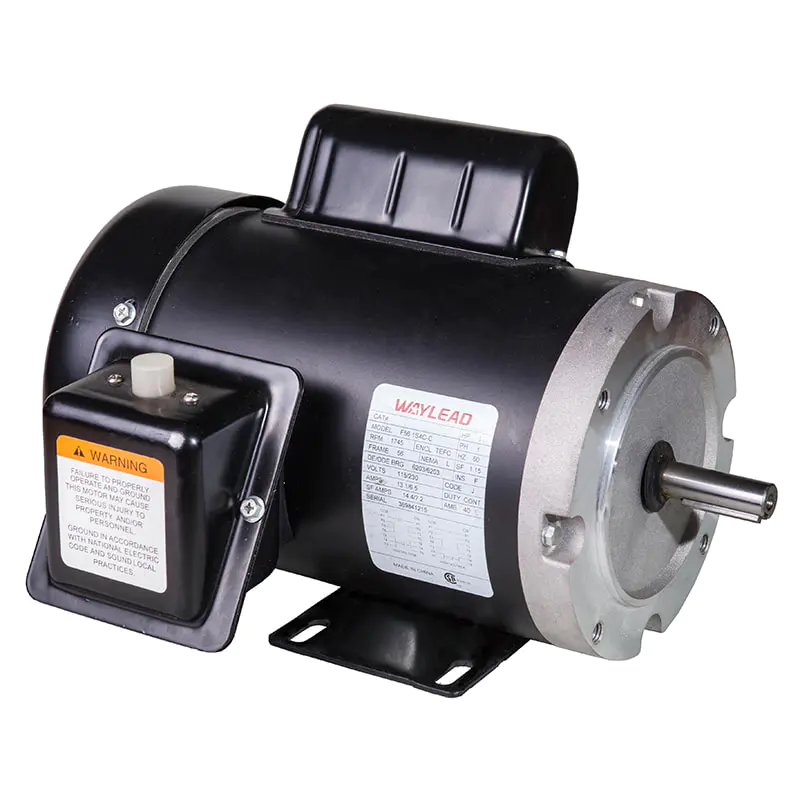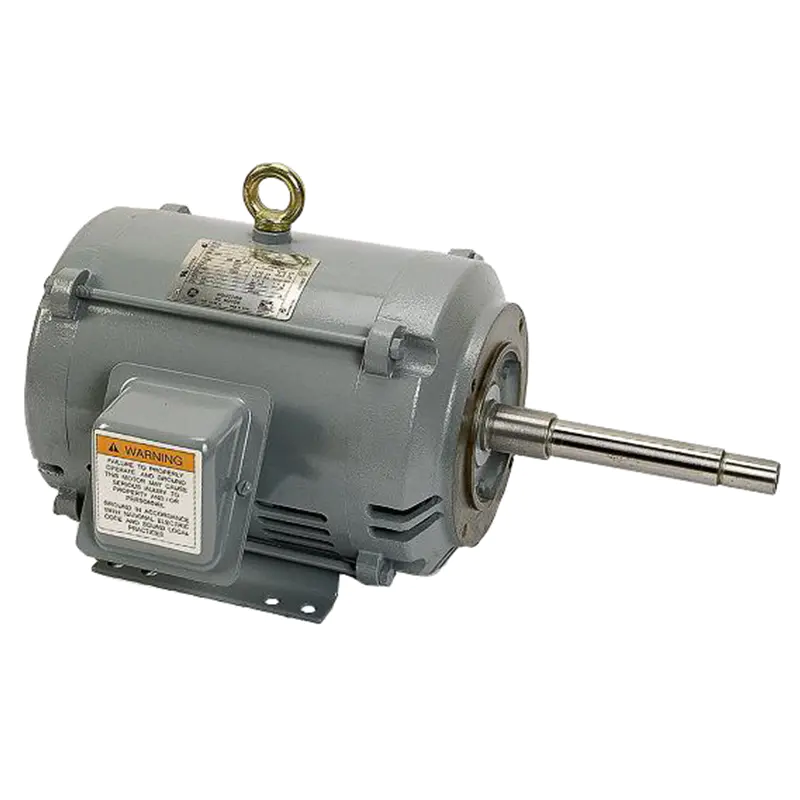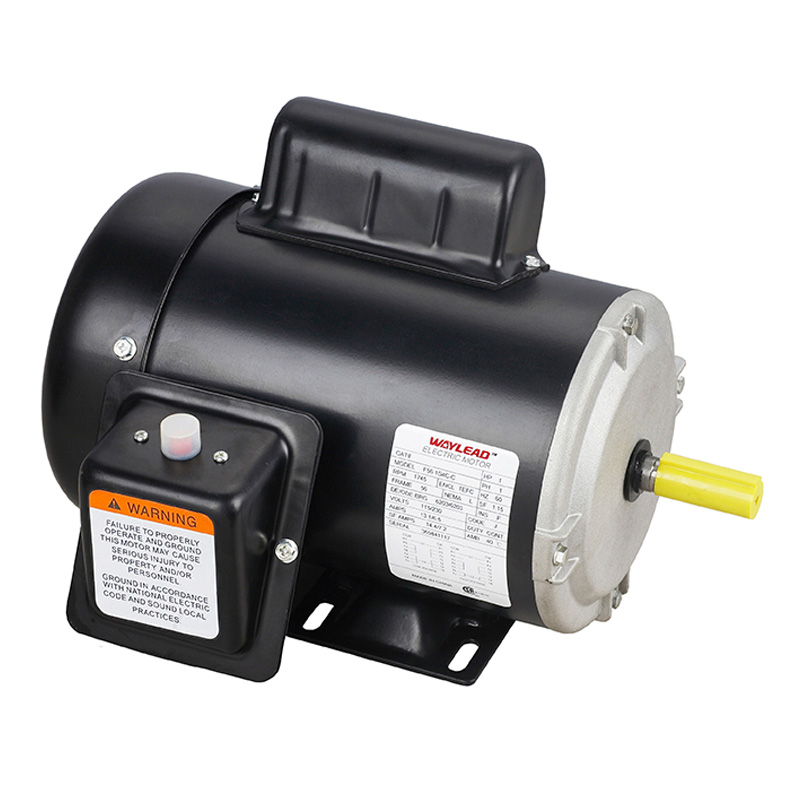
Which motor wins in the single phase motor vs three phase motor comparison depends entirely on the job: a single phase motor is the better choice for homes and light-duty equipment because it runs on standard household wiring and costs less to install, while a three phase motor is the better choice for industrial and commercial equipment because it delivers higher efficiency, smoother torque, and far greater power output from the same frame size. Below, this guide breaks down exactly how each motor type works, where the efficiency and power gaps come from, and which one is the right fit for a specific application, supported by figures from electrical engineering references and manufacturer specification data.
The core difference is how the magnetic field inside the motor is generated. A single phase motor runs on one alternating current waveform, which produces a pulsating, non-rotating magnetic field, while a three phase motor runs on three AC waveforms offset by 120 degrees from each other, which together produce a naturally rotating magnetic field in the stator. According to electrical engineering references, this single waveform in a single-phase design generates a pulsating rather than rotating magnetic field, a characteristic that requires additional starting mechanisms and results in notably different performance across nearly every operating parameter.
Because the three-phase design already has a rotating field the moment power is applied, it does not need any extra components to begin spinning. The single-phase design has no inherent rotation to start from, so it needs help getting going, which is the root cause of nearly every structural difference between the two motor types, from the capacitor in a single-phase motor to the additional wiring required for three-phase installations.
A single phase motor needs a capacitor because its single AC waveform only generates an alternating field, not a rotating one, so the capacitor creates a phase shift that gives the rotor an initial direction to turn in. A three-phase motor generates a rotating magnetic field on its own, so it does not need a capacitor or any other starting aid to begin operating.
This single design choice explains a long list of practical differences buyers notice immediately. The capacitor and its associated centrifugal switch are extra components that can wear out, add bulk to the motor housing, and introduce a small but measurable energy loss every time the motor starts. None of that exists in a three-phase design, which is one reason three-phase motors tend to be more compact relative to their power output and have fewer parts that eventually fail.
A three phase motor is typically 10 to 20 percentage points more efficient than a comparable single phase motor at full load. Industry comparisons report that three-phase motors achieve roughly 85 to 95 percent efficiency with strong power-to-weight ratios, while single-phase motors typically operate in the 60 to 85 percent efficiency range, with the auxiliary windings and starting capacitor introducing losses that simply do not exist in a three-phase design.
The current draw difference is just as significant as the efficiency gap. For the same horsepower and voltage, a three-phase motor requires roughly 43 percent less current per phase than an equivalent single-phase motor, which translates directly into less resistive heating in the windings and lower long-term power loss. This is the main reason three-phase motors run cooler than single-phase motors of the same rated output, especially under continuous, heavy-load conditions such as conveyor systems, compressors, and industrial pumps.
The table below summarizes the practical differences a buyer or facility manager actually needs to weigh when comparing a single phase motor against a three phase motor for a specific job.
| Characteristic | Single Phase Motor | Three Phase Motor |
| Power Supply | One AC waveform | Three AC waveforms, 120° apart |
| Magnetic Field | Pulsating, non-rotating | Continuously rotating |
| Starting Mechanism | Requires capacitor or starting winding | Self-starting, no capacitor needed |
| Typical Full-Load Efficiency | 60-85 percent | 85-95 percent |
| Maximum Practical Power Output | Up to approximately 10 hp | Up to approximately 400 hp |
| Starting Torque | Lower, depends on motor subtype | High and consistent |
| Operating Vibration and Noise | Higher, due to torque ripple | Lower, smoother torque delivery |
| Installation Requirements | Standard 120V/240V household wiring | Dedicated three-phase supply or phase converter |
| Typical Setting | Homes, offices, small workshops | Factories, industrial plants, large commercial buildings |
Table 1. Comparison of single phase motor and three phase motor characteristics, compiled from electrical engineering references and motor manufacturer specification guides.
A three phase motor delivers higher and more consistent starting torque than a single phase motor, which is exactly why heavy loads like compressors, conveyors, and large pumps are almost always driven by three-phase designs. The pulsating magnetic field in a single-phase motor produces torque ripple, meaning the turning force fluctuates periodically rather than staying constant, and this limits smooth operation at higher power levels while causing more vibration in larger frame sizes.
This torque ripple is also the practical reason single-phase induction motors are rarely manufactured above roughly 3 to 5 kilowatts for continuous-duty applications. Past that point, the vibration and reduced starting torque make single-phase designs impractical, which is why nearly every piece of heavy industrial equipment, regardless of manufacturer, is built around a three-phase motor rather than a scaled-up single-phase one.
Three phase motors can deliver roughly 150 percent of the power output of an equivalent single phase motor in the same frame size, which is the single biggest reason industrial facilities standardize on three-phase equipment. Single-phase motors are generally limited to about 10 horsepower and are best suited to equipment requiring lower output, while three-phase motors scale up to approximately 400 horsepower and commonly operate at speeds between 900 and 3,600 RPM depending on the number of poles in the winding.
This power gap shows up clearly in real motor nameplates. A 5-horsepower three-phase motor, for example, commonly draws around 11.6 full-load amps at 230 volts, while the single-phase equivalent rated for the same 5 horsepower draws closer to 21.8 full-load amps at the same voltage, nearly double the current for identical mechanical output. That difference in current is the direct, measurable result of the efficiency and phase-balance advantages built into the three-phase design.
A three phase motor is generally considered more reliable because its rotating magnetic field produces effectively constant torque through each full rotation, which reduces wear and tear on bearings and other driven components compared with the torque ripple inherent to single-phase designs. Lower vibration translates directly into less mechanical stress on couplings, belts, and bearings over years of continuous operation, which is one reason three-phase motors are favored in applications that run nearly around the clock, such as HVAC compressors in commercial buildings and pumps in water treatment facilities.
Maintenance practicality is another factor worth noting. Single-phase motors are generally more complicated to rewind than three-phase motors, which is part of the reason three-phase motors are rewound and repaired far more often in industrial settings, while damaged single-phase motors are frequently replaced outright rather than serviced, due to the added cost and complexity of rebuilding the starting-winding and capacitor circuitry.
Use a single phase motor for small, low-power equipment that runs on standard household or light commercial wiring, and use a three phase motor for any application involving heavy, continuous, or high-torque loads. The table below illustrates how this plays out across common real-world scenarios.
| Application | Recommended Motor Type | Reason |
| Household Air Conditioner | Single Phase | Standard wiring, modest power needs |
| Residential Water Pump | Single Phase | Low horsepower, intermittent use |
| Power Tool in Small Workshop | Single Phase | Easy installation, no special wiring |
| Industrial Pump | Three Phase | High torque, continuous duty |
| Factory Production Line | Three Phase | High efficiency at sustained heavy load |
| Agricultural Irrigation Motor | Three Phase | Large power output over long run times |
Table 2. Recommended motor type by application, based on power requirements, duty cycle, and torque demands described in industrial motor selection guides.
A single phase motor is cheaper and faster to install because it runs on the same 120V or 240V supply already present in most homes and small businesses, while a three phase motor typically requires either a dedicated three-phase utility connection or a phase converter, both of which add meaningful upfront cost. For a homeowner or small workshop owner, this is often the deciding factor: the single-phase motor wins on day-one installation cost even when the three-phase motor would be cheaper to run over time.
For facilities with consistently high electricity demand, the equation flips. Three-phase motors transmit a high volume of electricity over a large area more efficiently than single-phase systems, making them more economical specifically because the lower current draw per phase reduces both energy waste and the size of wiring and switchgear needed to safely carry the load. Large facilities recover the higher upfront infrastructure cost through lower operating expenses, longer motor lifespan, and reduced maintenance frequency over the equipment's service life.
A single phase motor cannot be directly converted into a three phase motor because the internal winding structure and rotor design are fundamentally different, but a phase converter or variable frequency drive can allow three-phase motors to run from a single-phase power supply with some performance trade-offs. This is a common workaround in workshops and small manufacturing facilities that only have single-phase utility service but want to take advantage of the smoother operation and higher efficiency of three-phase motors.
In practice, a single-to-three-phase variable frequency drive rated for a given horsepower, paired with a three-phase motor of matching or slightly higher horsepower, is a widely used solution in settings such as dust collection systems and small CNC equipment. The general guidance from experienced equipment operators is that the drive should be sized with some overhead above the motor's full-load amperage rather than matched exactly, since running close to the drive's rated limit on a continuous-duty application leaves no margin for startup current spikes.
The main advantage is simplicity and lower upfront cost. A single phase motor uses less power to start operating, runs on standard household wiring without any special electrical infrastructure, and is generally more affordable than a comparable three-phase motor, which makes it the practical choice for homes, offices, and small workshops.
Three phase motors are quieter because their continuously rotating magnetic field produces smooth, constant torque, while a single phase motor's pulsating field produces torque ripple that translates into audible vibration and noise, particularly noticeable in larger frame sizes or under heavy load.
Single phase motors are generally limited to around 10 horsepower for practical use, and most residential and light commercial applications use models well under that ceiling. Beyond roughly 3 to 5 kilowatts of continuous-duty output, the torque ripple and vibration inherent to single-phase designs make them impractical, which is why higher-power equipment defaults to three-phase motors instead.
In most real-world comparisons, yes, a three phase motor is more efficient than a single phase motor of equivalent power, primarily because the single-phase design's auxiliary windings and starting capacitor introduce losses that the three-phase design simply does not have. That said, efficiency is always a measured value specific to a given nameplate, so a particular single-phase motor and three-phase motor could theoretically share the same efficiency rating; the difference shows up most consistently at full load and in continuous-duty applications.
Yes. Most residential properties are only supplied with single-phase power, so running a three-phase motor at home typically requires either a utility upgrade to three-phase service, which is uncommon and costly for residential customers, or a phase converter or variable frequency drive that creates simulated three-phase output from a single-phase supply.
Three phase motors generally last longer under comparable usage conditions because their smooth, constant torque output reduces mechanical stress on bearings and other moving parts, while the torque ripple in single-phase motors contributes to faster wear, particularly in continuous or heavy-load applications. Single-phase motors used in light, intermittent residential service, however, can still provide many years of reliable operation.
In the end, the single phase motor vs three phase motor decision comes down to matching the motor to the actual electrical supply, power requirement, and duty cycle of the job. A single phase motor remains the right call for residential equipment, small tools, and any application under roughly 10 horsepower running on standard wiring, while a three phase motor is the clear choice for industrial machinery, large pumps, and any continuous-duty equipment where efficiency, starting torque, and long-term reliability outweigh the higher upfront infrastructure cost. Weighing the available power supply against the horsepower, torque, and duty-cycle needs of the equipment is the most reliable way to choose correctly the first time.
Copyright © 2018 Cixi Waylead Motor Manufacturing Co., Ltd.All Rights Reserved.
 Login
Wholesale AC Motor Manufacturers
Login
Wholesale AC Motor Manufacturers