The 3 types of 3 phase motors that dominate industrial and commercial applications are the squirrel cage induction motor (SCIM), the wound rotor induction motor (WRIM), and the permanent magnet synchronous motor (PMSM). These three categories account for over 90% of all three-phase motor deployments worldwide, according to data compiled by the U.S. Department of Energy's Industrial Technologies Program. Each type serves a distinct operational niche determined by its starting torque profile, efficiency characteristics, speed control capability, and total lifecycle cost.
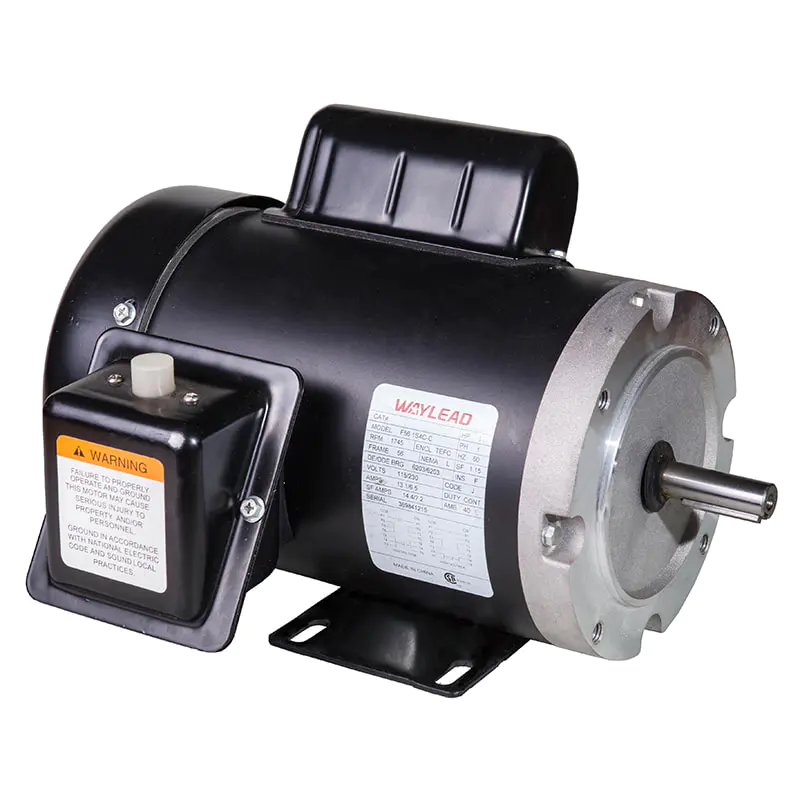
TYPE 1
Squirrel Cage Induction Motor
Rugged, low-cost, minimal maintenance. Powers pumps, fans, conveyors, and compressors across every industry.
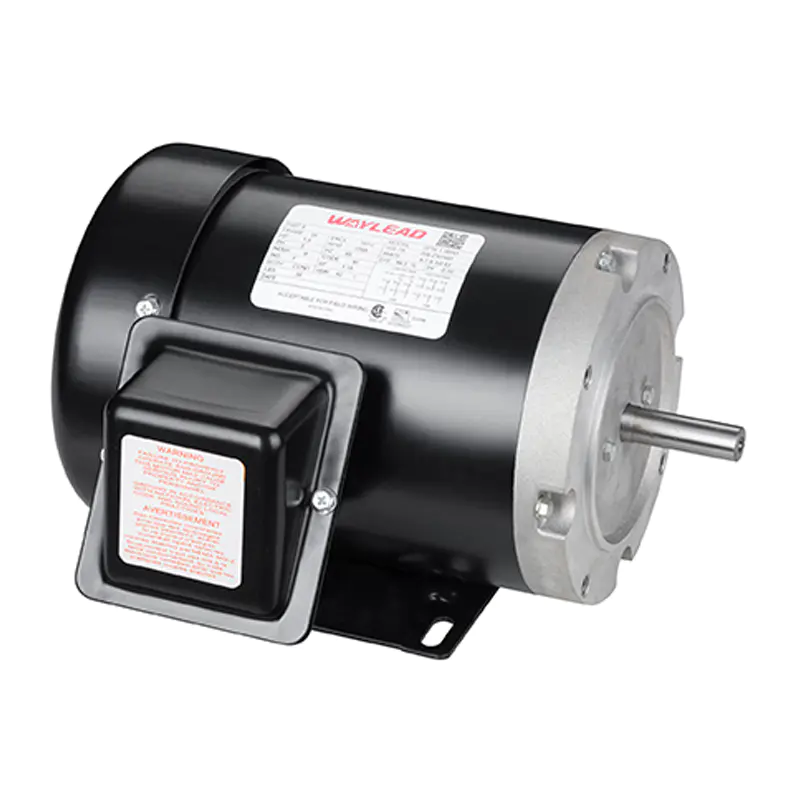
TYPE 2
Wound Rotor Induction Motor
High starting torque with controlled inrush current. Ideal for cranes, hoists, ball mills, and heavy inertia loads.
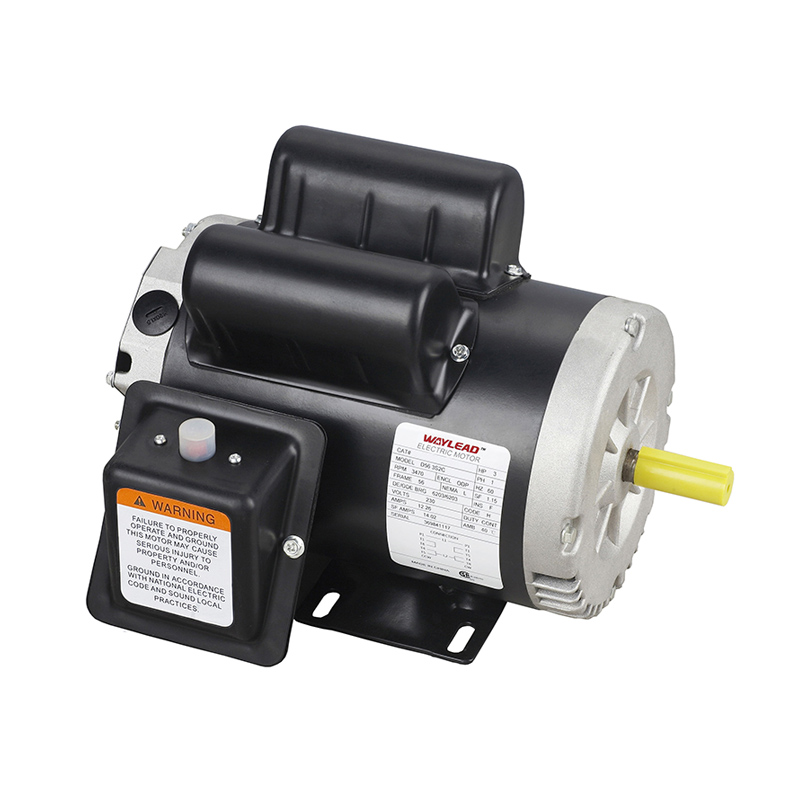
TYPE 3
Permanent Magnet Synchronous Motor
Highest efficiency, precise speed regulation. Dominates servo drives, robotics, EV traction, and HVAC compressors.
1. Squirrel Cage Induction Motor (SCIM)
The squirrel cage induction motor is the most widely deployed 3 phase motor type, representing an estimated 85% of all industrial electric motor installations globally per the International Energy Agency's 2023 motor systems report. Its defining characteristic is a rotor constructed from laminated steel with embedded aluminum or copper bars short-circuited by end rings, forming a structure that resembles a squirrel cage. This design eliminates brushes, slip rings, and permanent magnets, resulting in an exceptionally rugged machine with a mean time between failures that routinely exceeds 15,000 operating hours under normal conditions.
Construction and Operating Principle
SCIM operation relies on electromagnetic induction between the stator's rotating magnetic field and the stationary rotor conductors. When three-phase AC power energizes the stator windings, a rotating magnetic field sweeps across the rotor at synchronous speed. This field induces voltage in the rotor bars, which in turn generates current and a secondary magnetic field. The interaction between these two fields produces torque. A critical parameter is slip, the difference between synchronous speed and actual rotor speed, typically ranging from 0.5% to 5% at full load depending on the motor's NEMA design class.
Key Performance Characteristics
- Starting torque: Ranges from 1.5x to 2.5x rated torque for NEMA Design B motors, the most common industrial variant. NEMA Design C and D offer higher starting torque up to 2.75x for hard-to-start loads.
- Efficiency: Modern IE3 premium-efficiency SCIMs achieve 91% to 95% efficiency in the 5 to 200 horsepower range. IE4 super-premium units push beyond 96% in larger frame sizes, as documented in IEC 60034-30-1 testing protocols.
- Speed regulation: Without a variable frequency drive, speed is essentially fixed by line frequency and pole count. With VFD integration, speed control from 10% to 120% of base speed becomes feasible, though low-speed cooling may require auxiliary ventilation.
- Maintenance requirements: Limited to periodic bearing lubrication and insulation resistance testing. No brushes to replace, no rotor windings to inspect, making it the lowest-maintenance option among the 3 types of 3 phase motors.
Common Applications
SCIMs power centrifugal pumps, axial and centrifugal fans, belt-driven conveyors, air compressors, agitators, and machine tool spindles. In municipal water treatment facilities, 250-horsepower SCIMs operating 24 hours daily move millions of gallons through distribution networks. The combination of low acquisition cost and high reliability makes this motor the default choice when starting torque demands are moderate and precise speed control is not a primary requirement.
2. Wound Rotor Induction Motor (WRIM)
The wound rotor induction motor delivers the highest and most controllable starting torque among the 3 types of 3 phase motors. Its rotor carries insulated copper windings connected to external resistors through slip rings and brushes. By varying the external resistance, operators can adjust the motor's torque-speed curve in real time, achieving up to 300% of rated torque at startup while limiting inrush current to approximately 150% of full-load current. This capability is unmatched by standard SCIMs and makes the WRIM indispensable for high-inertia load applications.
Construction and Operating Principle
The WRIM stator is identical in construction to that of a SCIM. The differentiation lies entirely in the rotor, where precision-wound copper coils replace cast aluminum bars. These coils connect to three slip rings mounted on the rotor shaft. Carbon brushes riding on the slip rings link the rotor windings to an external resistance bank. During startup, maximum resistance is inserted into the rotor circuit, shifting the torque peak toward zero speed. As the motor accelerates, resistance is gradually reduced in steps, maintaining high torque output while controlling current draw. At full speed, the slip rings may be short-circuited, effectively converting the WRIM into a SCIM for steady-state operation.
Key Performance Characteristics
- Starting torque: Adjustable up to 3x rated torque, with the torque curve shape modifiable via external resistance. This flexibility prevents mechanical shock to driven equipment and reduces voltage dip on the supply line.
- Efficiency: Typically 88% to 93% at full load, slightly lower than equivalent SCIMs due to I²R losses in the rotor windings and brush contact resistance. The efficiency penalty is most pronounced during the starting phase when external resistors dissipate energy as heat.
- Speed control: Beyond starting duties, rotor resistance variation enables speed adjustment from approximately 50% to 100% of synchronous speed. However, this method is inherently lossy, converting slip power into heat. Modern slip power recovery systems can reclaim this energy, boosting overall system efficiency by 5 to 8 percentage points.
- Maintenance requirements: Higher than SCIM due to brush and slip ring wear. Brushes typically require inspection every 1,000 to 2,000 operating hours and replacement every 4,000 to 8,000 hours depending on loading and environmental conditions.
Common Applications
WRIMs excel in cement kilns, ball mills, large conveyor systems with high breakaway torque, mine hoists, overhead cranes, and large centrifugal compressors. A typical mining operation might deploy a 5,000-horsepower WRIM to drive a grinding mill, where the starting torque requirement exceeds 200% of rated torque and the load inertia is substantial. The external rotor resistance also provides a soft-start effect that protects gearboxes and couplings from torque transients.
3. Permanent Magnet Synchronous Motor (PMSM)
The permanent magnet synchronous motor represents the highest-efficiency category among the 3 types of 3 phase motors, with full-load efficiencies reaching 97% to 98% in premium designs. PMSMs achieve synchronous operation without the slip losses inherent to induction machines by embedding high-energy rare-earth magnets in the rotor. This design eliminates rotor copper losses entirely and reduces total losses by 30% to 50% compared to equivalently rated SCIMs, as documented in comparative testing published by the Electric Power Research Institute.
Construction and Operating Principle
PMSM rotors feature neodymium-iron-boron or samarium-cobalt magnets arranged in surface-mounted or interior configurations. Interior permanent magnet designs dominate industrial applications because they combine magnetic torque with reluctance torque, yielding higher power density. The stator carries conventional three-phase windings that generate a rotating magnetic field. The rotor locks into synchronism with this field, rotating at exactly the synchronous speed with zero slip. Unlike induction motors, PMSMs cannot self-start directly from line power because the rotor magnets cannot track the abruptly applied rotating field. They require a variable frequency drive to ramp frequency and voltage from zero, making the VFD an integral component of every PMSM installation.
Key Performance Characteristics
- Starting torque: With sensorless field-oriented control, PMSMs deliver 1.5x to 3x rated torque from zero speed. Closed-loop servo variants with encoder feedback achieve full rated torque at standstill, essential for precision positioning applications.
- Efficiency: IE4 super-premium and IE5 ultra-premium efficiency classes are routinely met. A 50-horsepower PMSM operating 6,000 hours annually at $0.10 per kWh saves approximately $1,200 to $2,400 in energy costs compared to an IE3 SCIM, translating to a payback period of 2 to 4 years on the motor premium alone.
- Power density: PMSMs pack 30% to 50% more torque per unit volume than induction motors of equivalent rating. This size reduction enables compact machine designs and reduces the footprint of drive trains in space-constrained installations.
- Speed range: When paired with an appropriate VFD, constant-torque operation from zero to base speed and constant-power operation up to 3x base speed are achievable. This wide speed range suits direct-drive applications that eliminate gearboxes entirely.
Common Applications
PMSMs are the motor of choice for electric vehicle traction drives, where Tesla and other manufacturers use them to achieve over 200,000 miles of reliable operation. Industrial applications include precision CNC machine tools, robotic arms, plastic injection molding machines, high-efficiency HVAC compressor drives, and direct-drive washing machines. In wind turbine generators, PMSMs eliminate the gearbox, reducing maintenance and improving low-wind-speed energy capture by 5% to 10%.
Comparative Analysis of 3 Types of 3 Phase Motors
The table below provides a side-by-side comparison of the three motor types across critical performance, economic, and operational dimensions. Understanding these distinctions is essential for selecting the optimal motor for a given application.
| Parameter | SCIM | WRIM | PMSM |
|---|---|---|---|
| Full-Load Efficiency | 91% - 95% (IE3) | 88% - 93% | 95% - 98% (IE4/IE5) |
| Starting Torque | 1.5x - 2.5x rated | Up to 3x rated (adjustable) | 1.5x - 3x rated (with VFD) |
| Speed Control | VFD required for variable speed | Rotor resistance + VFD optional | VFD mandatory, wide range |
| Maintenance Level | Low (bearings only) | Moderate (brushes, slip rings) | Low (bearings, VFD electronics) |
| Initial Cost | Low | Medium-High | Medium (motor) + VFD cost |
| Power Density | Moderate | Moderate | High (30%-50% more compact) |
| Typical Power Range | 0.5 HP to 500+ HP | 10 HP to 10,000+ HP | 0.1 HP to 1,000+ HP |
| Market Share | ~85% | ~5% | ~10% (growing rapidly) |
Comparative overview of the three primary 3 phase motor types across eight key evaluation criteria. Data synthesized from NEMA MG1 standards, IEC 60034-30-1 efficiency classifications, and industry market reports.
Selection Criteria: Matching Motor Type to Application
Selecting the right motor from the 3 types of 3 phase motors involves evaluating five primary factors: starting torque requirement, duty cycle, speed control needs, total cost of ownership, and operating environment. A methodical approach prevents overspending on unnecessary features while ensuring reliable operation over the motor's 15- to 25-year service life.
Factor 1: Starting Torque Demand
Loads with breakaway torque below 150% of running torque are well served by standard SCIMs. When breakaway torque exceeds 200%, or when the load inertia is exceptionally high, a WRIM or a PMSM with VFD should be evaluated. The WRIM offers the unique advantage of adjustable torque curves without complex power electronics, a feature still valued in remote mining sites where VFD service expertise may be limited.
Factor 2: Duty Cycle and Operating Hours
For motors operating more than 4,000 hours annually, the efficiency advantage of a PMSM becomes financially compelling. A 100-horsepower motor running 6,500 hours per year at an average load of 75% consumes approximately 363,000 kWh annually if it is an IE3 SCIM, but only 347,000 kWh if it is an IE4 PMSM. At an industrial electricity rate of $0.08 per kWh, the annual savings of $1,280 compound significantly over a 20-year lifespan. The U.S. Department of Energy estimates that motor-driven systems account for 53% of all industrial electricity consumption, making efficiency gains impactful at scale.
Factor 3: Speed Control Precision
Applications requiring sub-1% speed regulation or position control demand a PMSM with encoder feedback. SCIMs with VFDs can achieve 0.5% to 1% speed regulation in sensorless vector mode, adequate for pumps and fans but insufficient for CNC interpolation or robotic path control. WRIMs with slip recovery can hold speed within 2% to 3%, suitable for crane hoisting and mine winders where precise stopping is achieved through mechanical brakes rather than motor control.
Factor 4: Total Cost of Ownership
While SCIMs command the lowest purchase price, lifecycle cost analysis often favors PMSMs in high-utilization scenarios. The TCO equation includes initial motor cost, VFD cost where applicable, installation labor, energy consumption over the service life, maintenance labor and parts, and downtime costs. A 2022 study by the Copper Development Association found that energy costs represent 95% to 97% of a motor's total lifecycle cost, dwarfing the initial purchase price. This reality shifts the economic calculus decisively toward higher-efficiency motor types for continuous-duty applications.
Efficiency Trends and Regulatory Landscape
Global efficiency regulations are progressively eliminating lower-efficiency motors from the market. The IEC 60034-30-1 standard defines efficiency classes from IE1 (Standard) through IE5 (Ultra Premium). As of 2023, the European Union mandates IE3 as the minimum efficiency for motors from 0.75 kW to 375 kW, with IE4 required for certain higher-power units starting in 2025. The U.S. Department of Energy aligns with NEMA Premium efficiency levels, which correspond approximately to IE3. These regulatory pressures are accelerating the adoption of PMSMs, which are inherently capable of meeting IE4 and IE5 requirements without exotic materials or manufacturing processes.
| Efficiency Class | Typical 50 HP SCIM Efficiency | Typical 50 HP PMSM Efficiency | Annual Energy Cost (6,000 hrs, $0.10/kWh) |
|---|---|---|---|
| IE1 Standard | ~89% | N/A | $25,100 |
| IE2 High | ~91.5% | N/A | $24,400 |
| IE3 Premium | ~93.5% | ~95.5% | $23,900 / $23,400 |
| IE4 Super Premium | ~95% (limited availability) | ~97% | $23,500 / $23,100 |
| IE5 Ultra Premium | Not feasible | ~98% | $22,800 |
Efficiency comparison and estimated annual energy costs for a 50 HP motor operating 6,000 hours per year. Calculations assume a flat electricity rate of $0.10 per kWh and 75% average load. Data derived from IEC 60034-30-1 class definitions and manufacturer efficiency curves.
Frequently Asked Questions
What are the 3 types of 3 phase motors used in industry?
The three primary categories are the squirrel cage induction motor (SCIM), the wound rotor induction motor (WRIM), and the permanent magnet synchronous motor (PMSM). These 3 types of 3 phase motors collectively serve virtually all industrial drive applications, with SCIMs holding the largest market share due to their simplicity and low cost.
Which 3 phase motor type has the highest efficiency?
The permanent magnet synchronous motor achieves the highest efficiency, reaching 97% to 98% at full load in IE4 and IE5 designs. This surpasses SCIMs by 2 to 5 percentage points and WRIMs by 5 to 8 percentage points in comparable power ratings. The elimination of rotor copper losses is the primary driver of this efficiency advantage.
Can a squirrel cage induction motor run without a VFD?
Yes, SCIMs are designed for direct-on-line starting and operate at a fixed speed determined by line frequency and the number of poles. A 4-pole motor on a 60 Hz supply runs at approximately 1,750 to 1,780 RPM under load. A VFD is required only when variable speed operation is needed. This line-start capability is a key advantage over PMSMs, which require a VFD for all operations.
Why choose a wound rotor induction motor over a squirrel cage motor?
The WRIM is selected when the application demands high starting torque, typically above 200% of rated torque, combined with controlled inrush current. Ball mills, crushers, and large conveyor systems benefit from the adjustable torque-speed characteristic. Additionally, in locations without reliable VFD service infrastructure, the WRIM's external resistance control offers a robust, low-tech method of managing starting conditions without complex power electronics.
Are permanent magnet motors replacing induction motors?
PMSMs are steadily gaining market share, particularly in new installations where energy efficiency regulations and total cost of ownership calculations favor their adoption. However, SCIMs remain dominant in retrofit and replacement markets due to lower upfront cost and compatibility with existing direct-on-line starters. The transition is gradual, driven primarily by applications exceeding 4,000 annual operating hours where the energy savings justify the higher initial investment. Industry analysts project PMSM market share will grow from approximately 10% in 2020 to over 20% by 2030.
What maintenance is required for each of the 3 types of 3 phase motors?
SCIMs require the least maintenance: bearing lubrication every 2,000 to 4,000 hours and annual insulation resistance testing. WRIMs need additional attention to brushes and slip rings, with brush inspection every 1,000 to 2,000 hours and replacement every 4,000 to 8,000 hours. Slip ring resurfacing may be required every 15,000 to 20,000 hours. PMSMs have minimal motor-end maintenance similar to SCIMs but add VFD electronics upkeep, including capacitor bank replacement every 7 to 10 years and periodic firmware updates.
Conclusion
Understanding the 3 types of 3 phase motors — squirrel cage induction, wound rotor induction, and permanent magnet synchronous — equips engineers, maintenance managers, and procurement professionals to make informed decisions that balance performance, cost, and reliability. SCIMs remain the workhorse of industry, offering unmatched simplicity and low capital cost. WRIMs fill the specialized niche of high-starting-torque, high-inertia loads where controlled acceleration protects both the motor and the driven machinery. PMSMs represent the high-efficiency frontier, increasingly mandated by regulation and justified by lifecycle savings in continuous-duty applications. Selecting the appropriate motor type requires a holistic view of the application's torque profile, operating schedule, speed control needs, and total cost of ownership over a service life that typically spans two decades or more.
The motor landscape is evolving as efficiency standards tighten and VFD technology becomes more affordable and reliable. While the SCIM will continue to dominate unit volumes for the foreseeable future, the PMSM's trajectory points toward a significantly expanded role in the industrial motor fleet of 2030 and beyond. The WRIM, though niche, retains irreplaceable advantages in specific heavy-industry contexts where its unique torque control characteristics justify the additional maintenance burden. Each of these 3 types of 3 phase motors has a defined and defensible place in the modern industrial ecosystem.