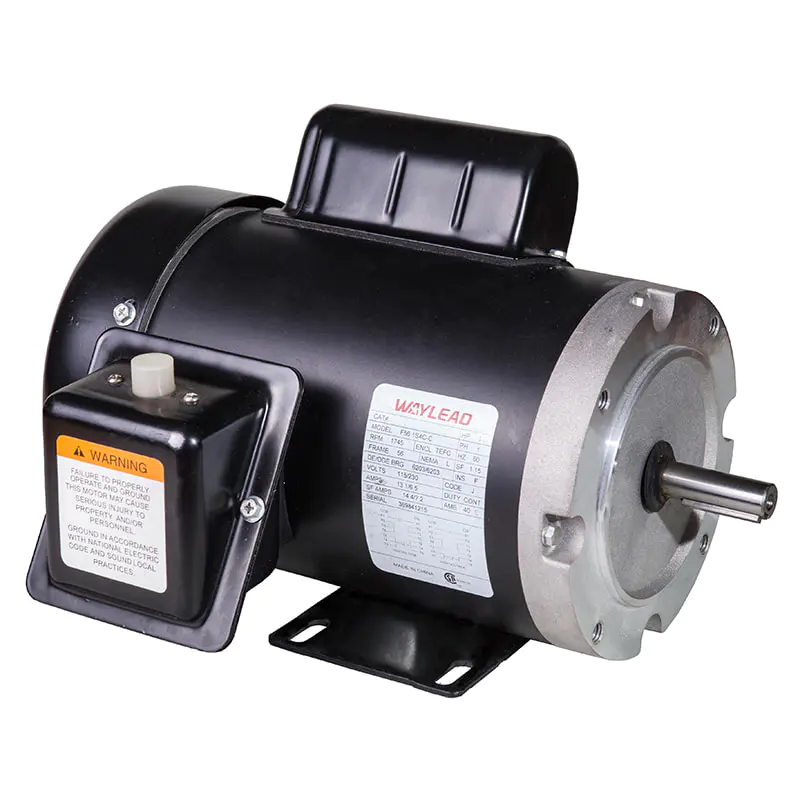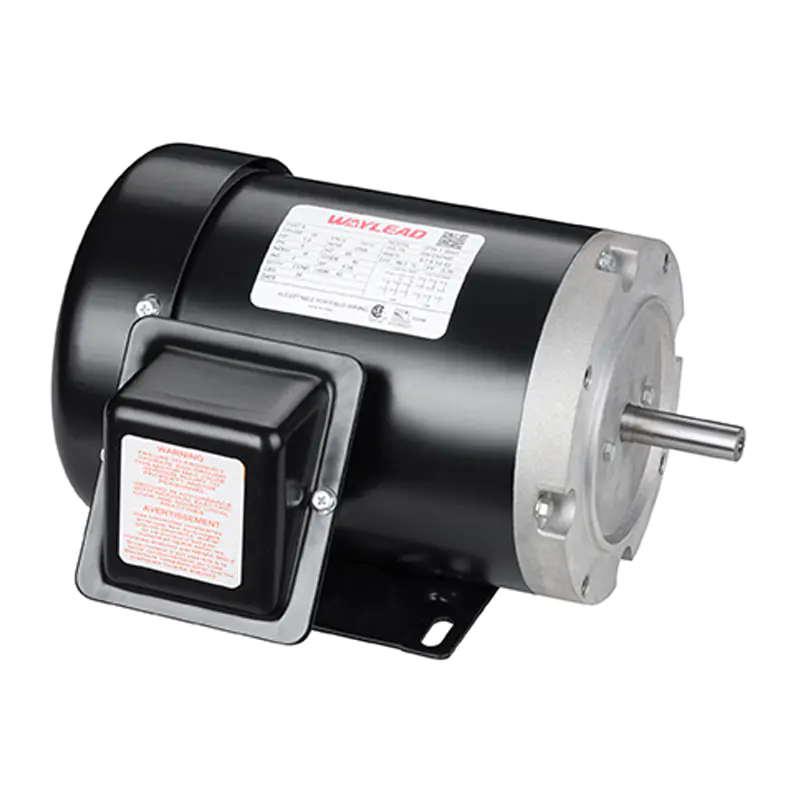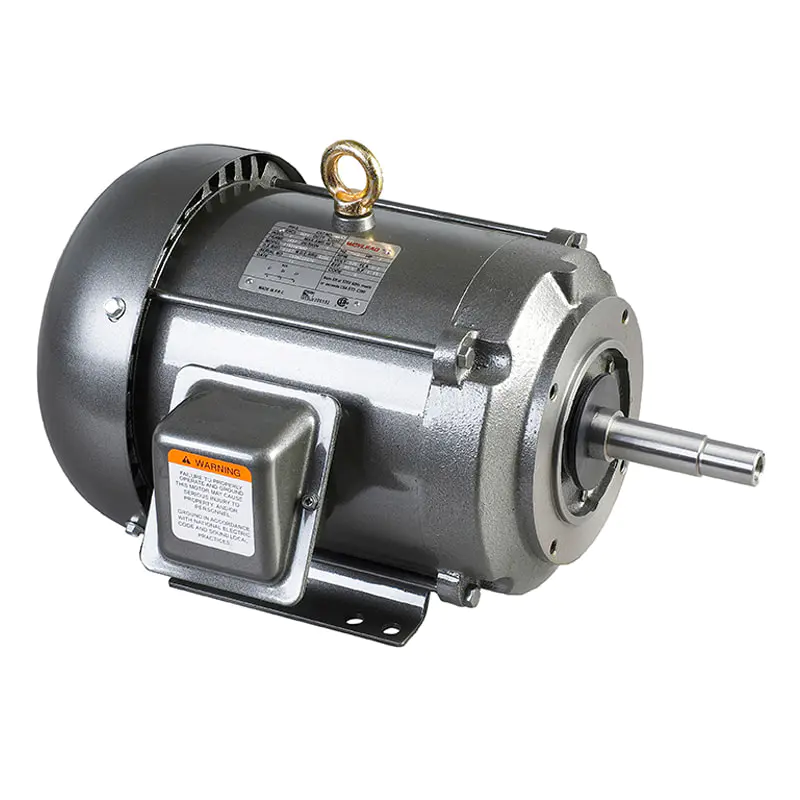
A comprehensive engineering analysis of how housing material choices directly determine motor efficiency, thermal management capability, and total lifecycle cost across industrial and electric vehicle applications.
Key Takeaway
There is no single best electric motor housing material for every application. Aluminum alloys currently dominate over 58% of the global motor housing market due to their superior thermal conductivity and lightweight properties, while cast iron retains a strong 31% share in heavy industrial environments where vibration damping and structural rigidity are paramount. The optimal selection depends on a matrix of thermal performance requirements, mechanical load conditions, manufacturing volume, and total cost of ownership.
1. Why the Choice of Electric Motor Housing Material Defines Motor Longevity
The housing of an electric motor serves as far more than a protective shell. It functions as the primary heat dissipation pathway, the structural backbone that maintains air gap integrity, and a critical determinant of the motor's power density. When engineers select an electric motor housing material, they are making simultaneous decisions about thermal management capacity, electromagnetic interference shielding, corrosion resistance, and manufacturing feasibility.
According to the International Energy Agency's 2025 Global Motor Systems Report, approximately 23% of premature motor failures trace back to inadequate heat dissipation, a condition directly governed by the housing material's thermal conductivity. A motor operating at 15 degrees Celsius above its design temperature can experience a 50% reduction in insulation life, making the housing material a direct contributor to operational reliability.
The housing must also maintain precise dimensional stability across temperature ranges. When a motor cycles from ambient temperature to 155 degrees Celsius under full load, differential thermal expansion between the housing and internal components can alter the rotor-to-stator air gap. Even a 0.1 mm deviation in this gap can reduce motor efficiency by 1.5% to 3%, as documented in IEEE Transactions on Industry Applications (Vol. 60, 2024). This underscores why the coefficient of thermal expansion is a non-negotiable parameter in electric motor housing material specification.
2. Aluminum Alloy Housings: The Dominant Lightweight Solution
Aluminum alloys have become the predominant electric motor housing material across automotive traction motors, HVAC systems, and general-purpose industrial motors. The global aluminum motor housing market was valued at approximately $4.7 billion in 2025 and is projected to grow at a compound annual growth rate of 7.8% through 2032, driven primarily by electric vehicle production scaling.
The core advantage lies in thermal conductivity. Common die-casting alloys such as A380 and A383 deliver thermal conductivity values between 96 and 110 W/mK, roughly two to three times that of cast iron. This enables aluminum-housed motors to dissipate winding heat more rapidly, allowing for higher continuous power density without exceeding insulation class temperature limits. A 2025 study published in the Journal of Electrical Engineering found that aluminum-housed motors achieved 12% lower steady-state winding temperatures compared to identically rated cast iron units under the same load profile.
2.1 Die-Casting vs. Sand-Casting for Aluminum Housings
The manufacturing process significantly influences the final properties of aluminum electric motor housing material. High-pressure die-casting accounts for approximately 72% of all aluminum motor housings produced globally. This process enables wall thicknesses as thin as 2.5 mm, complex integrated cooling channels, and production cycle times under 90 seconds per unit. Sand-casting, while slower and producing thicker minimum wall sections of 5 mm to 6 mm, offers greater alloy flexibility and is preferred for low-volume, large-frame motors where tooling amortization makes die-casting economically unviable.
Advantages of Aluminum
- Thermal conductivity of 96 to 110 W/mK
- Density of 2.7 g/cm3 enables significant weight reduction
- Excellent corrosion resistance with minimal coating
- Complex geometries achievable via die-casting
- Fully recyclable with low energy input
Limitations to Consider
- Lower vibration damping than cast iron
- Reduced stiffness at elevated temperatures
- Higher raw material cost per kilogram
- Galvanic corrosion risk with dissimilar metals
- Limited wear resistance in bearing seat areas
3. Cast Iron Housings: The Enduring Workhorse for Heavy Industry
Cast iron remains an indispensable electric motor housing material for applications where vibration absorption, structural mass, and raw material economy outweigh weight considerations. Gray cast iron grades such as FC200 and FC250 dominate motor frames rated above 200 kW, particularly in mining, steel processing, marine propulsion, and large pumping installations.
The defining characteristic of gray cast iron is its exceptional vibration damping capacity, measured by a specific damping capacity approximately 6 to 10 times higher than aluminum. The graphite flake microstructure dissipates mechanical energy as heat within the material itself, reducing noise transmission and protecting bearing systems from fatigue-inducing vibrations. In a 2024 comparative study conducted by the European Copper Institute, cast iron motor housings demonstrated 8 dB lower radiated noise levels compared to equivalent aluminum frames in the 500 Hz to 2000 Hz frequency range.
Cost economics also favor cast iron in large frame sizes. Raw gray iron foundry costs in 2026 range from $1.10 to $1.50 per kilogram in major Asian and Eastern European production hubs, compared to $3.20 to $4.80 per kilogram for aluminum casting alloys. For a 500 kW motor frame weighing 1,800 kg, this translates to a raw material cost differential exceeding $4,000 per unit.
4. Steel Fabricated Housings: Flexibility for Large and Custom Motors
Welded steel plate construction serves as a practical electric motor housing material solution for large, low-volume machines where casting tooling costs become prohibitive. Fabricated steel housings are common in motors with frame sizes exceeding IEC 500, including wind turbine generators, large hydro-generator end shields, and specialized marine propulsion motors.
Structural steel grades such as S235JR and S355J2 offer yield strengths between 235 MPa and 355 MPa, significantly exceeding the typical 150 MPa to 200 MPa yield strength of cast aluminum alloys. This allows fabricated housings to withstand higher mechanical loads with thinner wall sections in some designs. However, the thermal conductivity of carbon steel at approximately 45 W/mK to 54 W/mK falls between cast iron and aluminum, making it a moderate performer in heat dissipation.
The primary trade-off involves manufacturing economics. Fabricated steel housings require skilled welding labor, post-weld stress relief heat treatment, and machining of weld preparations. These processes make per-unit costs higher than cast alternatives at volumes above 50 to 100 units per year. At very low volumes of 5 to 20 units annually, however, the elimination of pattern and tooling costs makes steel fabrication the most economical path.
5. Advanced Composites and Magnesium Alloys: Emerging Lightweight Contenders
A new generation of electric motor housing material options is emerging from the aerospace and high-performance automotive sectors. Carbon fiber reinforced polymers and magnesium alloys are being evaluated for niche applications where weight reduction justifies significantly higher material costs.
Magnesium alloy AZ91D offers a density of only 1.81 g/cm3, approximately 33% lighter than aluminum and 75% lighter than cast iron. Its thermal conductivity of 72 W/mK, while lower than aluminum, still exceeds cast iron. The challenge lies in corrosion performance and creep behavior at elevated temperatures above 120 degrees Celsius. Surface treatment technologies including plasma electrolytic oxidation have improved corrosion resistance, but magnesium remains largely confined to motorsports and aerospace motor applications where weight savings command extreme premiums.
Carbon fiber reinforced epoxy composites present thermal conductivity values that are highly anisotropic. In the fiber direction, values can reach 400 W/mK or higher with pitch-based fibers, but transverse conductivity may drop below 10 W/mK. This directional behavior requires sophisticated thermal design but opens possibilities for targeted heat extraction pathways. Current material costs exceeding $40 per kilogram limit adoption to prototype and specialty applications.
6. Comprehensive Performance Comparison of Motor Housing Materials
The following table consolidates key engineering parameters for the four primary electric motor housing material categories, enabling direct comparison across thermal, mechanical, and economic dimensions. Data represents typical values for commonly specified grades in each material family as of 2026.
| Property | Aluminum Alloy (A380) | Gray Cast Iron (FC250) | Structural Steel (S355J2) | Magnesium Alloy (AZ91D) |
|---|---|---|---|---|
| Density (g/cm3) | 2.70 | 7.15 | 7.85 | 1.81 |
| Thermal Conductivity (W/mK) | 96 to 110 | 46 to 52 | 45 to 54 | 72 |
| Tensile Yield Strength (MPa) | 160 to 185 | 165 to 250 | 345 to 355 | 150 to 170 |
| CTE (10-6/K) | 21.5 | 10.5 to 11.5 | 11.5 to 12.5 | 26.0 |
| Vibration Damping Capacity | Low | Very High | Moderate | Low to Moderate |
| Raw Material Cost (USD/kg) | 3.20 to 4.80 | 1.10 to 1.50 | 0.90 to 1.30 | 5.50 to 8.00 |
| Corrosion Resistance | Good (with treatment) | Moderate (requires coating) | Low (requires coating) | Moderate (needs protection) |
| Recyclability | Excellent | Excellent | Excellent | Good (specialized process) |
Table data compiled from ISO 3522, EN 1706, and industry material datasheets valid as of Q2 2026. CTE values measured between 20 degrees Celsius and 200 degrees Celsius. Costs reflect global spot market averages for raw foundry-grade materials, not finished component pricing.
7. Manufacturing Cost and Process Trade-offs Across Material Choices
Selecting an electric motor housing material involves balancing raw material expense against manufacturing process costs. The total fabricated cost per housing often diverges significantly from simple material cost comparisons due to differences in process efficiency, tooling amortization, and post-processing requirements.
A detailed cost model for a mid-size industrial motor frame (IEC 160, approximately 35 kg finished weight) reveals instructive economics. An aluminum die-cast housing with integrated cooling fins carries a raw material cost of roughly $140 at 2026 prices but achieves a finished per-unit cost of approximately $215 when produced at volumes exceeding 5,000 units annually. The same frame in gray cast iron carries a raw material cost of only $45 but incurs higher machining costs due to the material's hardness, yielding a finished cost near $160. The differential narrows considerably when factoring in the aluminum housing's 9 kg weight advantage, which reduces shipping costs and installation labor.
Tooling investment represents a critical barrier. A high-pressure die-casting die set for an IEC 160 aluminum frame costs between $45,000 and $70,000, while sand-casting patterns for cast iron may require only $8,000 to $15,000. This five-to-one ratio explains why aluminum die-casting remains concentrated in high-volume applications, while cast iron and fabricated steel dominate in low-volume, large-frame production scenarios.
8. Application-Driven Material Selection Strategy
The practical selection of electric motor housing material follows a decision hierarchy starting with the application's dominant constraint, whether that be weight, thermal performance, noise sensitivity, or purchase cost.
Application Categories and Recommended Materials
- Electric Vehicle Traction Motors — Aluminum alloy is the near-universal choice. The 30% to 40% weight savings versus cast iron directly extends vehicle range. Thermal conductivity supports high continuous power density required for highway driving cycles.
- Heavy Industrial Mill Motors (above 500 kW) — Cast iron dominates. Vibration damping protects bearing life in high-shock environments. Raw material cost advantage scales with frame size.
- Marine Propulsion Motors — Cast iron or fabricated steel with specialized epoxy coatings. Corrosion resistance in salt-laden atmospheres takes precedence over weight considerations.
- HVAC and Pump Motors (IEC 80 to 200) — Aluminum die-castings prevail in high-volume production. Integrated cooling fin geometry reduces part count and assembly cost.
- Aerospace and Motorsport Generators — Magnesium alloys and carbon fiber composites justify their premium cost through extreme weight sensitivity, where every kilogram saved translates to measurable fuel or lap-time benefits.
- Wind Turbine Generator Housings — Fabricated steel or ductile iron. Structural loads from rotor thrust and tower-top acceleration demand high fatigue strength and stiffness.
9. Sustainability and End-of-Life Recycling Considerations
The environmental footprint of an electric motor housing material extends across mining, processing, manufacturing, and eventual recycling. Aluminum and cast iron both score highly on recyclability, but their primary production energy intensities differ dramatically. Primary aluminum smelting consumes approximately 15.5 MWh per metric ton, compared to roughly 2.1 MWh per metric ton for pig iron production in a modern blast furnace. However, secondary aluminum recycling requires only 5% of the primary smelting energy, making post-consumer aluminum an exceptionally sustainable feedstock.
The International Aluminum Institute reports that over 75% of all aluminum ever produced remains in active use, a testament to the material's infinite recyclability without property degradation. Cast iron similarly benefits from established scrap recovery infrastructure, with steel and iron comprising the most recycled material stream globally at over 600 million metric tons annually. For motor manufacturers facing increasingly stringent environmental regulations, the choice of housing material increasingly factors into corporate carbon accounting and regulatory compliance strategy.
10. Future Innovations in Motor Housing Material Technology
Research into advanced electric motor housing material solutions is accelerating on multiple fronts. Additive manufacturing of aluminum housings using laser powder bed fusion now enables conformal cooling channels that follow the exact contour of stator windings, improving heat extraction by up to 25% compared to conventional linear cooling passages. The technology remains cost-prohibitive for mass production but is gaining traction in motorsport and defense applications where performance trumps cost.
Metal matrix composites incorporating silicon carbide or boron nitride particles into aluminum matrices promise thermal conductivity values approaching 180 W/mK while maintaining the processability of conventional casting alloys. Early commercialization efforts are underway, with material costs currently running 3 to 5 times those of standard A380 alloy but expected to decline as production scales through 2030.
Multi-material housing designs represent another emerging trend. Some advanced motor designs now employ a cast aluminum main body with steel bearing inserts, combining the thermal benefits of aluminum with the wear resistance and stiffness of steel at critical load-bearing interfaces. This hybrid approach optimizes material utilization by placing each electric motor housing material precisely where its properties deliver maximum value.
11. Frequently Asked Questions
Q: What is the most common electric motor housing material used today?
Aluminum alloys, particularly A380 and A383 grades, account for approximately 58% of global motor housing production by volume. Their combination of lightweight construction, excellent thermal conductivity, and suitability for high-volume die-casting makes them the preferred choice across automotive, HVAC, and general industrial motor applications.
Q: How does the electric motor housing material affect motor efficiency?
The housing material influences efficiency primarily through thermal management. A housing with higher thermal conductivity lowers winding operating temperature, which reduces copper resistive losses. Every 10 degrees Celsius reduction in winding temperature improves motor efficiency by approximately 0.3% to 0.5%. Additionally, the housing's dimensional stability under thermal cycling maintains the air gap geometry, preventing efficiency losses from magnetic flux leakage.
Q: Why is cast iron still used for electric motor housings despite its weight?
Cast iron offers superior vibration damping, lower raw material cost, and excellent machinability. In large industrial motors above 200 kW, the weight penalty becomes less significant relative to the total installation mass, while the vibration damping properties directly extend bearing service life and reduce noise emissions in sensitive environments such as mining and marine applications.
Q: Can composite materials replace metals for motor housings in the near future?
Composite materials such as carbon fiber reinforced polymers will likely remain niche solutions for the next five to ten years due to their high cost and anisotropic thermal properties. However, they are gaining ground in aerospace and high-performance motorsport applications where weight reduction commands extreme value. Broader adoption depends on reducing fiber and processing costs by at least 50% from current levels.
Q: What is the cost difference between aluminum and cast iron motor housings?
For a mid-size motor frame weighing approximately 35 kg, the finished aluminum die-cast housing costs roughly $215 at production volumes above 5,000 units, compared to approximately $160 for an equivalent cast iron housing. The 34% cost premium for aluminum is offset by weight savings of 62%, reduced shipping costs, and often lower installation labor. Total lifecycle cost analysis frequently favors aluminum in weight-sensitive and thermally demanding applications.
Summary and Engineering Guidance
The selection of an electric motor housing material represents a multi-objective optimization problem where thermal performance, structural integrity, manufacturing economics, and environmental impact must be simultaneously satisfied. Aluminum alloys provide the best balance for the majority of modern motor applications, particularly where weight and thermal conductivity are prioritized. Cast iron retains irreplaceable advantages in heavy industrial contexts where vibration control and raw material economy dominate. Emerging materials including magnesium alloys, composites, and additively manufactured hybrid designs promise expanded design freedom but require further cost reduction before achieving widespread commercial adoption. Engineering teams should anchor their material selection process in a quantified analysis of the specific thermal, mechanical, and economic requirements of their target application rather than relying on generic material preferences.