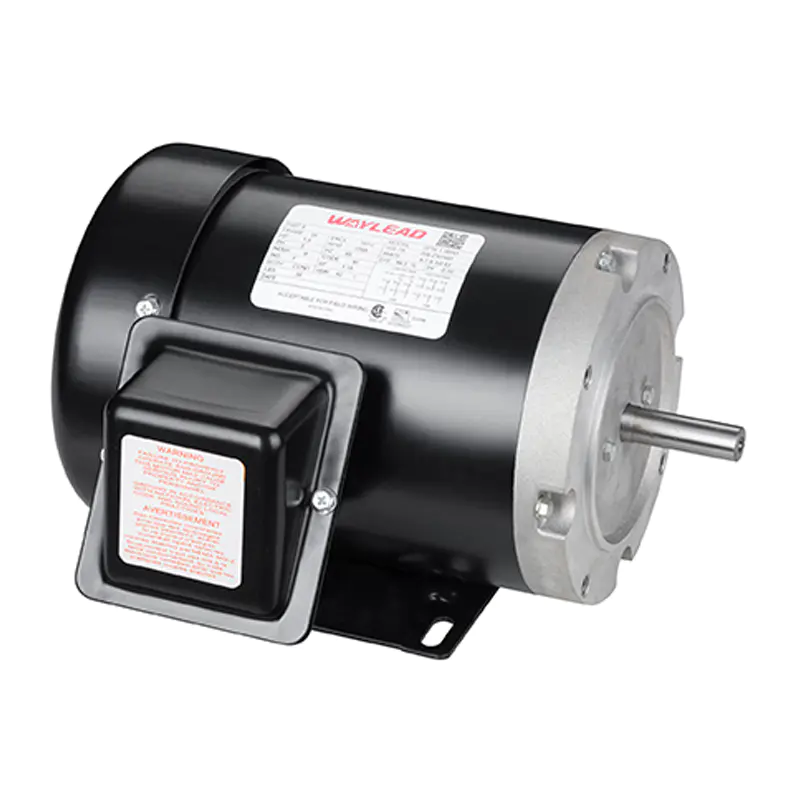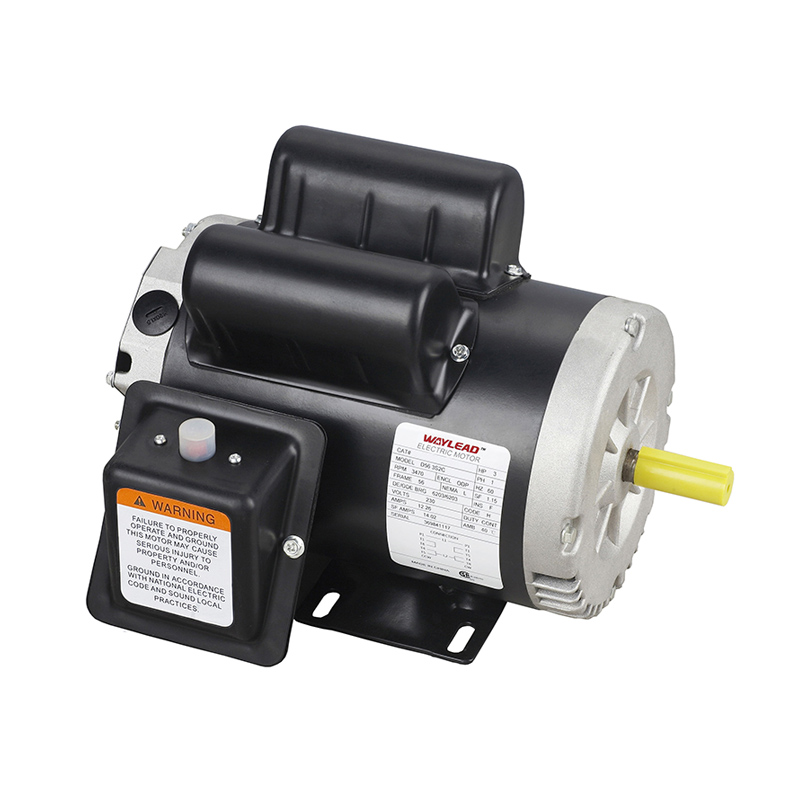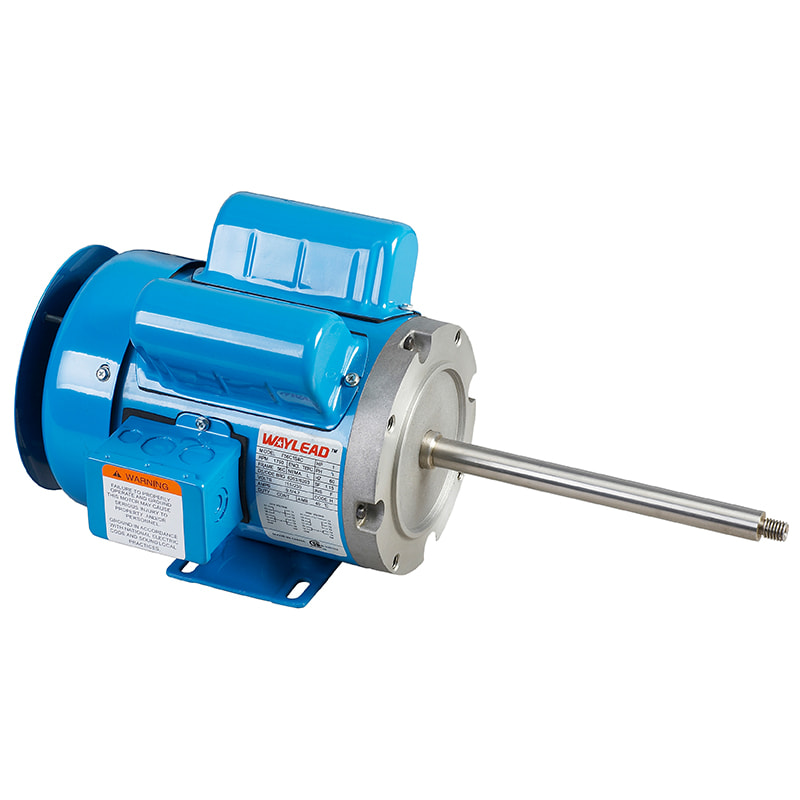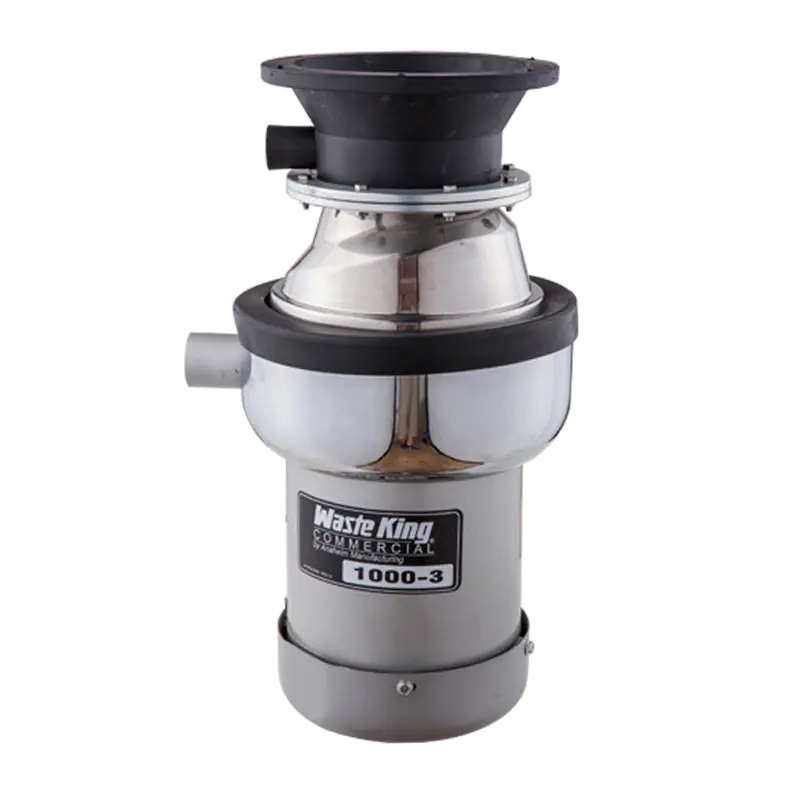
An electric motor converts electrical energy into mechanical energy, primarily through the interaction of magnetic fields and current-carrying conductors. The fundamental working principle relies on the force generated when a current passes through a coil inside a magnetic field, producing torque that turns the rotor. This rotational force is what drives pumps, fans, compressors, and countless other industrial and commercial machines.
The two basic structural components are the stationary stator and the rotating rotor. The stator generates a magnetic field, either from permanent magnets or field windings, while the rotor carries the armature conductors. In an induction motor, the stator's rotating magnetic field induces current in the rotor bars, creating a secondary magnetic field that chases the stator's field, resulting in continuous rotation without direct electrical contact to the rotor. The motor and generator relationship is reciprocal; apply mechanical force to turn the rotor, and the same device becomes a generator, producing electricity.
Industrial motor specifications cover a wide range to match diverse mechanical loads. Standard frame sizes and power ratings are critical reference points during selection. For instance, a manufacturer's catalog might include over 2,000 specifications ranging from 1/10 to 20HP, matching frame sizes from 48 to 250. This breadth of coverage is essential because a fractional-horsepower motor for a small fan has little in common structurally with a 20HP unit driving a hydraulic system, even though the underlying electromagnetic principles remain identical.
Choosing a motor starts not with a specific model number, but with narrowing the field by classification. There are five practical dimensions that matter most during procurement and equipment design. Filtering by these dimensions quickly eliminates incompatible options and focuses your search on viable candidates.
First, power supply type separates motors into AC and DC categories. AC motors dominate fixed-speed industrial applications because of simpler construction and direct compatibility with mains power. Second, phase divides AC motors into single-phase and three-phase. This single decision immediately sets limits on starting torque, power availability, and efficiency. Third, enclosure type defines environmental protection: a dripproof motor works in clean, dry settings, while a totally enclosed fan-cooled (TEFC) or totally enclosed non-ventilated (TENV) motor is required for wet, dusty, or corrosive conditions. Fourth, efficiency class has become non-negotiable with modern energy regulations. The choice between standard, high-efficiency (IE2), and premium-efficiency (IE3) affects long-term operating cost far more than initial purchase price. Fifth, application specialization distinguishes general-purpose motors from units purpose-built for pumps, air compressors, agricultural equipment, or braking systems.
These dimensions overlap. A pump motor may be a three-phase, TEFC, premium-efficiency unit. The skill in selection is knowing which dimension carries the most weight for your specific operating conditions. For a deeper look at how these classification and application of motors translate into real-world usage, the topic warrants careful study before moving to detailed specifications.
AC motors operate directly from alternating current, use a simple and rugged construction without brushes or commutators in induction designs, and are the standard choice for constant-speed continuous-duty industrial applications. DC motors offer superior speed control and high starting torque but require a commutator and brushes or an electronic controller to switch current direction, which adds maintenance points. For most industrial equipment, including pumps, fans, conveyors, and compressors, an AC induction motor is the appropriate baseline choice unless variable-speed precision is the primary requirement.
The dominance of AC motors in manufacturing and processing environments is reflected in product catalogs worldwide. The vast majority of motors deployed in factories are three-phase AC machines because they deliver reliable, efficient power with minimal maintenance. DC motors still appear in battery-powered mobile equipment, older elevator systems, and some precision servo applications, but for general industrial work, the AC motor is the practical default. Your first real decision is not usually AC versus DC; it is single-phase or three-phase power.
Single-phase motors are limited by physics. A single alternating voltage cannot create a rotating magnetic field on its own; the field merely pulsates. To start rotation, single-phase motors require an auxiliary winding, capacitor, or shaded pole to generate a phase shift. This creates a net torque in one direction, but the starting torque is inherently lower, and the power range tops out at a few horsepower. Three-phase motors enjoy a natural rotating magnetic field from the 120-degree phase separation of the supply. The result is smooth, self-starting operation, higher power density, and significantly better efficiency under load.
The practical boundary is clear. If your facility has three-phase power available and the application requires more than about 3 to 5 horsepower, a three-phase motor is almost always the right answer. Single-phase motors fill a necessary role in residential, light commercial, and rural settings where only single-phase power is available, but they are why single-phase motors are not ideal for high-power industrial use. The higher current draw for the same power output leads to greater line losses and higher operating temperatures. For a more fundamental look at this category, understanding what a single-phase motor is helps clarify these design limitations.
Three-phase industrial motors deliver clear advantages in reliability and lifecycle cost, which is why they are the backbone of industrial power. The absence of start capacitors and centrifugal switches, which are common failure points in single-phase designs, directly reduces maintenance. Advantages of three-phase motors include higher efficiency, smoother torque delivery, and smaller physical size for equivalent power. This makes them the default choice for continuous-duty pumps, compressors, and material handling systems.
The single-phase category is not one monolithic design. Different starting methods create distinct subtypes, each suited to specific load characteristics. Selecting the wrong subtype leads to insufficient starting torque or premature capacitor failure.
A capacitor-start motor uses a capacitor in series with the start winding, providing high starting torque for hard-to-start loads like air compressors and positive displacement pumps. A centrifugal switch disconnects the start winding and capacitor once the motor reaches about 75% of rated speed. A capacitor-run motor keeps a smaller run capacitor in the circuit continuously, improving running efficiency and power factor but delivering lower starting torque, making it suitable for fans and blowers. A capacitor start/run motor uses two capacitors, one for starting and one for running, combining high starting torque with good running characteristics. A resistance-start (split-phase) motor uses a high-resistance auxiliary winding to create a phase shift, offering low starting torque at reduced cost for easy-to-start loads like small fans and pumps.
Understanding these internal distinctions is crucial. A capacitor-start motor from a product catalog, such as a dripproof single-phase capacitor-start unit, is a specific tool for a specific job. Using a resistance-start design on a high-inertia conveyor will result in a motor that fails to start or repeatedly burns out start windings. The range extends further to totally enclosed capacitor-run motors for dusty farm environments and fractional-horsepower premium-efficiency designs that reduce energy use in continuous-duty applications. When you are ready to compare specific frame sizes and enclosures within this group, you can browse our single-phase motor range to see how these types map to actual product specifications.
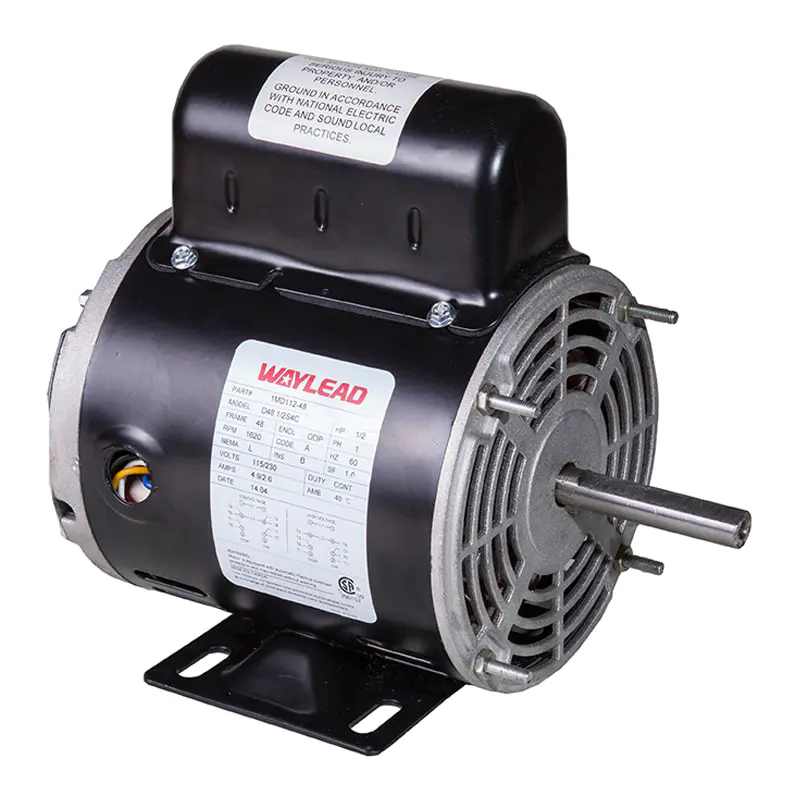 Custom Wholesale Single-phase Motor Manufacturers, FactoryAs a China single phase motors manufacturers and custom Single-phase Motor factory, Waylead Electric Motor Manufacturing Co.,Ltd offer wh...View Product →
Three-phase motor variations are defined more by enclosure and frame construction than by starting methods, because the rotating field makes all three-phase motors self-starting. The primary selection factor is the environment. A dripproof motor has open vents that allow ambient air to circulate through the windings for cooling but provides no protection against moisture or particles falling from above. These are restricted to clean, dry indoor installations. A totally enclosed fan-cooled (TEFC) motor seals the interior from the outside, cooling itself via an external fan blowing air over the finned frame. This design is standard for outdoor, washdown, and dusty environments.
The frame size then determines mounting compatibility and power capacity. A 56-frame three-phase motor serves fractional-horsepower applications, while larger frame numbers indicate larger shaft heights and higher torque outputs. Specialized designs like the 56-frame four-in-one motor offer mounting flexibility for OEM equipment builders who need one mechanical design to serve multiple applications. For higher-power applications demanding lower operating costs, a three-phase fractional-horsepower premium-efficiency motor delivers nameplate efficiency improvements that compound directly into annual energy savings. The full three-phase motor product lineup reflects this logical progression from standard enclosures to high-efficiency variants designed for continuous industrial duty.
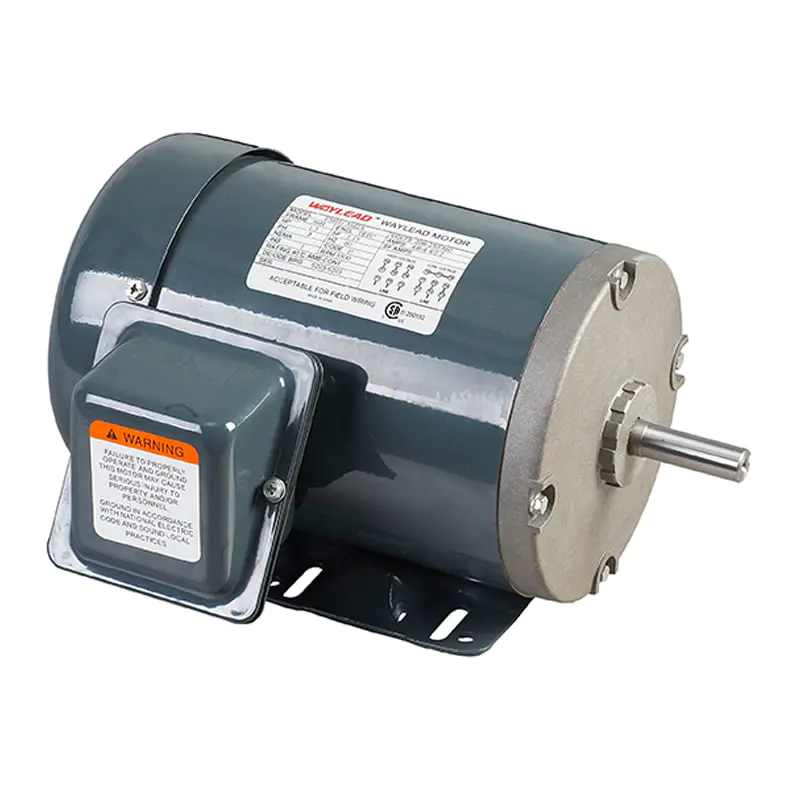 Three Phase Motor Manufacturers, Custom Three Phase Motor Factory - Cixi WayleadAs a China Three Phase Motor manufacturers and custom Three Phase Motor factory, Waylead Electric Motor Manufacturing Co.,Ltd offer whole...View Product →
General-purpose motors are a compromise. A purpose-built motor designed for a specific operating profile always outperforms a general-purpose unit in its intended application. Recognizing when a special-purpose motor is justified comes down to duty cycle, mechanical interface, and safety requirements.
Pump motors are engineered specifically for hydraulic loads. Jet pump motors are built with thrust bearings to handle the axial force from water pressure, and close-coupled pump motors feature a machined end plate for direct bolt-on connection to the pump housing, eliminating the need for a separate coupling and baseplate. Pool and spa pump motors use sealed enclosures and stainless steel shafts to resist chemical attack and moisture. Replacing a standard general-purpose motor with a proper JM or JP close-coupled pump motor reduces misalignment and bearing wear.
Farm-duty motors handle the high starting torque and harsh conditions of agricultural equipment. An air compressor motor on a farm operates in unheated outbuildings with dust and temperature extremes, requiring heavy starting windings and corrosion-resistant treatments. Totally enclosed designs protect against grain dust and chaff. Fan motors for agricultural ventilation run for months at a time with minimal attention, making bearing quality and thermal capacity the primary design priorities.
Brake motors integrate an electromagnetic spring-applied brake directly on the non-drive end of the motor. When power is removed, the brake engages instantly, holding the load and preventing coasting or drift. This is a safety-critical function for hoists, inclined conveyors, and machine tools where uncontrolled movement after a stop command or power loss creates a hazard. The brake motor is not a standard motor with an external brake bolted on; the integration ensures the brake releases and engages in precise coordination with motor energization.
TENV (Totally Enclosed Non-Ventilated) motors reject heat through the frame surface alone, without a cooling fan. This design is essential in extremely dirty or fibrous environments where a fan would clog quickly, and in applications requiring a smooth, easily cleaned exterior surface. The trade-off is lower power density for a given frame size, since passive cooling is less effective than forced air. Special motors under this category also include resilient-base units and NEMA EC motors designed for specific mounting and efficiency requirements.
The efficiency difference between motor classes is a direct operating cost difference. A premium-efficiency (IE3) motor converts a higher percentage of input electrical power into mechanical work compared to a standard-efficiency or high-efficiency (IE2) motor. The lost energy becomes heat, which also stresses the winding insulation and bearings, shortening service life. The purchase price premium for a higher efficiency class is repaid through reduced electricity bills, and the payback period shortens with every hour the motor runs.
Motor efficiency standards are now regulatory requirements, not marketing claims. Certifications such as the U.S. Department of Energy compliance, CSA CUS, and UL recognition validate that a motor meets specific minimum efficiency levels at full and partial load. The difference between IE2 and IE3 is defined by international standards, and understanding the key differences between IE2 and IE3 motors directly informs purchasing decisions when regional regulations mandate a minimum tier. IE3 motors achieve higher efficiency through more copper in the windings, higher-grade magnetic steel in the laminations, and reduced fan losses, all of which add material cost but reduce slip and resistive heating. For further background on these high-efficiency and ultra-high-efficiency motor designs, the engineering trade-offs become clear when you examine the steel and copper content per horsepower.
For continuous-duty applications running 24 hours a day, the energy saving from upgrading to a premium-efficiency motor often recovers the incremental cost within 12 to 18 months, after which the savings continue for the remaining 15 to 20 years of the motor's lifespan. This calculation is not subtle; it is the primary financial justification for specifying high-efficiency or premium-efficiency motors in any new installation or replacement project. When evaluating options, you can review premium-efficiency motor options across different enclosures, including dripproof, TEFC, and cast-iron frame designs that suit various environmental and load requirements.
 Custom High/Premium Efficiency Motor Manufacturers, FactoryCixi Waylead Electric Motor Manufacturing Co.,Ltd is China wholesale high efficiency motor manufacturers and custom premium efficiency mo...View Product →
Two globally dominant standards define motor dimensions, power ratings, and performance: NEMA (National Electrical Manufacturers Association), primarily used in North America, and IEC (International Electrotechnical Commission), adopted throughout Europe, Asia, and much of the rest of the world. A motor built to NEMA standards will not be mechanically interchangeable with an IEC motor of the same nominal power. The shaft diameters, mounting bolt patterns, and frame size designations follow entirely different conventions.
For international procurement, ignoring this distinction causes direct compatibility problems. A NEMA 56C face-mounted pump motor cannot directly replace an IEC 90-frame pump motor without an adapter plate and shaft modification. The labeling conventions also differ. NEMA uses letter codes for locked-rotor kVA and defines service factor explicitly, while IEC uses duty cycle designations (S1, S2, etc.) with different thermal margin assumptions. A NEMA motor typically carries a 1.15 service factor, allowing continuous operation at 115% of rated load, which is not a standard assumption under IEC ratings.
For OEMs exporting machinery across regions, offering both NEMA and IEC motor options is a practical necessity. A pumping station designed for the U.S. market specifies NEMA motors, while the same design sold into Southeast Asia requires IEC frame motors. The availability of IEC IE2 high-efficiency and IEC IE3 premium-efficiency motors means that international energy standards can be met while maintaining local mechanical compatibility. Your first filter when selecting a motor should therefore be the standard governing your installation geography; all other choices flow from this decision.
Choosing a motor by browsing specifications without a decision framework leads to inconsistency and costly errors. A structured, step-by-step elimination process converts the confusing array of motor types into a manageable path to the correct specification.
This sequence prevents the common mistake of selecting a motor based on price or availability and then discovering it is the wrong enclosure for the washdown area, the wrong efficiency for the energy code, or the wrong frame standard for the pump flange. Starting with the power supply and ending with the mechanical fit ensures every selected motor does the job required, safely and cost-effectively, for its entire service life.
Navigating the various types of electric motors is primarily an exercise in systematic elimination. The fundamental divisions between AC and DC, single-phase and three-phase, dripproof and totally enclosed, and standard and premium efficiency each carry clear implications for performance, cost, and reliability. There is no single best motor; there is only the correct motor for the specific combination of power supply, load characteristics, environment, and regulatory requirements you face.
If you are specifying a motor for new equipment or replacing a failed unit, start with the five-step framework outlined above. Confirm the power supply, define the load, characterize the environment, check efficiency regulations, and then match the mechanical interface. This approach ensures you arrive at a specification that is both technically sound and economically justified, without being distracted by options that are fundamentally unsuited to your conditions.
Copyright © 2018 Cixi Waylead Motor Manufacturing Co., Ltd.All Rights Reserved.
 Login
Wholesale AC Motor Manufacturers
Login
Wholesale AC Motor Manufacturers