Short Answer: Single-Phase Motors Can Run on Three-Phase Power
Imagine a workshop with a 240 V delta three-phase panel and a newly installed conveyor whose motor is a single-phase 1 HP unit. The motor can be operated, but only by taking power from two of the three phase conductors. The motor never receives “three-phase” power; it receives single-phase voltage between those two conductors. As long as the line-to-line voltage is within the motor's rated tolerance, the motor runs normally. Do not connect a single-phase motor across all three phases because that wiring error can destroy the motor and the starter.
The correct wiring is the first thing we verify in our motor manufacturing facility, because a simple mistake at the junction box is one of the most common causes of motor failure in the field.
Three Supply Configurations That Determine the Answer
Whether a single-phase motor can run on a three-phase supply depends on the type of three-phase system and the motor nameplate voltage. The following three configurations cover most industrial and commercial installations.
1. Four-Wire Wye System with Neutral
Connect the single-phase motor between one phase and the neutral conductor. In a 120/208 V wye system, this provides 120 V; in a 277/480 V wye system, it provides 277 V. A motor rated 115 V or 120 V will run normally on the first, while a motor rated 277 V can run on the second. This is the most straightforward and safest arrangement.
2. Three-Wire Delta System Without Neutral
Use any two of the three phase conductors. In a 240 V delta system, the phase-to-phase voltage is 240 V, which suits a standard 230 V single-phase motor. In a 480 V delta system, you would need a motor rated 460 V or 480 V. A 120 V single-phase motor cannot be connected directly because no neutral is available.
3. 208 V Line-to-Line from a 120/208 V Wye System
This is the most common source of confusion. A 120/208 V wye supply provides 208 V between phases and 120 V from each phase to neutral. If you connect a motor rated 230 V between two phases, 208 V is just inside the standard NEMA tolerance of ±10% because 207 V is the lower limit. However, the motor will have lower starting torque, draw slightly higher full-load current, and run hotter. A motor rated exactly 208 V is a better match. A motor marked 240 V, rather than 230 V, is outside tolerance and should not be connected directly.
Voltage Tolerance: The Real Limit
A single-phase motor will usually start and run even with moderately lower voltage, but operating temperature rises quickly and service life drops. Use the motor nameplate rating as the reference, not the supply system name. NEMA standard practice allows a ±10% variation from the rated voltage: a 115 V motor accepts roughly 103.5 to 126.5 V, a 230 V motor accepts 207 to 253 V, and a 460 V motor accepts 414 to 506 V.
The table below shows what happens with common combinations of single-phase motor ratings and three-phase supply connections.
| Supply configuration | Motor connection | Motor rating | Result |
|---|---|---|---|
| 120/208 V wye, with neutral | L1 to neutral | 115 or 120 V | Normal operation |
| 120/208 V wye, with neutral | L1 to L2 | 230 V | Marginal; acceptable but lower torque and higher heating |
| 120/208 V wye, with neutral | L1 to L2 | 240 V | Under voltage; not allowed |
| 240 V delta, three-wire | L1 to L2 | 230 V | Normal operation |
| 480 V delta, three-wire | L1 to L2 | 460 V | Normal operation |
| 480 V delta, three-wire | L1 to L2 | 230 V | Overvoltage; motor will burn out |
The risk is therefore less about the number of phases and more about the actual voltage between the two conductors you select. Always measure the voltage before energizing the motor.
How to Check Whether Your Single-Phase Motor Will Run
Before connecting a single-phase motor to a three-phase panel, follow this simple verification process.
- Read the motor nameplate. Confirm that the motor is marked “single phase” and note the rated voltage, such as 115/230 V or 230/460 V.
- Measure the actual voltage between the two conductors you plan to use with a true-rms multimeter at the motor disconnect. Do not rely solely on the service label.
- Compare the measured voltage with the motor nameplate rating. Use the ±10% range to determine whether the connection is acceptable.
- Check the motor connection diagram. Dual-voltage single-phase motors often require changing the terminal connection before rewiring.
- Verify overload protection. A connection taken from a three-phase panel may have a different short-circuit current rating, so size the fuses or motor circuit protector from the motor nameplate current.
If the measured voltage falls outside the acceptable range, do not energize the motor until you install a transformer or another voltage-correction device.
Single-Phase Motor vs. Three-Phase Motor: Which Makes More Sense?
Once you confirm that a single-phase motor can run on your three-phase system, you still need to decide whether it should. For small machines, a single-phase motor is acceptable. For higher power, continuous duty, or frequent starting, a three-phase motor has clear advantages. The table below compares the key factors.
| Factor | Single-phase motor | Three-phase motor |
|---|---|---|
| Supply connection | Two wires from the three-phase panel | Three phase conductors |
| Efficiency | Good, but lower for the same frame size | Higher, especially at fractional horsepower |
| Starting components | Start capacitor, run capacitor, or start switch required | Self-starting; no capacitor or switch |
| Practical power range | Usually up to about 2–3 HP | From fractional horsepower to hundreds of HP |
| Maintenance | More wear parts and failure modes | Simpler winding system, no centrifugal switch |
| Voltage flexibility | Limited to nameplate single-phase ratings | Easier to match 208, 230, 460, or 575 V services |
| VFD compatibility | Not suitable for standard VFD output | Compatible with most variable frequency drives |
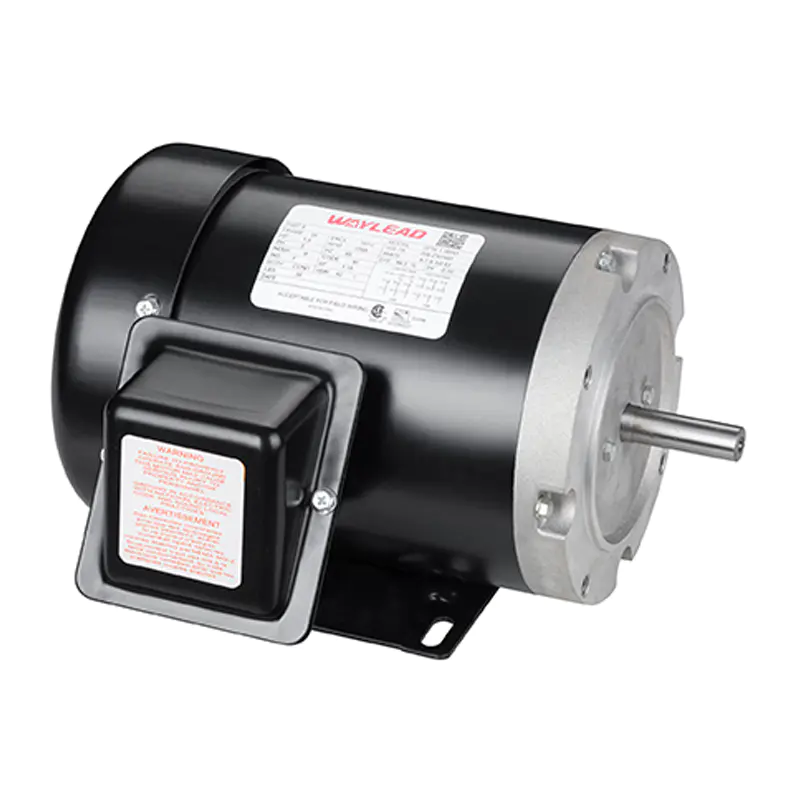
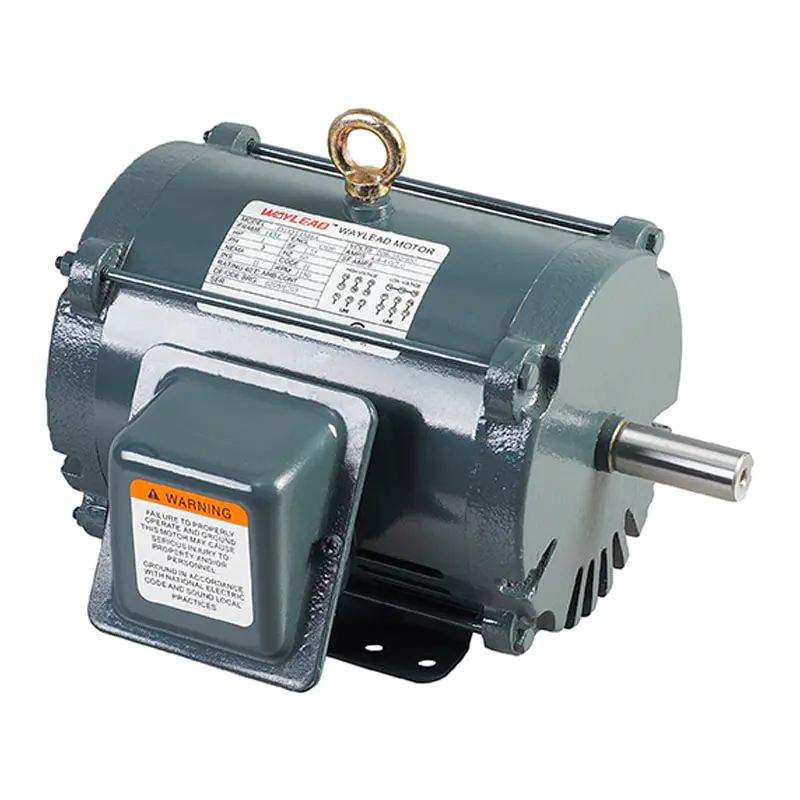
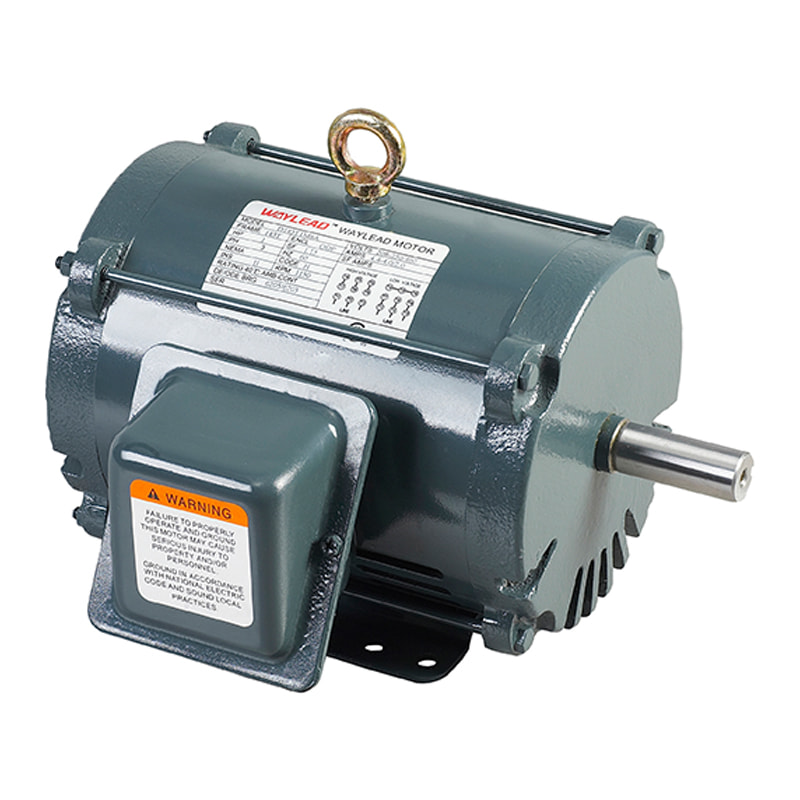
If you already have three-phase power, the most reliable route is to select a motor designed for that supply. A three-phase four-in-one motor is a common replacement for 56-frame equipment and eliminates the need for capacitors or starting switches.
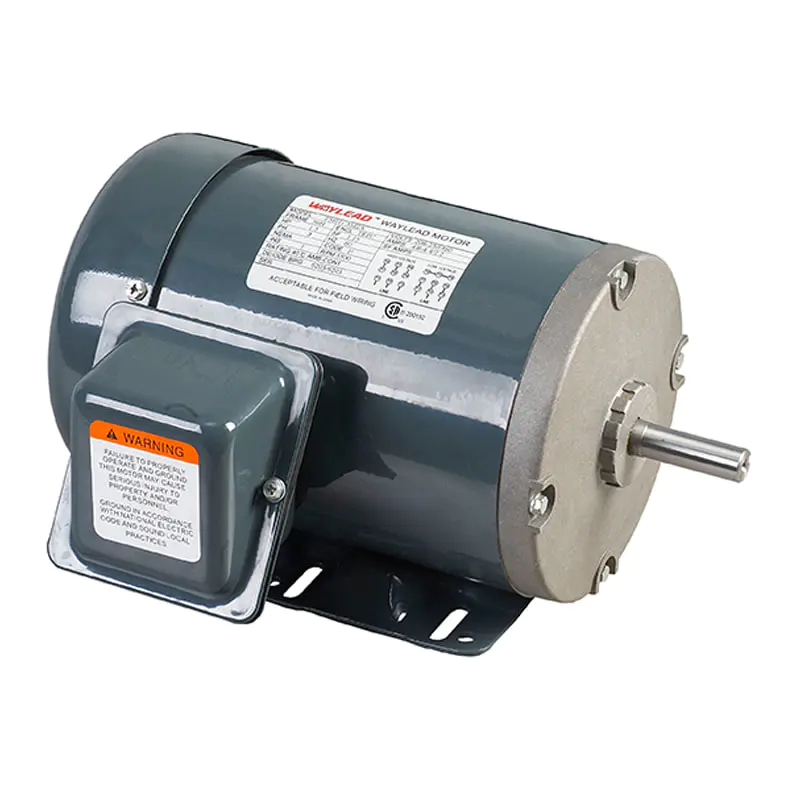 OEM 56 Frame Four-in-one Motor, Three-Phase Suppliers, Company - Cixi Waylead ElWaylead Electric Motor Manufacturing Co.,Ltd is china OEM 56 Frame Four-in-one Motor, Three-Phase suppliers and company, detail:Features:...View Product →
Practical Buying Considerations: Keep or Replace?
The practical question after the technical answer is cost and downtime. Replacing a single-phase motor with a three-phase motor is usually the better long-term choice when the machine is hard-wired to a three-phase service. A three-phase motor runs cooler, uses slightly less energy, and requires no starting capacitor replacement. However, if the machine has single-phase controls or the voltage mismatch is small and easily corrected, retaining the existing motor can be quicker and less expensive.
- Keep the single-phase motor when the machine came with it, the power is below about 2 HP, and the available voltage matches the nameplate.
- Replace with a three-phase motor when the motor is above 2 HP, the service is 208 V line-to-line but the motor is rated 240 V, or the equipment will run continuously.
- Use a transformer when you need to operate a 230/240 V single-phase motor from a 120/208 V wye service; a buck-boost transformer can correct 208 V to 230/240 V.
- Avoid phase converters for single-phase motors. A phase converter creates three-phase power for three-phase motors; it does not convert a three-phase supply into a single-phase supply.
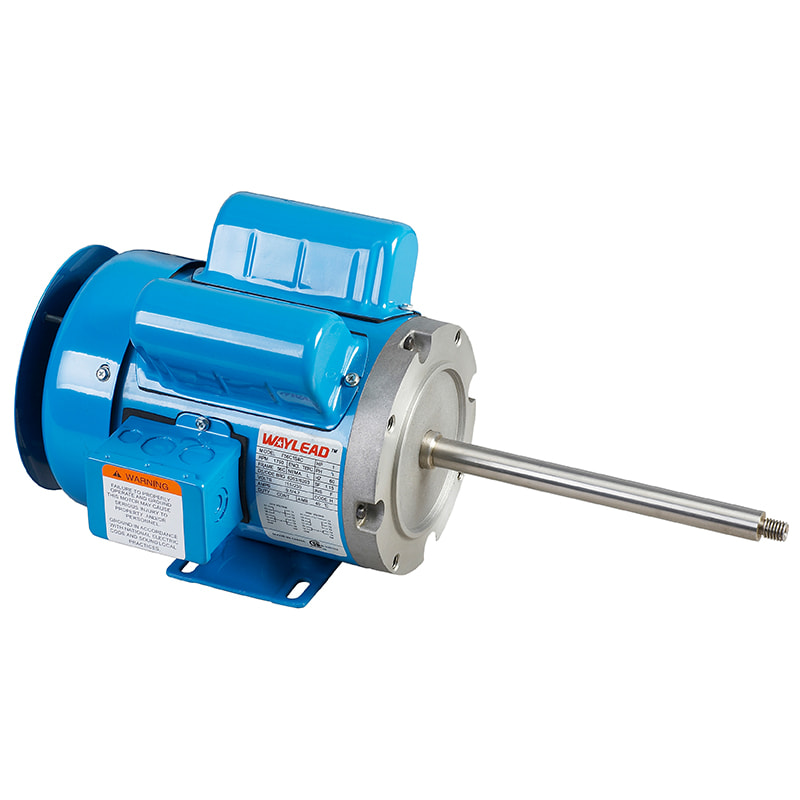
For a small- or medium-duty 115/230 V installation where a three-phase changeover is not planned, a dripproof single-phase capacitor-start motor provides familiar starting torque and simple service, provided the supply voltage is corrected and the branch circuit is protected correctly. Compare the available frame sizes and electrical ratings in the Waylead product catalogue before making the final decision.
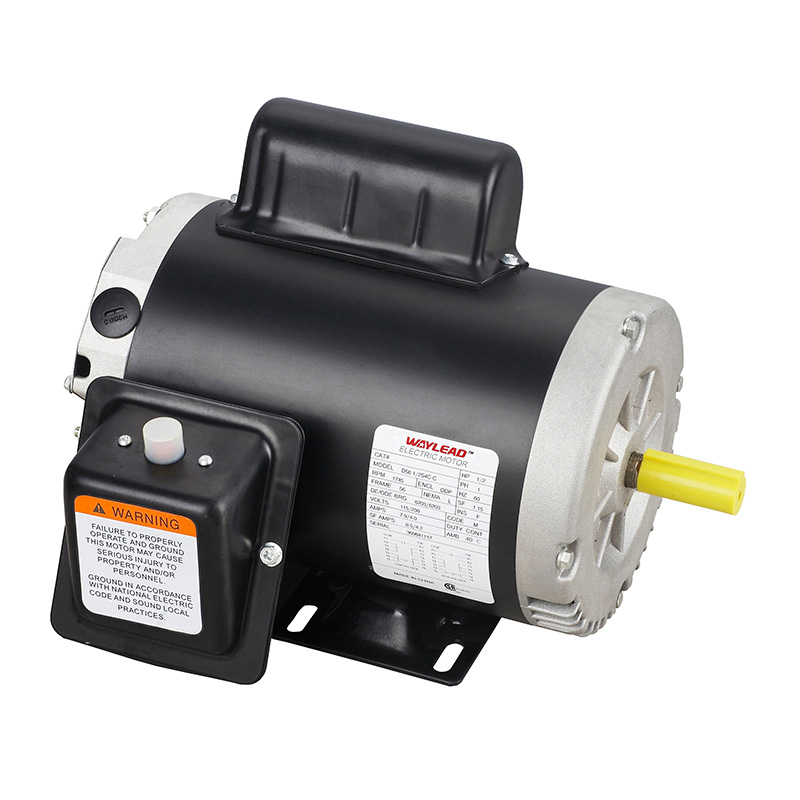 OEM Dripproof Single-Phase Capacitor Start Motor Suppliers, Company - Cixi WayleWaylead Electric Motor Manufacturing Co.,Ltd is china OEM Dripproof Single-Phase Capacitor Start Motor suppliers and company, detail:Feat...View Product →
Frequently Asked Questions
Can I wire a single-phase motor to all three phases?
No. A single-phase motor has only two power input points. Connecting all three phases, or connecting two phases to one terminal and one phase to the other, creates a serious electrical fault. Use only one phase and neutral, or two phases, according to the motor rating.
Will a 240 V single-phase motor run on 208 V?
Not reliably. A motor marked 240 V is outside the acceptable NEMA range on a 208 V supply because 208 V is about 13% below the nameplate rating. A motor marked 230 V is at the edge of the ±10% tolerance, but it will run with lower torque and higher temperature. A buck-boost transformer is the safer solution for either motor.
Can a three-phase generator power a single-phase motor?
Yes, using the same rule. Use one phase and neutral if available, or two phases if the line voltage matches the motor. A portable three-phase generator that provides only 208 V line-to-line will still require voltage correction for a 230/240 V single-phase motor. For larger loads, consider a single-phase generator or a three-phase motor instead.
Does using two phases of a three-phase system unbalance the load?
Slightly. A single-phase load connected between two phases draws current from only those two phases, while the third phase carries nothing. For a single small motor, the unbalance is generally acceptable. For larger loads, distribute multiple single-phase loads across the three possible phase pairs to keep the system balanced.