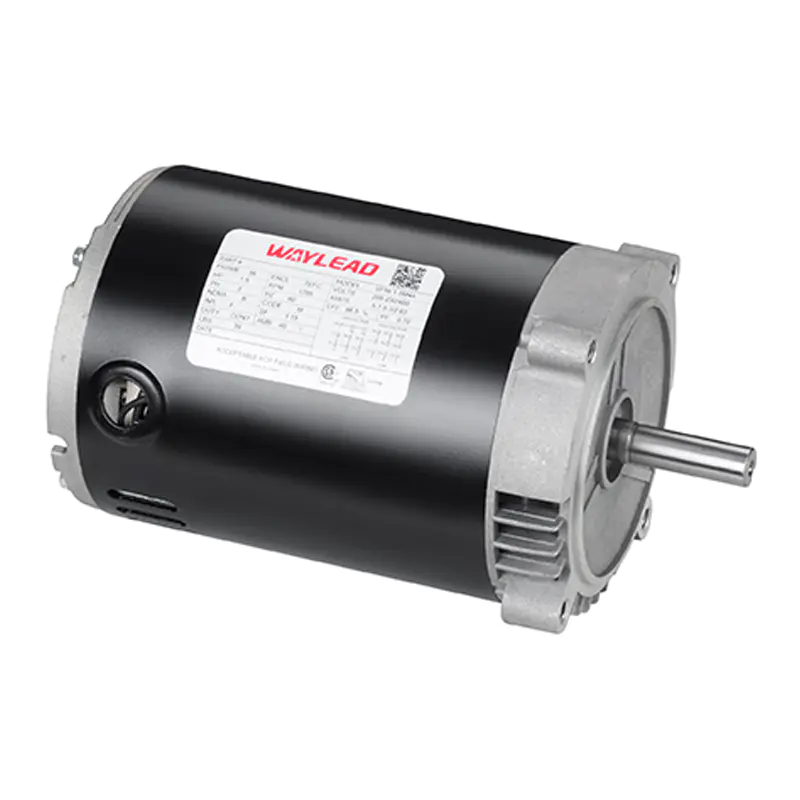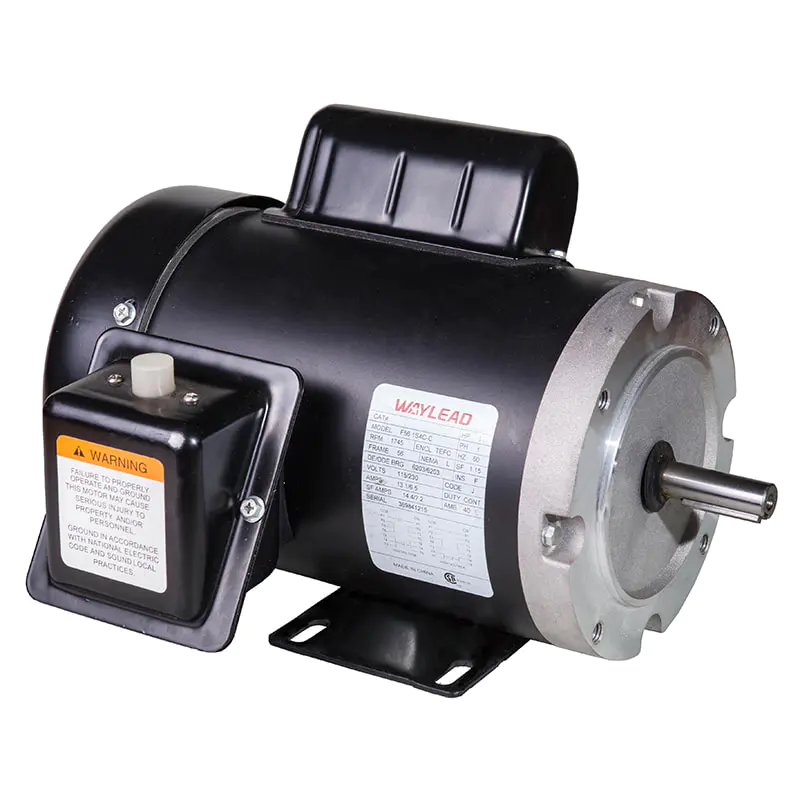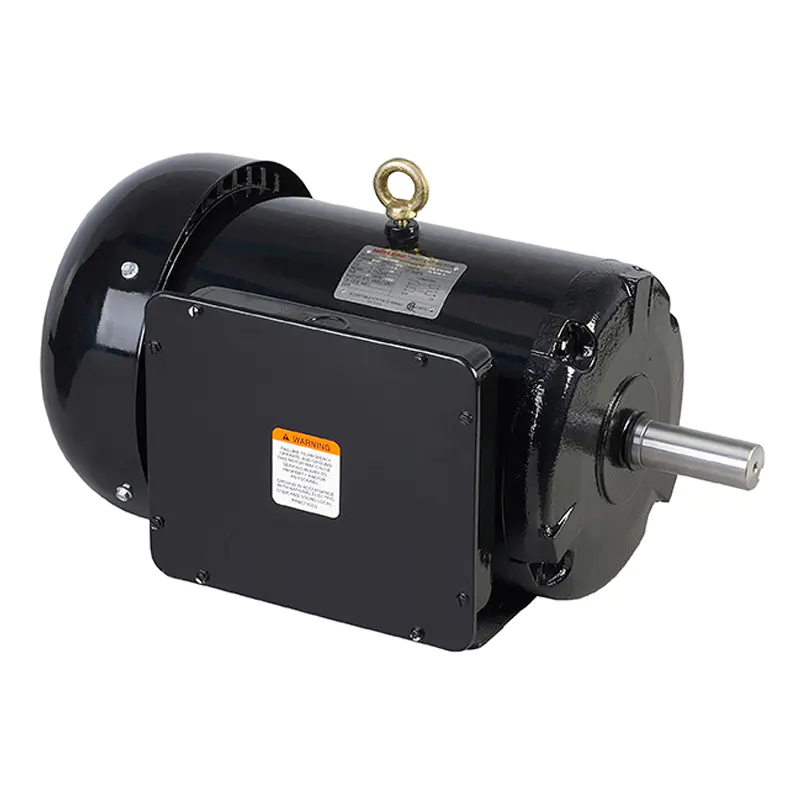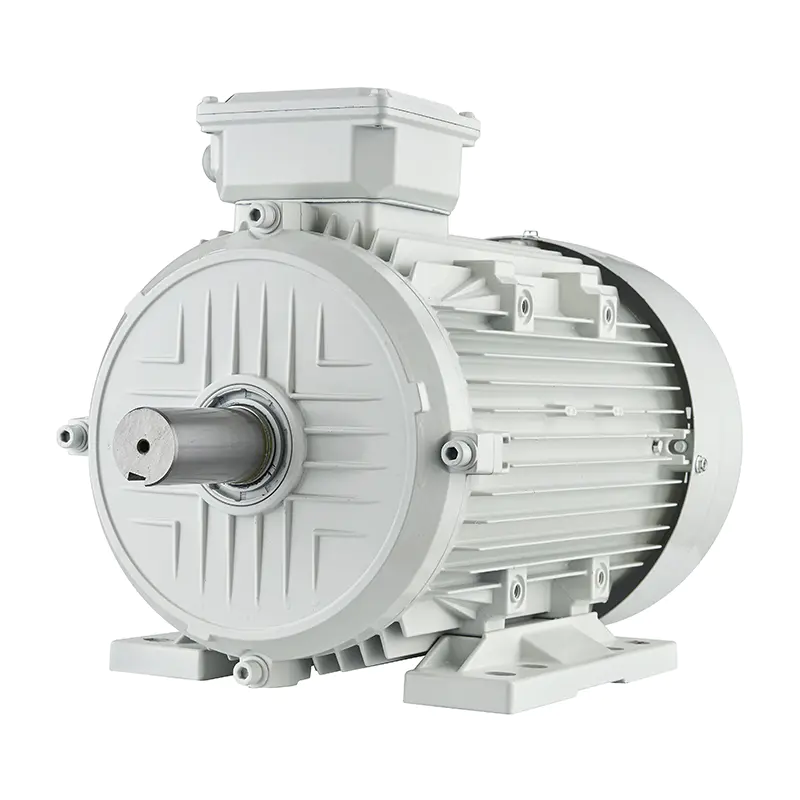
A NEMA motor nameplate is a permanently attached data label standardized by the National Electrical Manufacturers Association (NEMA). NEMA establishes the definitions, measurement methods, and required information fields that manufacturers must include on every compliant motor sold in North America. The governing standard is NEMA MG 1, which covers motors ranging from fractional-horsepower household units to large multi-thousand-horsepower industrial electric motors.
The nameplate is not a suggestion — it is the authoritative reference for how to safely install, power, protect, and operate the motor. Ignoring or misreading nameplate data is one of the most common causes of premature motor failure, nuisance tripping, overheating, and electrical hazards in industrial facilities.
Before examining individual fields, it is worth understanding the practical consequences of nameplate data at the system level:
Understanding each nameplate field transforms a cryptic label into a complete engineering specification.
The top of the nameplate typically lists the motor manufacturer, the model or catalog number, and a serial number. This information is critical when ordering exact replacement parts, requesting a warranty claim, or downloading the manufacturer's dimensional drawing and wiring diagram. Major manufacturers such as Nidec, WEG, ABB, Baldor (now ABB), Leeson, and Siemens all follow NEMA MG 1 formatting while adding proprietary model coding.
Horsepower is the motor's rated output power at the shaft — not the input power drawn from the supply. This is the most commonly referenced nameplate value when sizing a motor for a specific mechanical load.
The nameplate voltage is the supply voltage for which the motor's windings are designed. Common NEMA voltage ratings include:
| Voltage Rating | Typical Application | Motor Type |
| 115V | Residential, light commercial | Single-phase AC motors |
| 208–230V | Commercial HVAC, small industrial | Single-phase or three-phase AC motors |
| 230/460V | Industrial dual-voltage winding | Three-phase induction motors |
| 575V | Canadian industrial facilities | Three-phase AC motors |
| 90V / 180V DC | Variable speed drives, traction | DC motors (shunt, series, compound) |
A nameplate showing 230/460V means the motor can be reconnected internally (via a terminal box wiring diagram) for either supply voltage. At 230V, the windings are connected in parallel; at 460V, they are in series. Always verify which configuration is currently wired before applying power.
Full-Load Amperes (FLA) is the current the motor draws from the supply when delivering rated horsepower at rated voltage and frequency. This is the value used to:
For dual-voltage motors (e.g., 230/460V), the nameplate lists both FLA values. The higher current corresponds to the lower voltage connection.
The nameplate RPM on an AC induction motor is the full-load speed — slightly below synchronous speed due to slip. Common nameplate RPM values and their synchronous equivalents on a 60 Hz supply:
| Synchronous Speed (60 Hz) | Typical Nameplate RPM | Number of Poles |
| 3,600 RPM | 3,450–3,500 RPM | 2-pole |
| 1,800 RPM | 1,725–1,760 RPM | 4-pole |
| 1,200 RPM | 1,140–1,170 RPM | 6-pole |
| 900 RPM | 850–880 RPM | 8-pole |
For DC motors, nameplate speed is typically expressed as base speed at rated armature voltage and full load, with an overspeed rating also listed when field weakening is used. For variable frequency drive (VFD)-rated motors, the nameplate RPM represents operation at the base frequency (usually 60 Hz), and the motor can operate above or below this speed.
North American motors are designed for 60 Hz. International and IEC-standard motors are typically rated at 50 Hz. Running a 60 Hz motor on 50 Hz supply reduces synchronous speed by 17% and increases magnetizing current, causing heating. Running a 50 Hz motor on 60 Hz increases speed but may reduce torque.
Motors labeled 50/60 Hz are designed to operate on either frequency, usually with a corresponding dual-voltage listing (e.g., 220V/50 Hz — 260V/60 Hz).
The phase designation tells you whether the motor requires:
Never connect a three-phase motor to a single-phase supply — it will not start and will burn out rapidly. Single-phase motors connected to three-phase supplies may run but with severe imbalance issues.
The NEMA frame designation (e.g., 56, 143T, 182T, 213T, 256T, 284T) defines the motor's critical mounting dimensions: shaft height, bolt pattern, shaft diameter and length. NEMA standardized these dimensions so that any motor with the same frame number from any manufacturer is dimensionally interchangeable — the motor can be bolted in as a drop-in replacement without machining or adapters.
| Frame | Shaft Height (inches) | Typical HP Range | Common Application |
| 56 | 3.5" | 1/4 – 3/4 HP | Fans, pumps, appliances |
| 143T / 145T | 3.5" | 1/2 – 1 HP | Light industrial, HVAC |
| 182T / 184T | 4.5" | 1 – 3 HP | Compressors, conveyors |
| 213T / 215T | 5.25" | 3 – 10 HP | Pumps, machine tools |
| 256T / 284T | 6.25" – 7" | 10 – 30 HP | Heavy industrial |
The "T" suffix indicates a NEMA T-frame (current standard, smaller than the older U-frame). Always verify the frame designation before ordering a replacement motor.
The insulation class defines the maximum allowable winding temperature. NEMA classifies motor insulation into four common classes:
| Class | Max Winding Temp (°C) | Max Ambient + Rise |
| Class A | 105°C | 40°C ambient + 60°C rise + 5°C hotspot allowance |
| Class B | 130°C | 40°C ambient + 80°C rise + 10°C hotspot allowance |
| Class F | 155°C | 40°C ambient + 105°C rise + 10°C hotspot allowance |
| Class H | 180°C | 40°C ambient + 125°C rise + 15°C hotspot allowance |
Most modern NEMA premium efficiency motors use Class F insulation but are designed for Class B temperature rise. This 25°C "thermal headroom" significantly extends insulation life — motor insulation life roughly doubles for every 10°C reduction in operating temperature.
The service factor is a multiplier applied to the nameplate horsepower to define the maximum safe continuous overload. A motor rated 10 HP with SF 1.15 can deliver 11.5 HP continuously without damaging the windings — provided it operates at rated voltage and frequency in a 40°C ambient.
Operating continuously at the service factor load increases temperature and reduces motor life. SF is best used as an emergency buffer, not a design operating point.
Modern nameplates for NEMA Premium® efficiency motors and IE3/IE4 motors list nominal full-load efficiency (%). Higher efficiency means less energy wasted as heat:
Power factor (PF) is listed as a decimal (e.g., 0.85) or percentage. Low power factor motors draw more reactive current from the supply, increasing distribution system losses. Power factor correction capacitors can be added to improve facility-wide PF.
The enclosure designation defines the motor's mechanical protection and cooling method:
| Designation | Full Name | Typical Use |
| ODP | Open Drip-Proof | Clean, dry indoor environments |
| TEFC | Totally Enclosed Fan-Cooled | Outdoor, dusty, wet, or contaminated environments |
| TENV | Totally Enclosed Non-Ventilated | Small motors, food processing, wash-down areas |
| TEAO | Totally Enclosed Air-Over | Fan blade direct airflow applications |
| XPRF / Explosion-Proof | Explosion-Proof (ATEX/UL listed) | Hazardous locations (Class I, II, III) |
The duty cycle specifies whether the motor is designed for:
Standard NEMA motors are rated for a maximum ambient temperature of 40°C (104°F). If a motor must operate in a hotter environment — near furnaces, in tropical climates, or in enclosures with poor ventilation — a motor with a higher insulation class or a derated HP must be selected.
The NEMA design letter defines the motor's torque-speed characteristics:
| Design | Starting Torque | Starting Current | Slip | Best For |
| Design A | Normal | High | Low (<5%) | Fans, pumps, centrifugal loads |
| Design B | Normal | Low | Low (<5%) | Most general-purpose applications (most common) |
| Design C | High | Low | Low (<5%) | Compressors, conveyors, hard-to-start loads |
| Design D | Very High | Low | High (5–13%) | Punch presses, hoists, high-inertia loads |
Many facilities now operate a mix of NEMA motors and IEC (International Electrotechnical Commission) motors. While both carry similar data, the format and some values differ:
| Parameter | NEMA Standard | IEC Standard |
| Output Power | Horsepower (HP) | Kilowatts (kW) |
| Frame Reference | Frame number (e.g., 213T) | IEC frame (e.g., IEC 100, IEC 132) |
| Efficiency Class | NEMA Nominal, Premium | IE1, IE2, IE3, IE4 |
| Frequency | 60 Hz primary | 50 Hz primary |
| Supply Voltage | 230V / 460V common | 230V / 400V common |
| Mounting Dimensions | Inches | Millimeters |
The most common industrial motor type. Look specifically for: voltage (and whether it is a dual-voltage winding), connection diagram (wye or delta for each voltage), FLA at each voltage, and the NEMA design letter. Verify the rotation direction arrow if present — reversing any two of the three phase leads reverses rotation.
Single-phase motors list the starting mechanism type (e.g., CSIR — capacitor-start, induction-run; CSCR — capacitor-start, capacitor-run). The capacitor value in microfarads (µF) and voltage rating are critical for replacement. Many also list locked rotor code letter and thermal protector type.
DC motors list armature voltage and current separately from field voltage and current. For permanent magnet DC motors, only armature data is relevant. Shunt-wound and compound-wound DC motors may list field resistance or field current for speed regulation purposes.
Motors designed for operation with variable frequency drives (VFDs) carry additional nameplate data: inverter duty rating, constant torque speed range (e.g., 2:1 or 10:1 CT), and sometimes a minimum cooling speed. These inverter-duty motors use enhanced insulation systems (typically NEMA MG 1 Part 31 compliant) to withstand the voltage spikes generated by PWM drives.
| Mistake | Consequence | How to Avoid |
| Ignoring dual-voltage wiring diagram | Winding damage or wrong voltage connection | Always check terminal box wiring before applying power |
| Setting overload relay to locked rotor amps | Motor runs unprotected during overload | Set to FLA × 1.15 (or 1.25 for SF 1.15 motors) |
| Replacing with different NEMA frame | Misaligned shaft, wrong bolt pattern | Match frame designation exactly |
| Running 60 Hz motor on 50 Hz without derating | Overheating, reduced life | Derate to 83% of rated HP or select 50/60 Hz motor |
| Assuming HP equals kW input | Undersized wiring and breakers | Calculate input kW = HP × 0.746 ÷ efficiency |
When replacing a failed motor, collect all nameplate data before the motor is removed if possible. The minimum data needed for an exact replacement:
If upgrading efficiency class (e.g., from standard efficiency to NEMA Premium efficiency), verify that the higher-efficiency motor's locked rotor current (KVA code) does not exceed the supply circuit's capacity or cause coordination issues with upstream protection.
The KVA code letter (A through V) represents the locked rotor kVA per horsepower — essentially the motor's inrush current at startup. Code letter F means the motor draws 5.0–5.59 kVA/HP at startup. Higher letters mean higher starting current, which affects breaker sizing and starter selection. This is particularly important for across-the-line starters on large motors.
Using a larger replacement motor is sometimes done, but requires careful evaluation. A larger motor draws higher starting current, may saturate at light loads with poor power factor and efficiency, and may require upgraded branch circuit conductors, overcurrent protection, and starter. Always consult the driven equipment manufacturer before upsizing the motor.
FLA (Full-Load Amperes) is the current drawn at rated load. LRA (Locked Rotor Amperes) is the inrush current at the moment of starting, when the rotor is stationary. LRA is typically 6–8× FLA for NEMA Design B motors. This distinction is critical when sizing time-delay fuses and circuit breakers per NEC Article 430.
If the nameplate shows two ampere values (e.g., 14/7A), the motor is a dual-voltage motor. The higher current (14A) applies to the lower voltage connection (e.g., 230V) and the lower current (7A) applies to the higher voltage (e.g., 460V). The total power consumption is the same at both voltages.
A thermally protected motor contains an internal thermal cutout device in the windings. This device opens the circuit when winding temperature exceeds a safe limit and resets — either automatically or manually — when the motor cools. This protection supplements but does not replace external overload relays in most installations.
Look for terms like "inverter duty," "VFD rated," or a NEMA MG 1 Part 31 designation on the nameplate or product data sheet. Standard motors can often tolerate VFD operation at moderate speed ranges, but motors operating below 50% of base speed without external cooling — or in applications with long cable runs — should use inverter-duty rated motors with enhanced insulation to resist voltage spikes.
A NEMA Premium® efficiency motor meets or exceeds the minimum nominal efficiency levels defined in NEMA MG 1 Table 12-12. These motors also comply with DOE 10 CFR Part 431 efficiency regulations. The nameplate lists nominal efficiency (e.g., 95.4%) and the motor may display the NEMA Premium logo. Since June 2016, all general-purpose motors 1–500 HP sold in the US must meet NEMA Premium or equivalent efficiency standards.
| Nameplate Field | What to Verify |
| HP / kW | Matches or exceeds load requirement |
| Voltage | Matches available supply; check dual-voltage wiring |
| Phase | Matches supply (1Ø or 3Ø) |
| FLA | Used to size conductors, overload relay, disconnect |
| RPM | Matches driven equipment speed requirement |
| Frame | Identical to original for mechanical fit |
| Insulation Class | Class F or H preferred; check thermal headroom |
| Service Factor | 1.15 standard; do not use SF for continuous overload |
| Enclosure | Appropriate for environmental conditions |
| Design Letter | Matches torque requirement of driven load |
| Efficiency | NEMA Premium or IE3+ preferred for energy savings |
| KVA Code | Verify starting current vs. breaker and starter rating |
The NEMA motor nameplate is one of the most information-dense labels in industrial equipment. Once you know how to read it, every electric motor — from a fractional-horsepower single-phase AC motor in a kitchen exhaust fan to a 500 HP three-phase induction motor driving a centrifugal pump — reveals exactly how it should be installed, protected, and operated. Mastering nameplate reading is not just an academic exercise: it directly reduces motor failures, energy waste, and unplanned downtime across every type of motor-driven system.
Copyright © 2018 Cixi Waylead Motor Manufacturing Co., Ltd.All Rights Reserved.
 Login
Wholesale AC Motor Manufacturers
Login
Wholesale AC Motor Manufacturers