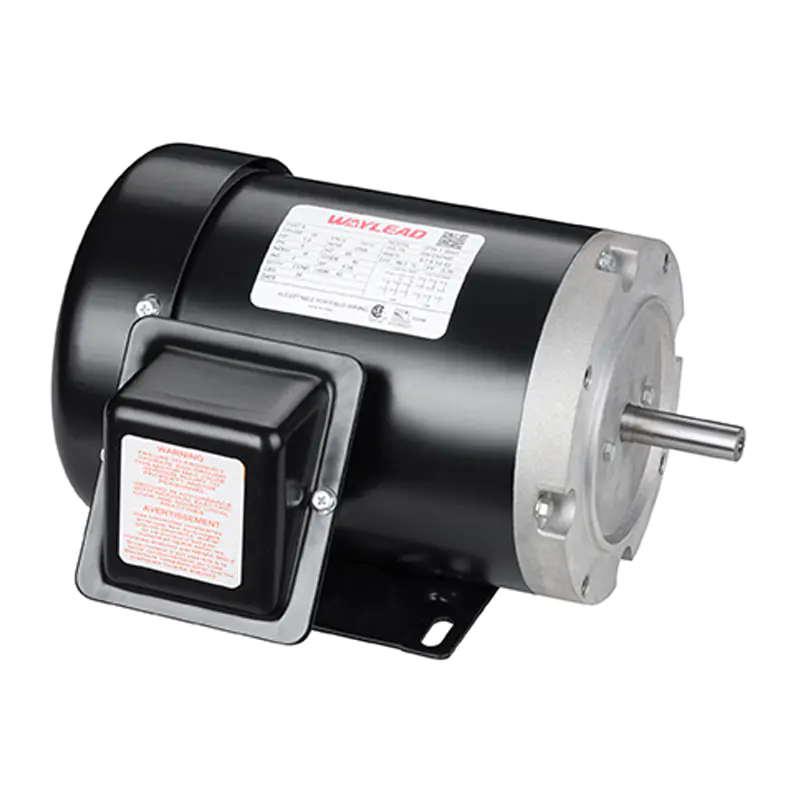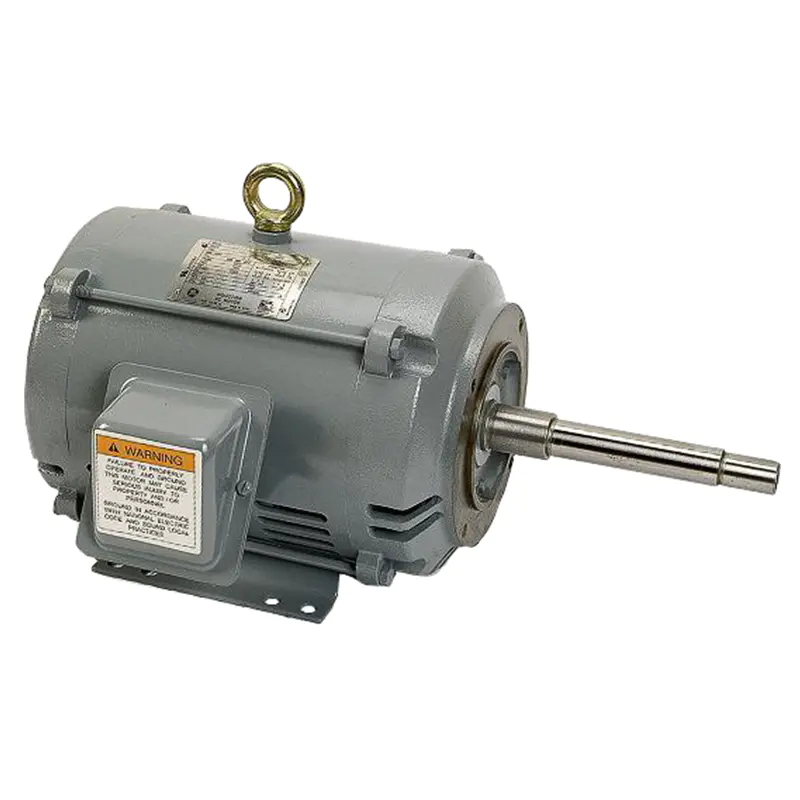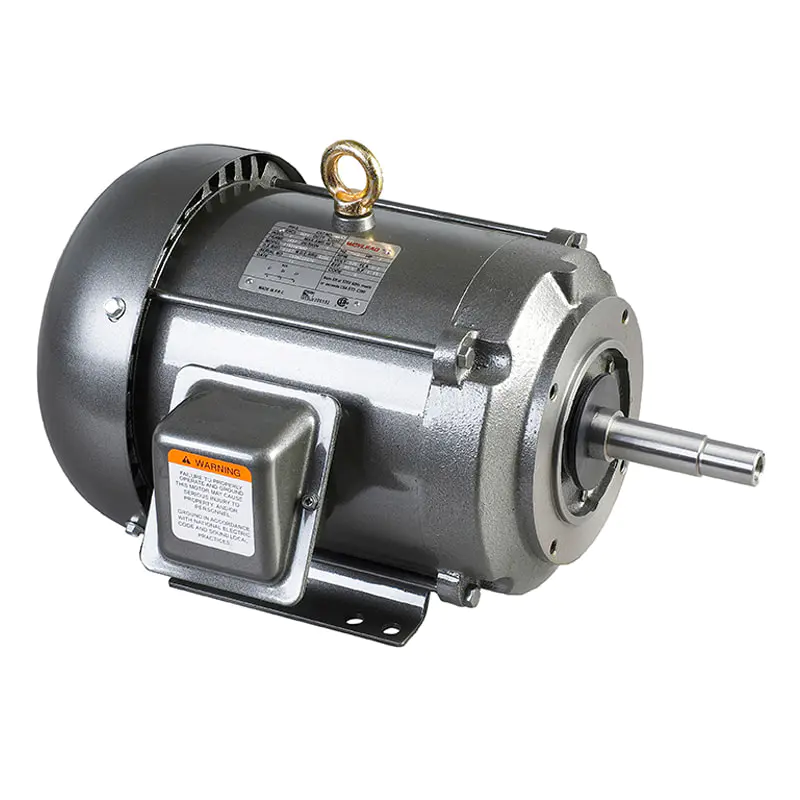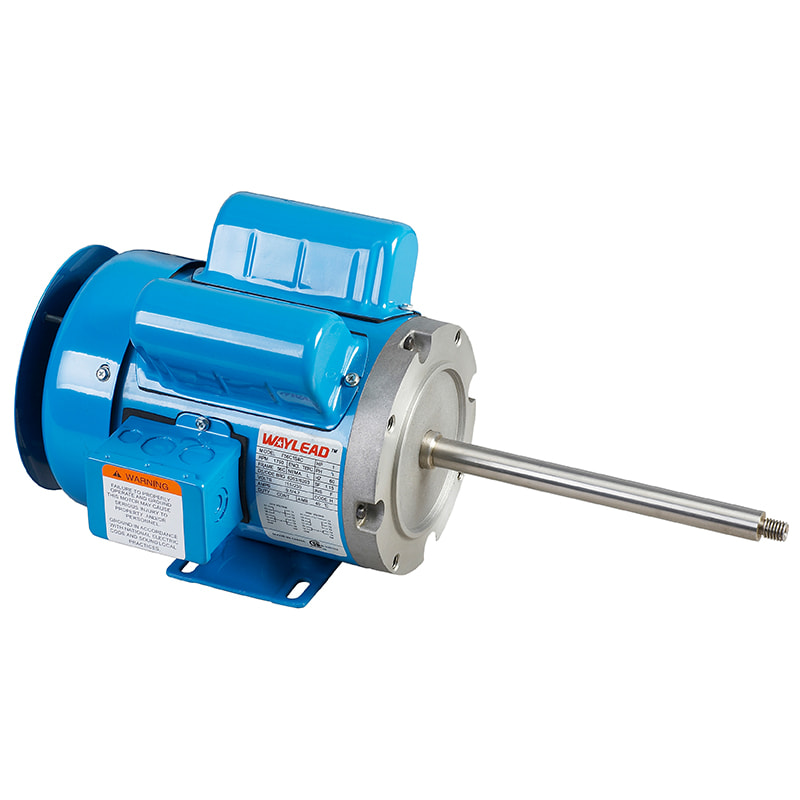
An IEEE 841 motor is a severe-duty, totally enclosed squirrel-cage induction motor that meets the requirements set by the IEEE Standard 841 (Institute of Electrical and Electronics Engineers). It is specifically designed for use in petrochemical, chemical, and industrial plant applications where reliability, efficiency, and resistance to harsh environments are critical. IEEE 841 motors go beyond standard NEMA MG-1 requirements, incorporating tighter tolerances on efficiency, vibration, noise, and construction quality.
The IEEE Standard 841 was developed by the IEEE Petroleum and Chemical Industry Committee (PCIC). It establishes a comprehensive set of performance, construction, and testing specifications for AC induction motors used in demanding environments. The standard applies primarily to motors in the 1 to 500 horsepower (HP) range, operating at voltages up to 4,000V and running at standard NEMA frame sizes.
The motivation behind IEEE 841 was straightforward: standard NEMA motors, while reliable for general-purpose use, often fell short of the operational demands found in oil refineries, chemical plants, offshore platforms, and other process industries. Unplanned motor failures in these settings can result in costly downtime, safety incidents, and environmental hazards. The IEEE 841 standard was created to bridge this gap.
The standard has been revised multiple times since its initial publication, with significant updates addressing efficiency levels aligned with current NEMA Premium® Efficiency requirements and improved corrosion protection measures.
IEEE 841 motors must comply with a detailed list of requirements that go well beyond generic motor standards. Below are the most important technical characteristics:
All IEEE 841 motors must use a TEFC (Totally Enclosed Fan-Cooled) or TENV (Totally Enclosed Non-Ventilated) enclosure. This prevents contaminants, dust, moisture, and corrosive gases from entering the motor's interior — essential for petrochemical environments where airborne chemicals are common.
IEEE 841 motors must meet or exceed NEMA Premium efficiency levels, which are more stringent than standard NEMA Energy Efficient requirements. High efficiency reduces energy consumption and operating costs over the motor's lifecycle — a critical factor in continuous-process industries.
The standard mandates lower vibration limits than NEMA MG-1. Maximum allowable vibration velocity is 0.08 in/sec (2.0 mm/s) peak for motors up to 1,800 RPM and 0.10 in/sec (2.5 mm/s) peak for higher speeds. Reduced vibration extends bearing life and reduces mechanical stress on connected equipment.
IEEE 841 requires specific corrosion protection measures, including:
IEEE 841 motors must use Class F insulation rated for 155°C, but with temperature rise limited to Class B levels (80°C rise). This built-in thermal margin significantly extends winding life by operating at much lower temperatures than the insulation's maximum rating — a principle sometimes called "Class F insulation, Class B rise."
The standard sets maximum sound pressure levels for IEEE 841 motors, which are at or below NEMA MG-1 limits. This reduces workplace noise pollution — an important consideration under OSHA and international occupational health regulations.
IEEE 841 motors require regreasable anti-friction bearings with grease inlet and relief fittings accessible from outside the motor. The standard also specifies bearing L10 life (the life at which 90% of bearings are expected to survive) of at least 100,000 hours for direct-coupled loads — far beyond most standard motor specifications.
Understanding how an IEEE 841 motor differs from a standard NEMA MG-1 motor helps engineers and procurement teams make the right selection for their application.
| Feature | IEEE 841 Motor | Standard NEMA MG-1 Motor |
| Enclosure | TEFC or TENV required | Various (ODP, TEFC, etc.) |
| Efficiency | NEMA Premium® required | Energy Efficient minimum |
| Insulation Class | Class F / Class B rise | Class B or F (full rise) |
| Vibration Limit | 0.08–0.10 in/sec peak | 0.15 in/sec peak (NEMA) |
| Bearing L10 Life | ≥ 100,000 hours | Not specified (typically 50,000 hrs) |
| Corrosion Protection | Epoxy primer, SS hardware required | Standard paint, carbon steel hardware |
| Conduit Box | Sealed, oversized, rotatable | Standard |
| Grease Fittings | External regrease required | May vary |
| Noise Level | At or below NEMA MG-1 | Per NEMA MG-1 limits |
| Typical Application | Petrochemical, chemical plants | General industrial use |
| Cost | 15–30% higher upfront | Lower upfront cost |
The IEEE 841 standard was written specifically for the petroleum and chemical industries, but its superior reliability has led to adoption in many other demanding sectors. Common applications include:
This is the primary target environment for IEEE 841 motors. Pumps, compressors, fans, blowers, and mixers in oil refineries and petrochemical plants are driven 24/7. Any unscheduled downtime is extremely expensive — some estimates put shutdown costs at tens of thousands of dollars per hour. The enhanced reliability and reduced maintenance intervals of IEEE 841 motors make them the preferred choice.
Corrosive gases, acidic vapors, and high-humidity environments in chemical plants are particularly destructive to motor components. The corrosion-resistant coatings, sealed enclosures, and stainless steel hardware of IEEE 841 motors provide significant protection against these hazards.
The wet, dusty, and chemically aggressive atmosphere of pulp and paper manufacturing challenges motor longevity. IEEE 841 motors' robust construction suits continuous-process applications like refiners, stock pumps, and agitators.
Motors operating in water treatment facilities face high humidity, outdoor exposure, and occasional flooding. IEEE 841 motors' sealed enclosures and corrosion protection are well-suited to these conditions.
Dust-laden, abrasive, and sometimes wet environments in mining operations benefit from the robust TEFC enclosures and long bearing life specified in IEEE 841.
Auxiliary motors in power plants — driving cooling water pumps, induced-draft fans, forced-draft fans, and boiler feed pumps — are critical assets. IEEE 841 motors' long service intervals and high reliability reduce risk in these applications.
The higher upfront cost of an IEEE 841 motor is consistently justified by long-term operational and financial advantages:
Beyond performance metrics, the IEEE 841 standard specifies a range of physical construction requirements that set these motors apart:
The conduit box must be oversized — at least 40% larger than required by NEMA MG-1 — to ease wiring installation and maintenance. It must be rotatable in 90° increments to accommodate various installation orientations and must be sealed against moisture and contaminants. A separate ground terminal must be provided inside the conduit box.
IEEE 841 motors must include automatic or manual drain plugs to prevent condensation accumulation. Stainless steel materials are required for drain plugs to resist corrosion.
The standard recommends — and some specifications require — the installation of resistance temperature detectors (RTDs) or thermocouples in the stator windings to enable continuous temperature monitoring and early detection of thermal problems.
IEEE 841 motors are typically equipped with internal space heaters that energize when the motor is not running. These prevent condensation from forming inside the motor during standby periods, protecting the windings and bearings from moisture damage.
Shaft surfaces must be coated to prevent rust during storage and transport. The motor feet must have a flat machined mounting surface to ensure proper alignment and reduce vibration transmission to the base.
Industrial motor users sometimes need to choose between three overlapping standards. Here is a concise comparison:
| Standard | Scope | HP Range | Best For |
| NEMA MG-1 | General industrial motors | All sizes | General-purpose, light duty |
| IEEE 841 | Severe-duty TEFC induction motors | 1–500 HP | Petrochemical, chemical, industrial plants |
| API 541 | Large form-wound induction motors | 250 HP and above | Large critical rotating equipment in oil & gas |
NEMA MG-1 is the baseline standard for North American motors covering general design, performance, and testing requirements. It is the minimum acceptable standard for most industrial applications.
IEEE 841 builds on NEMA MG-1 but adds more stringent requirements for harsh environments. It is the industry standard of choice for motors in the 1–500 HP range used in process plants and facilities where reliability and corrosion resistance are paramount.
API 541 (published by the American Petroleum Institute) covers large, form-wound induction motors — typically above 250 HP — used for critical services such as large compressor drives and main process pumps in oil and gas. API 541 imposes even more rigorous requirements than IEEE 841, including more detailed testing, documentation, and quality assurance provisions.
In practice, many facilities use IEEE 841 for small-to-medium motors (1–500 HP) and API 541 for large critical motors. Some projects may specify IEEE 841 plus selected additional requirements from API 541 to achieve an intermediate level of rigor.
While IEEE 841 motors offer significant advantages, they are not always the best choice for every application:
Q: Is an IEEE 841 motor automatically explosion-proof?
No. IEEE 841 defines a severe-duty, totally enclosed motor for harsh environments, but it does not make a motor explosion-proof or suitable for use in hazardous (classified) locations where flammable gases may be present. For those applications, an additional explosion-proof rating (UL, CSA, ATEX, or IECEx) is required.
Q: What does "Class F insulation with Class B rise" mean?
It means the motor uses Class F insulation materials (rated for up to 155°C) but is designed so that under full-load conditions, the winding temperature rises no more than 80°C above the 40°C ambient (Class B rise). Operating at temperatures well below the insulation's maximum rating significantly extends winding life. This is one of the most valued features of IEEE 841 motors.
Q: What HP range does IEEE 841 cover?
The IEEE 841 standard covers squirrel-cage induction motors from 1 HP to 500 HP, operating at voltages up to 4,000V and speeds up to 3,600 RPM (synchronous speed). For motors above 500 HP, API 541 is the relevant standard in the petroleum industry.
Q: Can I use an IEEE 841 motor in a general industrial application (not petrochemical)?
Yes. While IEEE 841 was designed for petrochemical environments, its superior efficiency, corrosion resistance, low vibration, and long bearing life make it an excellent choice for any application where high reliability and low lifecycle cost are priorities — including pulp and paper, mining, water treatment, and power generation. The main consideration is the higher upfront cost.
Q: Who manufactures IEEE 841 compliant motors?
Major motor manufacturers offering IEEE 841 compliant products include Nidec (U.S. Motors), WEG, ABB, Siemens, Regal Rexnord, and Toshiba International, among others. Always verify compliance through the manufacturer's specification sheet and request test certificates for critical applications.
Q: How do I verify that a motor meets IEEE 841?
Request the manufacturer's IEEE 841 compliance data sheet and test reports. Check efficiency values against NEMA Premium tables, review bearing L10 life calculations, confirm vibration test results, and inspect the physical motor for stainless steel hardware, epoxy coatings, oversized conduit box, and external regrease fittings.
Q: How much more does an IEEE 841 motor cost compared to a standard motor?
Typically, an IEEE 841 motor costs 15–30% more at the point of purchase compared to a standard NEMA motor of the same HP. However, when lifecycle costs are considered — including energy savings from higher efficiency, reduced maintenance frequency, fewer unexpected failures, and longer service life — the total cost of ownership is often lower over a 10–20 year period.
The IEEE 841 motor represents a carefully engineered balance between rugged construction, energy efficiency, and long-term reliability. By specifying tighter tolerances on vibration, higher insulation thermal margins, superior corrosion protection, longer bearing life, and premium efficiency, the IEEE 841 standard ensures that motors deployed in demanding petrochemical, chemical, and industrial plant environments deliver consistent performance with minimal unplanned downtime.
For engineers and procurement teams selecting motors for process industries, the question is not merely "what does an IEEE 841 motor cost?" but rather "what is the cost of a motor failure in this application?" When the answer to the latter is "very high," the IEEE 841 motor consistently proves to be the most economical long-term choice.
Understanding the differences between IEEE 841, NEMA MG-1, and API 541 standards allows informed decisions that optimize both upfront capital expenditure and total lifecycle cost — ensuring safe, efficient, and reliable motor-driven operations for decades to come.
Copyright © 2018 Cixi Waylead Motor Manufacturing Co., Ltd.All Rights Reserved.
 Login
Wholesale AC Motor Manufacturers
Login
Wholesale AC Motor Manufacturers